Types of Number Plates in India and What Each Colour Means
17 July, 2026
RTO
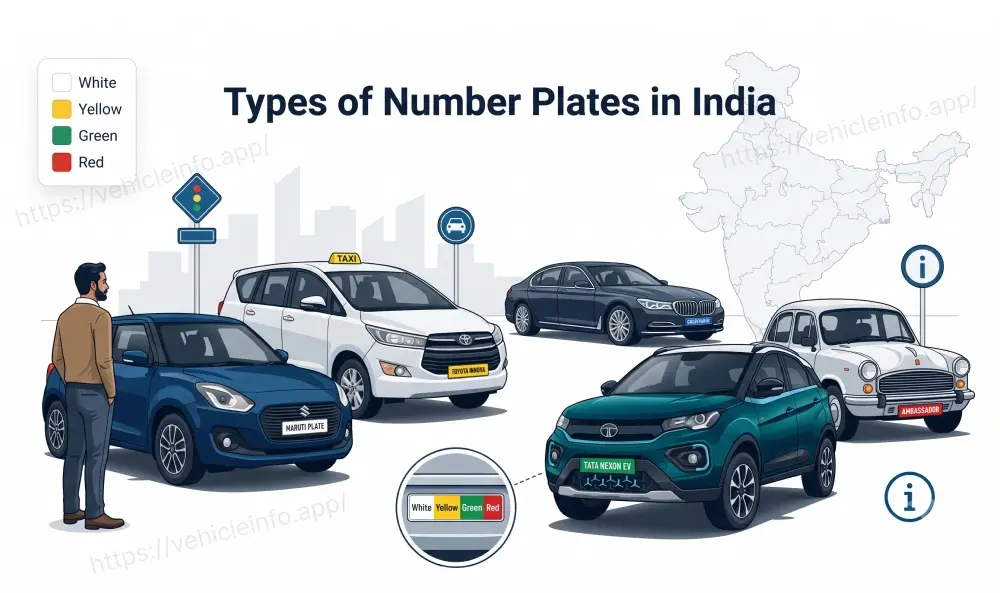
Every vehicle on an Indian road carries a number plate, but not every number plate looks the same, and that difference is not just style. The types of number plates in India follow a strict colour code set by the government, and each colour tells you something specific about how that vehicle is meant to be used. This guide breaks down what each colour means, why HSRP plates matter, and how your plate type connects to registration and insurance.
The Number Plate System in India
Number plates in India are issued by the Regional Transport Office (RTO) under rules set out in the Central Motor Vehicles Rules, 1989. Every registered vehicle must display a plate at both the front and rear, showing the state code, district code, a series of letters, and a unique registration number. The system of number plate colours India follows is what makes this whole setup easy to read at a glance.
What makes the system easy to read at a glance is colour. Rather than relying only on the alphanumeric code, India uses background and text colour combinations to instantly signal what category a vehicle falls into. A traffic officer, a toll booth operator, or another driver can tell a private car apart from a commercial taxi or an electric vehicle just by looking at the plate, without needing to check any documents.
What Each Plate Colour Means
Understanding the number plate colours India uses is straightforward once you know the categories. Here is what each one signals:
- White background, black text: Private, non-commercial vehicles. This is the plate you will see on the vast majority of personal cars, bikes, and SUVs
- Yellow background, black text: Commercial vehicles such as taxis, trucks, and buses. Driving one of these legally requires a commercial driving licence.
- Green background, white text: Private electric vehicles. A green number plate on a commercial electric vehicle instead carries yellow text, which distinguishes private EVs from commercial ones at a glance.
- Black background, yellow text: Self-drive rental vehicles. Interestingly, a private driving licence is enough to drive one of these, even though the vehicle is technically registered for commercial use.
- Red background, white text: Temporary registration, typically seen on a brand-new vehicle that has not yet received its permanent number from the RTO. This is usually valid for about 30 days.
- Blue background, white text: Vehicles belonging to foreign diplomats and embassies.
- Red background with the national emblem: Reserved for official vehicles of the President, Vice President, Governors, and a small number of other constitutional posts.
- Yellow background, black text, with an upward arrow: Military and defence vehicles carry this distinct marking in addition to standard commercial colouring.
Knowing what do number plate colours mean in India also helps when you are dealing with practical situations, like renting a self-drive car or buying a used electric scooter, since the plate itself gives you an immediate clue about the vehicle's registered category.
HSRP and the High-Security Plate Mandate
Colour is only one part of the picture. Since 2019, every vehicle in India, whether newly registered or already on the road, is required to carry a High Security Registration Plate, commonly called an HSRP number plate. This is not a separate colour category. Every one of the colour combinations above is now implemented using the HSRP format.
An HSRP number plate is made of aluminium and includes several tamper-resistant features: a chromium-based hologram of the Ashoka Chakra, a laser-etched unique identification code, and non-reusable snap locks that break if someone tries to remove the plate. These features exist for a specific reason. Older plates were easy to forge or swap, which made stolen vehicles harder to trace. An HSRP is linked to the vehicle's registration details in the central database, so authorities can verify a plate almost instantly using CCTV or a handheld scanner.
So, for those wondering, is HSRP mandatory? The simplest answer is yes, without exception. Vehicles registered after April 2019 receive an HSRP automatically at the time of registration. Owners of older vehicles registered before that date are required to retrofit an HSRP through an authorised vendor or their local RTO. Several states have started actively fining vehicles still running on the older, non-HSRP plates, so this is not a rule that is likely to stay unenforced for long if you have not yet made the switch.
How Plate Type Affects Registration and Insurance
Your plate colour is not just cosmetic. It reflects the vehicle's registered category, and that category has real consequences for compliance.
A vehicle registered with a white, private plate but used to carry paying passengers or goods is operating outside its registered purpose. This mismatch can affect an insurance claim, since a standard private car policy is priced and written for personal use, not commercial activity. If an accident happens while a privately registered vehicle is effectively being used commercially, an insurer may dispute or reduce a claim on the grounds that the vehicle was being used outside the terms of the policy.
The same logic applies to green plates. Since these are reserved for electric vehicles, they often come tied to specific state incentives, such as reduced or waived road tax, toll exemptions, or priority parking in some cities. Using vehicle number plate rules correctly, meaning registering and displaying the plate type that matches how the vehicle is actually used, keeps you eligible for whatever benefits apply to that category and keeps your insurance valid on paper as well as in practice.
Illegible, damaged, or non-standard plates also cause practical problems beyond fines. A VAHAN or insurance check by registration number depends on the plate being read correctly. A faded, tampered, or non-HSRP plate can complicate everything from an insurance verification to an RTO service request, simply because the system cannot reliably match the vehicle to its record. This is one more reason vehicle number plate rules exist in the first place: a plate that cannot be read accurately breaks the whole chain of digital verification that the RTO and insurers now rely on.
Following the vehicle number plate rules also matters when you eventually sell the vehicle. A buyer checking the number plate colours India assigns to a listing, alongside a quick VAHAN search, is one of the fastest ways to confirm a vehicle's category matches what the seller claims before money changes hands.
FAQs
1. What are the main types of number plates in India?
Ans: White for private vehicles, yellow for commercial vehicles, green for electric vehicles, black for self-drive rentals, red for temporary registration, blue for diplomatic vehicles, and a special red plate with the national emblem for top constitutional posts.
2. What do number plate colours mean in India for everyday buyers?
Ans: For most buyers, the relevant distinction is white for private use and yellow for commercial use. Green additionally signals an electric vehicle, which may carry separate tax and toll benefits depending on the state.
3. What is a green number plate exactly?
Ans: A green number plate is issued exclusively to electric vehicles. Private electric vehicles display white text on a green background, while commercial electric vehicles display yellow text instead.
4. Is HSRP mandatory for old vehicles too, or just new ones?
Ans: Yes. HSRP is mandatory for both newly registered vehicles and older vehicles that were registered before the mandate began in 2019. Older vehicles need to be retrofitted through an authorised vendor.
5. Can I use a yellow plate commercial vehicle for personal use?
Ans: Technically, a yellow plate indicates the vehicle is registered for commercial use, but nothing stops an owner from also using it personally. The key practical differences are the type of driving licence required and the applicable tax and permit rules.
6. What happens if I do not switch to an HSRP number plate?
Ans: Several states have begun issuing fines for vehicles still running on older, non-HSRP plates. Beyond the fine risk, an outdated plate can also complicate insurance or RTO verification processes that rely on reading the plate accurately.
7. Do black number plates require a commercial driving licence?
Ans: No. Black plates are used for self-drive rental vehicles, and despite being a commercial registration category, a standard private driving licence is sufficient to drive one.
8. How long is a red temporary number plate valid?
Ans: Typically around 30 days, though exact timelines can vary by state. It is meant to cover the gap between purchasing a new vehicle and receiving its permanent registration number from the RTO.