RC and Bike Insurance Transfer Rules India 2026
20 July, 2026
Bike Insurance
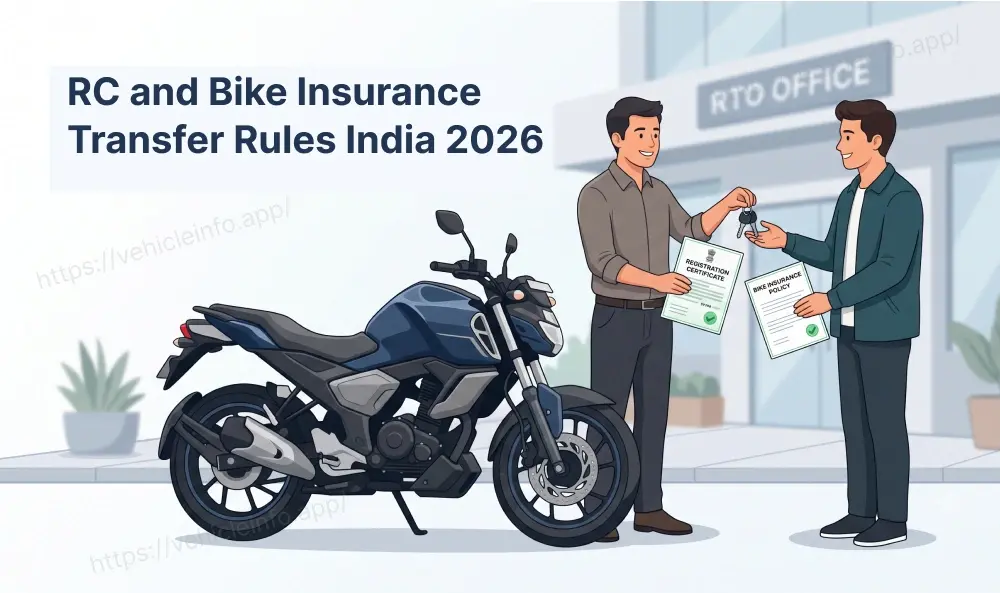
Buying or selling a used two-wheeler involves more paperwork than just handing over the keys. The RC and bike insurance both need to be moved into the new owner's name, and doing this correctly and on time is what actually protects both the buyer and the seller if something goes wrong later. Getting your RC and bike insurance aligned under the same name is not just good practice; it is a legal requirement with real consequences if skipped. This guide walks through exactly how the transfer works, what documents you need, and what happens if you skip it.
RC and Insurance Name Match: Why It Is a Legal Requirement
Your Registration Certificate and your insurance policy are supposed to show the same registered owner. This is not a minor administrative detail. IRDAI requires that the name and address on an insurance policy match the RC exactly, because an insurance contract is legally tied to a specific policyholder, not just to a vehicle in the abstract.
When a bike changes hands, this match breaks the moment ownership actually transfers, even if nobody has filed any paperwork yet. The seller is technically no longer the true owner, but the RC and policy still show their name, which creates a legal grey zone that neither party wants to be caught in if an accident or a claim happens during that window.
Two-Wheeler RC Transfer: Step-by-Step at RTO
RC transfer is governed by Section 50 of the Motor Vehicles Act, and it needs to be completed within 14 days of the sale. The general process looks like this:
- Seller and buyer agree on a sale and fill out Form 29, which is the seller's intimation of transfer, and Form 30, the buyer's application for transfer
- Both parties submit these forms at the RTO, along with the original RC, a valid insurance certificate, a PUC certificate, and identity proof
- If the bike has an existing loan, a No Objection Certificate from the financier and a Form 35 for removing the hypothecation must be submitted first, since a transfer generally cannot proceed with an active loan still recorded against the vehicle
- The RTO verifies the documents and processes the change, along with the applicable transfer fee
- A new RC reflecting the buyer as the registered owner is issued, typically within a few weeks
This is the foundation everything else depends on. Bike insurance RC transfer cannot properly happen until the RC itself shows the new owner's name, since the insurer needs a document to endorse the policy against. Skipping straight to the insurance step before the bike insurance RC transfer paperwork clears at the RTO usually just causes delays later.
Endorsing Insurance to New Owner: IRDAI Process
Once the RC transfer is underway or complete, the insurance side needs its own separate action. Under IRDAI rules, the buyer applies to the seller's insurer to have the certificate of insurance and the policy endorsed in their name, reflecting the change of ownership.
Section 157 of the Motor Vehicles Act gives some breathing room here: for 14 days from the date of the sale, the third-party portion of the existing policy is automatically deemed transferred to the new owner, even before any paperwork is filed. This is meant to prevent a compliance gap right at the point of sale. However, this automatic extension only covers third-party liability. If the seller had comprehensive cover, the own-damage portion of that policy does not transfer automatically and needs the insurer's formal endorsement to apply to the new owner.
In practice, most buyers choose to buy a fresh policy in their own name rather than working through an endorsement, particularly if they want comprehensive cover from day one, since a fresh policy also lets them shop for the best premium rather than staying locked into the seller's existing insurer.
Documents Required for Insurance Transfer on a Bike
Whether endorsing the existing policy or applying for a fresh one, insurers typically ask for a consistent set of documents:
- The new RC, or at least proof that the RC transfer has been filed at the RTO
- Forms 29 and 30, or the RTO's acknowledgement receipt for these
- The seller's existing insurance policy copy
- A signed proposal form from the buyer
- Identity and address proof for the buyer
- In some cases, a vehicle inspection report, particularly if the bike is older or the policy being transferred is comprehensive
Having these ready before approaching the insurer speeds up the process considerably, since incomplete documentation is one of the most common reasons a bike insurance transfer to new owner request gets delayed.
What Happens If You Ride on the Previous Owner's Bike Insurance
This is where many buyers unknowingly expose themselves. If you buy a used bike and continue riding on the seller's unendorsed policy beyond the 14-day window that Section 157 covers, you are effectively riding without valid insurance in your own name, even though a policy technically still exists somewhere.
If an accident happens during this period, an insurer can refuse to process an own-damage claim, since the policyholder on record is not the person who was actually riding the bike. Third-party claims are more complicated but not automatically safe either, since insurers can and do investigate ownership mismatches when a claim is filed, and a clear discrepancy between the RC and the policy can become grounds for dispute.
Penalty for Mismatched RC and Insurance Owner
Beyond the claims risk, riding a bike where the RC and insurance owner do not match can also trigger regulatory consequences. If the vehicle is found to be effectively uninsured in the current rider's name, it can be treated the same as riding without valid insurance altogether, which falls under Section 196 of the Motor Vehicles Act. The penalty is a fine of Rs 2,000 for a first offence, rising to Rs 4,000 for a repeat offence, along with the possibility of imprisonment for up to three months.
There is also a longer-term consequence worth noting. Sellers who do not confirm the transfer was completed remain formally linked to the vehicle in the eyes of the law. If the buyer never finishes the RC and insurance transfer, the original seller can still be pursued for challans, tolls, or even third-party liability arising from an accident involving a bike they no longer physically own.
How VAHAN Reflects the RC-Insurance Match
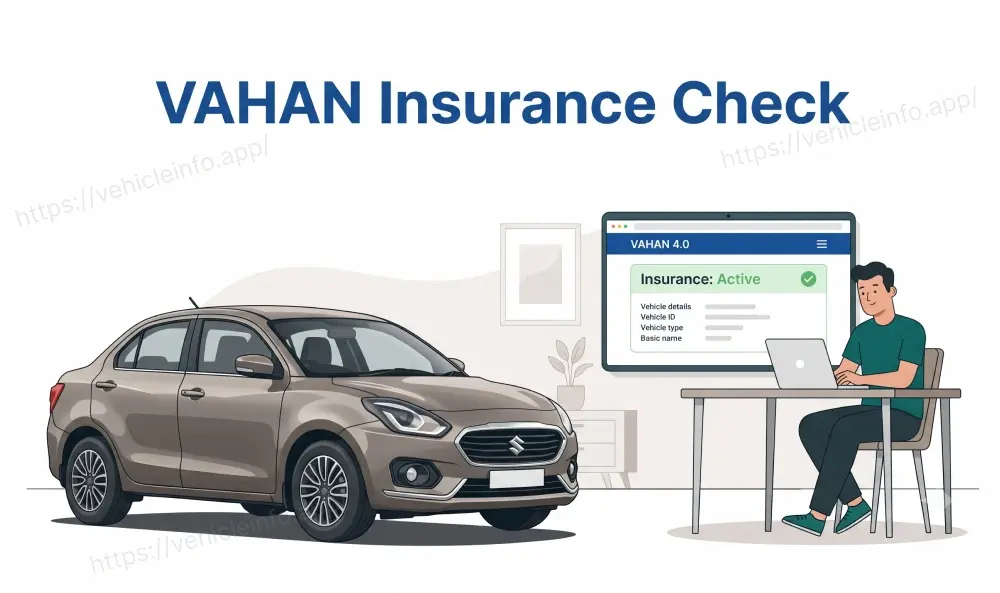
VAHAN, the national vehicle database, is where this mismatch becomes visible to anyone checking the vehicle. A two wheeler RC insurance linkage that has not been updated will show the previous owner's name against the registration, alongside whatever insurance record exists, which may still carry the seller's name as well.
This matters practically. A VAHAN bike RC insurance search run by a traffic officer, an insurer, or even a future buyer will surface this mismatch immediately. Since VAHAN pulls insurance data directly from insurers and RC data directly from RTOs, an incomplete transfer does not stay hidden. The two wheeler RC insurance linkage shows up as a visible discrepancy the moment anyone runs a basic check on the registration number, which is exactly why completing the two wheeler RC insurance linkage properly, rather than assuming nobody will notice, matters even for owners who rarely expect to be checked.
Used Bike Buyers: Checklist Before Paying
Before finalising payment on a used bike, running through a short checklist protects you from inheriting someone else's compliance problem:
- Confirm the RC is genuine and matches the chassis and engine numbers on the bike itself
- Check the bike's current insurance status on VAHAN or the mParivahan app, and note whether it is comprehensive or third-party only
- Ask the seller for a No Objection Certificate if there is any existing loan against the vehicle
- Get Forms 29 and 30 signed at the time of sale, rather than leaving this for later
- Plan to either apply for insurance endorsement or buy a fresh policy within the 14-day window, Section 157 covers, so you are never riding on a lapsed or mismatched policy
Following this sequence, rather than treating RC and insurance transfer as an afterthought, is really how to transfer bike insurance with RC properly and keep both the paperwork and your legal protection aligned from day one of ownership.
FAQs
1. What happens to bike insurance when selling the bike?
Ans: The third-party portion automatically extends to the buyer for 14 days under Section 157 of the Motor Vehicles Act. Beyond that window, the buyer needs to either get the existing policy endorsed in their name or purchase a fresh policy.
2. How to transfer bike insurance with RC after buying a used two-wheeler?
Ans: First, complete the RC transfer at the RTO using Forms 29 and 30, then approach the insurer with the new RC, the existing policy copy, and your identity proof to have the policy endorsed, or apply for a new policy directly.
3. Do bike insurance and RC owner name must match India-wide, or does this vary by state?
Ans: It applies uniformly, since both the RC transfer rule under Section 50 and the insurance transfer rule under Section 157 come from the central Motor Vehicles Act rather than state-specific rules.
4. What is the penalty if RC and insurance owner's names do not match?
Ans: If the mismatch effectively means the current rider has no valid insurance in their own name, it can be treated as riding without insurance under Section 196, carrying a fine of Rs 2,000 for a first offence and Rs 4,000 for repeat offences.
5. Can I still ride a bike I bought if the RC transfer has not been completed yet?
Ans: You have a 14-day window during which the third-party cover from the previous policy is deemed to extend to you, but you should complete both the RC and insurance transfer as quickly as possible within that period.
6. Is bike insurance RC transfer the seller's responsibility or the buyer's?
Ans: According to RC transfer bike insurance rules in India, both parties have a role in the transfer process. The seller typically files Form 29 as an intimation, while the buyer files Form 30 and drives the actual insurance transfer process, since the policy is moving into their name.
7. Does the own-damage cover on a comprehensive bike policy transfer automatically like third-party cover does?
Ans: No. Only the third-party portion transfers automatically for 14 days. Own-damage cover requires the insurer to formally endorse the policy in the new owner's name.
8. Can I buy a brand new insurance policy instead of getting the seller's policy endorsed?
Ans: Yes. Many buyers prefer this, since it allows shopping for a better premium and starting with a clean, comprehensive policy rather than being tied to the seller's existing insurer and terms.
9. What if there is a loan on the bike I am buying?
Ans: You will need a No Objection Certificate from the financier along with Form 35 to remove the hypothecation before the RC transfer can be completed.
10. How can I check if a used bike's RC and insurance are properly matched before buying it?
Ans: Search the registration number on VAHAN or the mParivahan app. The result will show the registered owner's name and the current insurer, which you can compare against what the seller has told you.