Is Third-Party Bike Insurance Mandatory in India? MV Act, IRDAI Rules and Validity
20 July, 2026
Bike Insurance
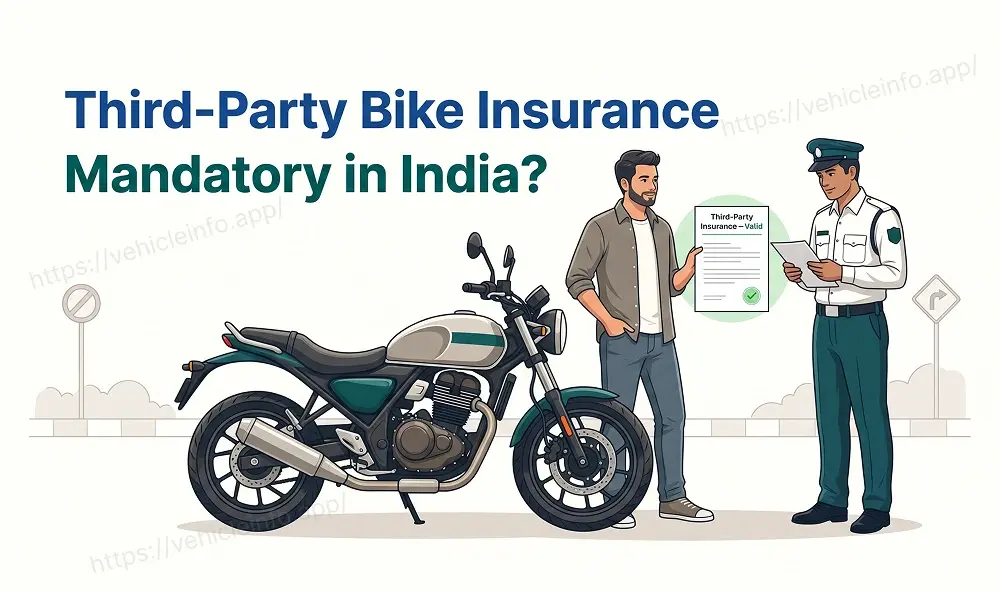
If you have ever wondered whether third-party bike insurance is mandatory in India, or whether it is one of those rules that sounds official but rarely gets enforced in practice, the answer is simple. It is a firm legal requirement, written directly into central law, with a specific penalty attached and an enforcement system that increasingly checks compliance automatically. This guide goes through the exact legal text, the current premium rates, and a few nuances about long-term policies that most people often skip entirely.
Legal Mandate for Two-Wheeler Third-Party Insurance in India
Two wheeler third party insurance mandatory status comes from a single, unambiguous source: Sections 146 and 147 of the Motor Vehicle Act, 1983, a central legislation that applies identically across every state, making no distinction based on engine size, vehicle age, or how often the bike is actually ridden.
The rule exists for a simple, yet valid reason, and understanding the MV Act bike insurance rationale helps explain why the requirement is so strictly enforced. Road accidents happen, and without a mandatory insurance system, injured third parties would have no reliable way to receive compensation beyond the personal finances of whoever caused the accident. Making third-party cover compulsory shifts that responsibility onto a regulated insurance system rather than leaving victims dependent on an individual rider's ability to pay.
Section 146 and Section 147, Motor Vehicles Act 1988: The Exact Text
Section 146 states that no person can use a motor vehicle in a public place unless there is a policy of insurance in force that complies with the requirements of the Act. This is the provision that actually creates the third party bike insurance law that riders are bound by.
Section 147 then sets out what that policy must actually cover. It requires the policy to protect against liability for death or bodily injury to any person and for damage to third-party property, subject to defined limits. Together, these two sections form the complete legal basis: Section 146 says you must have cover, and Section 147 defines what that cover has to include at a minimum.
What Third-Party Bike Insurance Covers by Law
Under Section 147, mandatory bike insurance in India requires two specific categories of protection:
- Death or bodily injury to a third party: This has no upper limit under the law. Compensation is determined by the Motor Accident Claims Tribunal based on factors like the victim's age, income, and dependents, and can run into lakhs of rupees for serious cases.
- Third-party property damage: This is capped, currently at Rs 7.5 lakh per claim under the standard policy terms. Damage beyond that ceiling becomes the rider's personal liability.
What this cover explicitly does not include is any protection for the bike itself. Damage to your own vehicle, whether from an accident, theft, or fire, falls outside third-party cover entirely and requires a separate own-damage or comprehensive policy.
IRDAI Third-Party Premium Rates for Two-Wheelers 2024-25
Engine Capacity Slabs
The irdai two wheeler third party premium is fixed centrally and does not vary between insurers, since third-party pricing in India is regulated rather than competitive. Under rates that have applied through recent years, the annual premium works out to roughly Rs 538 for bikes up to 75cc, Rs 714 for 75cc to 150cc, Rs 1,366 for 150cc to 350cc, and Rs 2,804 for bikes above 350cc.
5-Year Policy for New Bikes
For new two-wheelers, this same rate structure applies to a single, five-year premium rather than an annual one. The five-year figures work out to approximately Rs 2,901, Rs 3,851, Rs 7,365, and Rs 15,117 across the same four capacity slabs, respectively. IRDAI reviews these rates periodically, and a revision has been under discussion in recent notifications, so checking the current official rate before a purchase or renewal is worth doing rather than relying on figures that may shift.
The 5-Year Third-Party Rule for New Bikes: Supreme Court Order Explained
Since September 2018, every new two-wheeler sold in India has been required to carry a five-year third-party policy, purchased as a single premium at the time of registration. This did not originate as an insurer policy choice. It followed a Supreme Court direction in S. Rajaseekaran versus Union of India, a case concerned broadly with road safety, after which IRDAI mandated the long-term structure specifically to address the large number of two-wheelers that ended up uninsured simply because an annual policy lapsed and was never renewed.
The logic is straightforward. A one-year policy depends on the owner remembering to renew it every twelve months, and a meaningful share of India's uninsured vehicles came from exactly this kind of missed renewal rather than deliberate non-compliance. Locking in five years of third-party cover at the point of sale removes that renewal risk for a significant stretch of the bike's early life.
Penalty for No Third-Party Bike Insurance
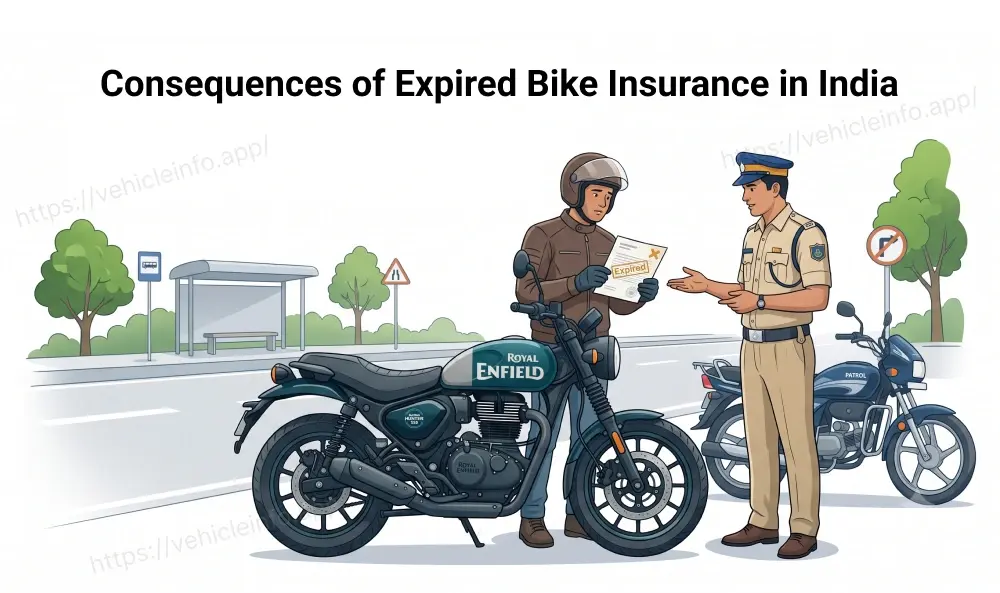
Riding without valid third-party cover, whether the policy never existed or has since lapsed, is a punishable offence under Section 196 of the Motor Vehicles Act. The penalty for no third-party bike insurance is a fine of Rs 2,000 for a first offence, rising to Rs 4,000 for a repeat offence, with imprisonment of up to three months possible in either case.
Is third party insurance compulsory for two wheelers in India regardless of how the vehicle is used? Yes. There is no exemption for occasional use, short commutes, or vehicles kept mostly parked. If the bike is present and usable on a public road, the requirement applies in full.
How Police Verify Two-Wheeler Insurance
DigiLocker
Insurance documents stored in DigiLocker are recognised as legally valid proof at a traffic stop, carrying the same legal weight as a physical certificate, following a government notification confirming digital documents satisfy the requirement.
mParivahan App
The mParivahan app offers similar recognition, and beyond just displaying your own document, it also lets an officer cross-check a registration number directly against VAHAN's insurance records, which draw from insurer-reported data rather than anything the rider presents personally.
Can Long-Term Policies Go Invalid Early?
A five-year third-party policy is not entirely immune to problems before its term ends. A long-term policy can effectively stop protecting you in a few specific situations: if the bike is sold and ownership changes without the policy being properly endorsed to the new owner, if the original premium payment is reversed or dishonoured, or if the policy was issued based on incorrect or fraudulent information at the time of purchase.
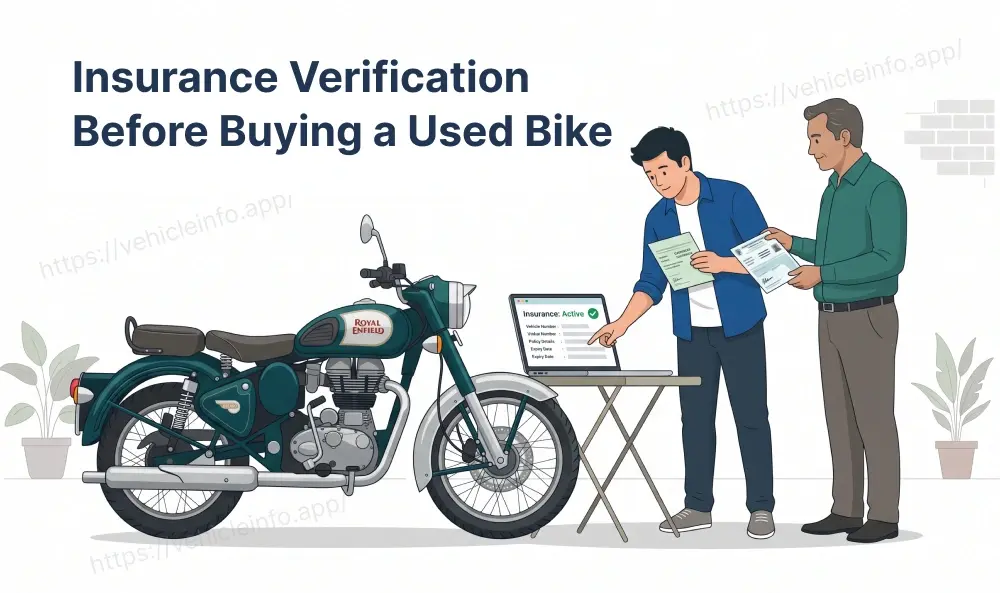
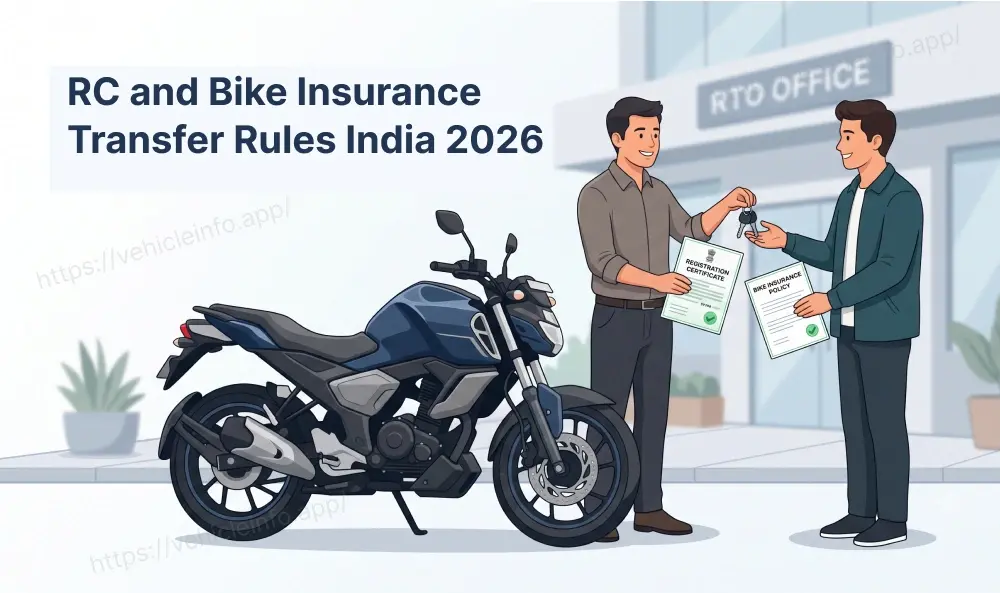
This matters particularly for used bike buyers. If you buy a two-wheeler still within its original five-year third-party term, do not assume that cover automatically continues to protect you as the new rider. Under Section 157 of the Motor Vehicles Act, the third-party portion is deemed to transfer to a new owner automatically for 14 days after a sale, but beyond that window, formal endorsement or a fresh policy becomes necessary regardless of how much of the original five-year term remains.
After the 5-Year Period: Renewal Rules
Once the initial five-year third-party term ends, the policy reverts to a standard annual renewal cycle, the same as it would for any other vehicle. Owners need to actively renew every year from that point forward, which reintroduces exactly the renewal risk the five-year rule was designed to remove during the bike's early life.
This is a detail worth marking on a calendar or setting a reminder for, since a bike that has run smoothly on autopilot for five years can catch an owner off guard the first time an annual renewal becomes their own responsibility again. The own-damage portion of a comprehensive policy, if the owner holds one, typically continues on its usual annual cycle throughout, so the change at the five-year mark is specifically about the third-party component catching up to a yearly rhythm.
Common Misconceptions About the Mandate
A few myths persist around is third party bike insurance mandatory rules, and clearing them up avoids accidental non-compliance.
- My bike is too old for this to matter: The two wheeler third party insurance mandatory requirement applies regardless of a bike's age. A vehicle from 2005 is held to the same standard as one registered last month.
- I only ride within my own neighbourhood: There is no distance-based or locality-based exemption anywhere in the third party bike insurance law. A five-minute ride to a nearby shop on a public road falls under the same requirement as a long highway trip.
- A learner's licence means the insurance requirement does not apply yet: Insurance is tied to the vehicle's registration, not the rider's licence status. A registered bike used on a public road needs valid cover regardless of who is riding it or what licence they hold.
- If my comprehensive policy is active, I do not need to think about third-party separately: This one is actually correct, since every comprehensive policy already bundles in third-party liability as a core component. The confusion usually runs the other way: riders assume a lapsed comprehensive policy is a purely financial problem, when it also means losing third-party compliance the moment it lapses.
Treating mandatory bike insurance in India as a fixed, non-negotiable part of owning a two-wheeler, rather than something to reconsider based on age, distance, or rider experience, is the simplest way to stay on the right side of the law without needing to re-litigate the question every time.
FAQs
1. Is third party bike insurance mandatory in India for every two-wheeler?
Ans: Yes, under Section 146 of the Motor Vehicles Act, every motorcycle and scooter used on a public road must carry at least valid third-party insurance, regardless of engine size or usage pattern.
2. Is third party insurance compulsory for two wheelers in India even if I rarely ride?
Ans: Yes. The requirement is tied to the vehicle being present and usable on a public road, not to how frequently it is actually ridden.
3. What is the penalty for no third party bike insurance?
Ans: Rs 2,000 for a first offence and Rs 4,000 for a repeat offence under Section 196 of the Motor Vehicles Act, with the possibility of imprisonment up to three months in either case.
4. What are the current IRDAI third party two wheeler premium 2024-25 rates?
Ans: Roughly Rs 538 annually for bikes up to 75cc, Rs 714 for 75cc to 150cc, Rs 1,366 for 150cc to 350cc, and Rs 2,804 for bikes above 350cc, before GST.
5. Why do new bikes come with a 5-year third-party policy instead of a 1-year one?
Ans: Following a Supreme Court direction in S. Rajaseekaran versus Union of India, IRDAI made a five-year term compulsory for new two-wheelers since September 2018, aimed at reducing vehicles left uninsured due to missed annual renewals.
6. Does third party bike insurance law require comprehensive cover as well?
Ans: No. The law requires only third-party liability cover at a minimum. Comprehensive insurance, which protects your own bike, is an optional addition beyond the legal requirement.
7. Can a long-term third-party policy become invalid before its five years are up?
Ans: Yes, in specific situations such as an unendorsed ownership transfer, a reversed premium payment, or fraud or misrepresentation at the time the policy was issued.
8. What happens to third-party insurance after the initial 5-year period ends?
Ans: It reverts to a standard annual renewal cycle, meaning the owner needs to actively renew the third-party cover every year from that point onward.
9. How does a traffic officer verify two wheeler third party insurance mandatory compliance during a stop?
Ans: By checking a digital copy on DigiLocker or mParivahan, or by cross-referencing the registration number directly against VAHAN's insurer-reported insurance records.
10. Does the mandatory third-party cover include damage to my own bike?
Ans: No. Third-party cover only protects against liability to others for death, injury, or property damage. Your own bike needs a separate own-damage or comprehensive policy.
11. Is the third-party property damage limit the same for every two-wheeler?
Ans: The standard property damage cap of Rs 7.5 lakh applies broadly across private vehicle categories, while death and injury liability remains unlimited regardless of vehicle type.
12. If I buy a used bike still within its 5-year third-party term, am I automatically covered?
Ans: Only for 14 days after the sale under Section 157 of the Motor Vehicles Act. Beyond that, you need the policy formally endorsed in your name or a fresh policy of your own, regardless of how much of the original term remains.