Consequences of Expired Bike Insurance in India: Fine, Claim Rejection and Legal Exposure
17 July, 2026
Bike Insurance
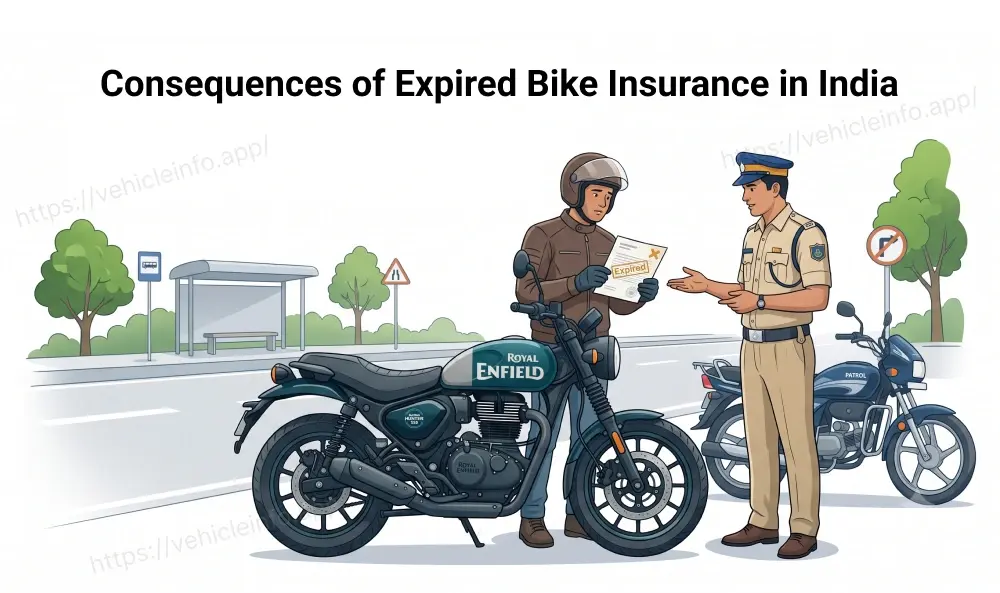
A bike insurance policy does not send a dramatic warning when it expires. It just quietly stops covering you, and everything that happens after that point looks very different from what most riders expect. Understanding the real expired bike insurance consequences, not just the headline fine, helps explain why renewing on time matters far more than it might seem on an ordinary day of riding.
Legal Status of Riding with Expired Bike Insurance
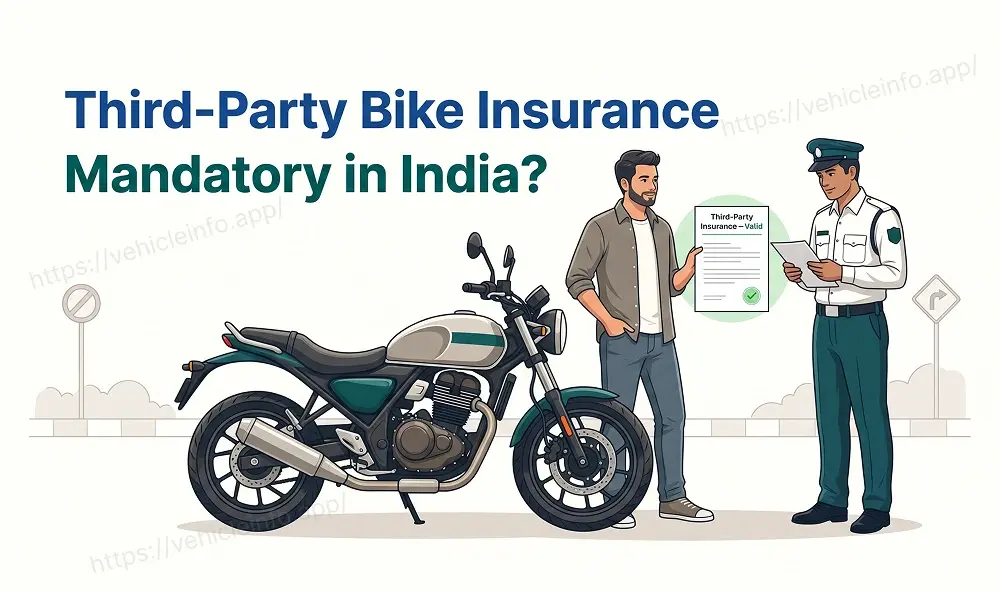
The moment your policy's validity date passes, your bike is legally uninsured, regardless of how many years you held continuous cover before that point or how careful a rider you are. Riding with expired bike insurance puts you in exactly the same legal position as someone who never bought a policy at all. The Motor Vehicles Act does not distinguish between a never-insured vehicle and a vehicle that was insured just until last week. Both are treated as non-compliant with the mandatory insurance requirement under Section 146.
This is a common misunderstanding. Riders sometimes assume a recently expired policy offers some kind of residual protection, or that insurers extend an automatic grace period during which cover technically continues. Neither is true. Cover ends exactly when the policy document says it ends.
Fine Under Section 196 MV Act for No Valid Insurance
Riding without valid insurance, including riding on an expired policy, is a punishable offence under Section 196 of the Motor Vehicles Act. For a first offence, the fine is Rs 2,000, with the possibility of imprisonment up to three months, or both. If you are caught a second time, the fine rises to Rs 4,000, again with the same possible imprisonment.
This is the expired two wheeler insurance fine most riders have heard of, but it is genuinely the smaller part of the exposure. The larger financial risk sits elsewhere, in what happens if an accident occurs during the lapse rather than in the fine itself.
Claim Rejection: Why Insurers Refuse to Pay on an Expired Policy
Insurance operates on a simple principle: cover exists only for the exact period specified in the policy document. If an accident, theft, or damage event happens after that period ends, there is no policy in force to respond to it, so a claim submitted for an incident during a lapse is refused, not because of any technicality or fine print, but because there is genuinely no active contract at the time the loss occurred.
This applies whether the lapse was one day or one year. An insurer will not partially honour a claim because the gap was short, and there is no appeals process that overrides this, since the refusal is not a discretionary decision; it is simply a reflection of the fact that no premium was paid for that period and no cover was ever purchased for it.
Full Third-Party Liability Without Insurance Cover
This is where riding with expired bike insurance becomes genuinely serious rather than just an administrative lapse. If your bike causes an accident that injures, kills, or damages the property of someone else while your policy is lapsed, you personally bear the entire cost of any compensation, with no insurer standing between you and that liability.
Third-party compensation for death or injury has no upper limit under Indian law, and is determined by the Motor Accident Claims Tribunal based on factors like the victim's age, income, and dependents. Without insurance, a rider found responsible for a serious accident could face a personal financial liability running into lakhs of rupees, a scale of exposure the mandatory insurance system exists specifically to prevent.
IRDAI Break-in Insurance Rules for Two-Wheelers
Once a policy has lapsed, renewing it is not always a simple, instant transaction. IRDAI's break-in insurance rules govern how insurers handle a policy that has already expired, and the requirements get stricter the longer the gap has lasted.
A short break-in period, typically renewed quickly, often goes through with minimal friction, sometimes just requiring a declaration that no claim-worthy incident happened during the lapse. A longer gap usually triggers a mandatory inspection of the bike before a new policy is issued, since the insurer has no way of knowing what condition the vehicle is in, or what might have happened to it, during the uncovered period.
Lapse Duration and Its Impact on the Renewal Process
Under 90 Days
A lapse within roughly this window is generally the easiest to resolve. Many insurers will renew without a physical inspection, particularly if the gap is very short, and No Claim Bonus is typically still protected if you renew before this window closes.
90 Days to 1 Year
Beyond the roughly 90-day mark, most insurers require a vehicle inspection before issuing a new policy, and any accumulated No Claim Bonus is generally lost at this point. The renewal itself is still usually possible with the same or a different insurer, but expect additional paperwork and a slightly slower process than a straightforward on-time renewal.
Over 1 Year
A lapse stretching beyond a year is typically treated less like a renewal and more like a fresh policy application. Expect a more thorough inspection, possibly photographs or a video walkaround of the bike, and a real chance that the insurer applies a higher base premium given the extended period during which the vehicle's condition was effectively unknown and unmonitored.
NCB Reset: The Financial Cost of a Lapsed Policy
No Claim Bonus is a discount, often 20 to 50 per cent depending on how many consecutive claim-free years you have built up, applied to the own-damage portion of a comprehensive policy's premium. It is one of the more valuable long-term benefits of maintaining continuous insurance, and it is also one of the more painful things to lose.
If a lapsed bike insurance policy is not renewed within the insurer's break-in window, commonly around 90 days, though this can vary by insurer, the NCB resets to zero, regardless of how many claim-free years you had accumulated before the lapse. This is a purely financial consequence separate from the legal fine, and for riders who had built up several years of NCB, it can mean paying meaningfully more for every renewal going forward, essentially starting the discount clock over from the beginning.
How to Renew a Lapsed Two-Wheeler Policy
If your policy has already expired, here is generally how the renewal process works:
- Contact your existing insurer, or shop around with others, since you are not obligated to renew with the same company
- Provide your registration certificate, ID proof, and details of your previous policy if you have them
- If required based on the lapse duration, complete a vehicle inspection, which may be done in person or, increasingly, through a self-inspection video submitted via the insurer's app
- Review the quote, which may reflect a reset NCB and possibly a slightly higher base premium if the lapse was long
- Pay the premium to activate the new policy, and keep a digital copy accessible through DigiLocker or the mParivahan app going forward
Renewing sooner rather than later generally produces a smoother, cheaper outcome at every step of this process, since both the inspection requirement and the NCB reset are tied directly to how long the two wheeler insurance lapse has lasted. Thinking through the full expired bike insurance consequences ahead of time, rather than after a lapse has already happened, is really what makes on-time renewal worth prioritising.
Inspection Before Renewal: What the Insurer Checks
When an inspection is required, whether in person or through a self-submitted video, insurers are generally looking for a consistent set of things: visible body damage, the condition of tyres and brakes, whether the chassis and engine numbers match the registration documents, and any signs of unreported prior damage or unauthorised modification.
Pre-existing damage found during this inspection is typically excluded from the new policy's own-damage cover, since the point of the inspection is to establish the bike's condition at the start of the new policy period, not to retroactively cover anything that happened during the uninsured gap. This is a good reason to be upfront and accurate during the inspection process rather than attempting to gloss over existing damage, since a dispute at claim time over undisclosed pre-existing damage is a far worse outcome than a slightly awkward inspection conversation upfront.
FAQs
1. What are the main expired bike insurance consequences in India?
Ans: A fine of Rs 2,000 to Rs 4,000 under Section 196 of the Motor Vehicles Act, automatic rejection of any claim for incidents during the lapse, full personal liability for third-party damage or injury, and loss of your No Claim Bonus if the two wheeler insurance lapse extends beyond the insurer's break-in window.
2. What happens if you ride bike with expired insurance and get stopped by the police?
Ans: You can be fined Rs 2,000 for a first offence or Rs 4,000 for a repeat offence, with the possibility of imprisonment up to three months in either case, under Section 196 of the Motor Vehicles Act.
3. What happens if bike insurance expires India-wide? Does the rule vary by state?
Ans: No. Since the requirement comes from the central Motor Vehicles Act, the consequences are identical everywhere in the country, regardless of which state the bike is registered in.
4. What is the bike insurance lapse penalty India imposes if I am in an accident during the gap?
Ans: Beyond the fine, you become personally liable for any compensation owed to a third party, since no insurer covers a claim during a lapse. There is no cap on this personal liability for death or injury claims.
5. How long can two wheeler insurance lapse before I lose my No Claim Bonus?
Ans: Typically around 90 days, though this window can vary slightly by insurer. Renewing before that two wheeler insurance lapse window closes generally preserves your accumulated NCB.
6. Does a short, accidental lapse of a few days still count as expired insurance?
Ans: Yes. There is no grace period that extends actual coverage. Even a one-day lapse means you are legally uninsured, and any incident during that gap would not be covered.
7. Will my insurer refuse to renew a lapsed bike insurance policy?
Ans: Generally, no, though a longer lapse may require an inspection and could come with a higher premium or a reset NCB. Outright refusal to renew is uncommon for a standard lapse.
8. Can I switch insurers when renewing a lapsed policy, or must I stay with the same one?
Ans: You can switch. There is no requirement to renew with your previous insurer, and comparing quotes is often worthwhile, particularly if a long lapse means starting fresh regardless of which insurer you choose.
9. Does an inspection after a lapse cover pre-existing damage on my bike?
Ans: No. Damage identified during a pre-renewal inspection is typically excluded from the new policy's own-damage cover, since the inspection is meant to record the bike's condition at the start of the new term.
10. Is there any way to avoid the legal consequences of expired two wheeler insurance in India while I arrange renewal?
Ans: Not really. The safest approach is to avoid riding the bike at all until a new policy is active, since the legal exposure applies from the moment the previous policy expired, regardless of your intent to renew soon.