Is Third-Party Car Insurance Mandatory in India? Law, IRDAI Rules and Minimum Cover
16 July, 2026
Car Insurance
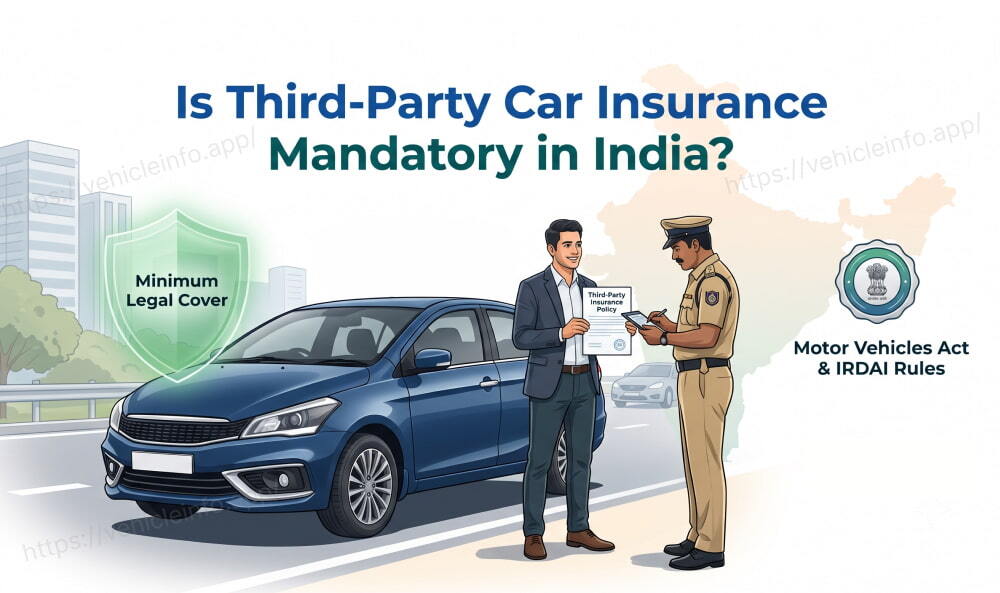
Every car owner in India eventually asks the same question. Is third party car insurance mandatory, or just a good idea? The answer is unambiguous. It is a legal requirement, not a personal choice, and driving without it puts you outside the law from the moment your car touches a public road. This guide explains exactly why, what the cover includes, what it costs, and how the rule is enforced.
The Legal Mandate: Why Third-Party Insurance Is Not Optional
Third party car insurance mandatory India rules trace back to a single, clear provision: Section 146 of the Motor Vehicles Act, 1988. It states that no motor vehicle can be used in a public place unless it is covered by a valid insurance policy meeting the requirements of the Act. Section 147 then spells out exactly what that policy has to cover at a minimum.
This is a central law, so it applies the same way in every state. There is no version of car ownership in India where third-party cover is optional. Even if you never plan to drive your car outside your own colony, the moment it is on a public road, whether that is a highway or the street outside your house, the third party insurance legal requirement kicks in.
The reasoning behind this is straightforward. Road accidents happen, and without a legal guarantee of compensation, victims would be entirely dependent on the driver's personal ability to pay. Making insurance compulsory shifts that burden onto a regulated financial system instead of leaving injured people to chase an individual for money they may not have.
What Third-Party Car Insurance Covers Under IRDAI Rules
The Insurance Regulatory and Development Authority of India (IRDAI) sets the baseline for what every third-party policy must include, regardless of which insurer issues it.
Death or Injury to Third Party
If your car causes an accident that injures or kills someone who is not the policyholder, third-party cover pays for the resulting compensation. This includes pedestrians, other drivers, cyclists, and passengers in other vehicles.
Third-Party Property Damage
If your car damages someone else's vehicle, wall, shopfront, or other property, the policy compensates for that damage as well, subject to a defined ceiling.
Unlimited Liability for Death/Injury
Compensation for death or bodily injury has no upper limit under the law. The amount is decided by the Motor Accidents Claims Tribunal based on factors like the victim's age, income, and dependents, and it can run into lakhs or even crores of rupees in serious cases. Property damage, by contrast, is capped. The current statutory limit for third-party property damage is Rs 7.5 lakh per claim. Anything beyond that ceiling becomes the vehicle owner's personal liability.
What Third-Party Insurance Does NOT Cover
Understanding the limits matters just as much as understanding the mandate. A third-party only policy does not pay for:
- Damage to your own car from an accident
- Theft of your own vehicle
- Fire, flood, or natural disaster damage to your own car
- Your own medical expenses beyond the compulsory personal accident cover, which is typically capped at around Rs 15 lakh for the owner-driver
If you want protection for your own vehicle, you need a comprehensive policy, which bundles third-party liability together with own-damage cover. The third party cover alone satisfies the mandatory third party cover requirement under law, but it leaves your own car financially unprotected.
IRDAI-Set Premium Rates for Third-Party Car Insurance
One thing that makes third-party pricing unusual in India is that you cannot shop around for a better rate on this portion of your policy. The IRDAI third party premium is fixed centrally based on engine cubic capacity, and every insurer charges the identical base rate.
For private cars, the annual third-party premium rates work out to roughly Rs 2,094 for cars below 1000cc, Rs 3,416 for cars between 1000cc and 1500cc, and Rs 7,897 for cars above 1500cc.
Add 18 per cent GST and, for higher-cc cars with additional compulsory covers factored in, the total a buyer sees on their renewal notice can land in the range of Rs. 12 to 14,000, particularly for larger cars or when bundled with a multi-year premium.
These rates have stayed largely unchanged since 2019, though IRDAI and the Ministry of Road Transport and Highways have been discussing a revision, potentially in the range of 10 to 25 per cent, depending on vehicle category. However, any such change would be formally notified before taking effect, so it is worth checking the latest IRDAI notification at the time you renew rather than relying on older figures.
Comprehensive Insurance Does Not Replace Third-Party: The Legal Truth
A common misconception is that comprehensive insurance is somehow a separate, optional upgrade sitting alongside third-party cover. In reality, every comprehensive policy already includes third-party liability as a built-in component. You are not choosing between the two. You are choosing between third-party alone, which is the bare legal minimum, and comprehensive, which includes that same third-party protection plus own-damage cover on top.
What you cannot legally do is have only own-damage cover without third-party liability. No insurer in India offers a standalone own-damage-only policy for a vehicle that lacks third-party cover, precisely because that would leave the vehicle non-compliant with Section 146.
How Third-Party Claims Are Settled: Motor Accident Claims Tribunal
When a third-party claim arises from an accident, it is not settled the way a typical insurance claim is. Instead, it goes through the Motor Accident Claims Tribunal (MACT), a specialised body set up under the Motor Vehicles Act specifically to adjudicate these cases.
- The general process looks like this:
- An FIR is filed for the accident
- The affected party, or their legal heirs in the case of death, files a claim application before the MACT
- The tribunal examines the facts, medical records, and financial dependents of the victim
- Compensation is determined based on established legal principles, factoring in age, income, and future earning potential for injury or death claims
The insurer is required to pay the awarded amount, since it was made a party to the proceedings as the insurer of the vehicle involved
This structure ensures that even years after an accident, if a case is still working through the tribunal, the victim has a defined legal path to compensation rather than a private negotiation with the vehicle owner.
Penalty for Having No Third-Party Cover
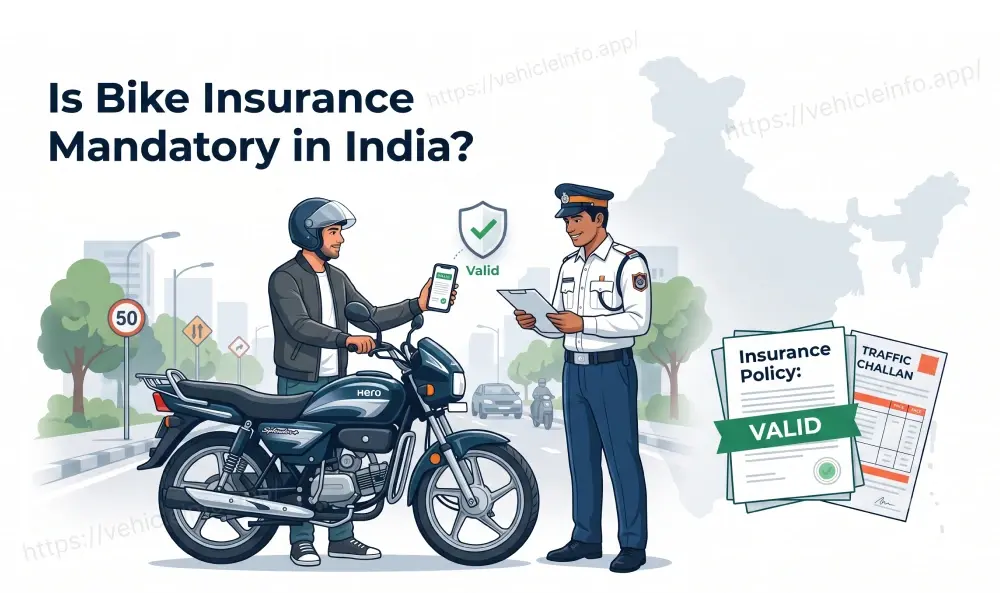
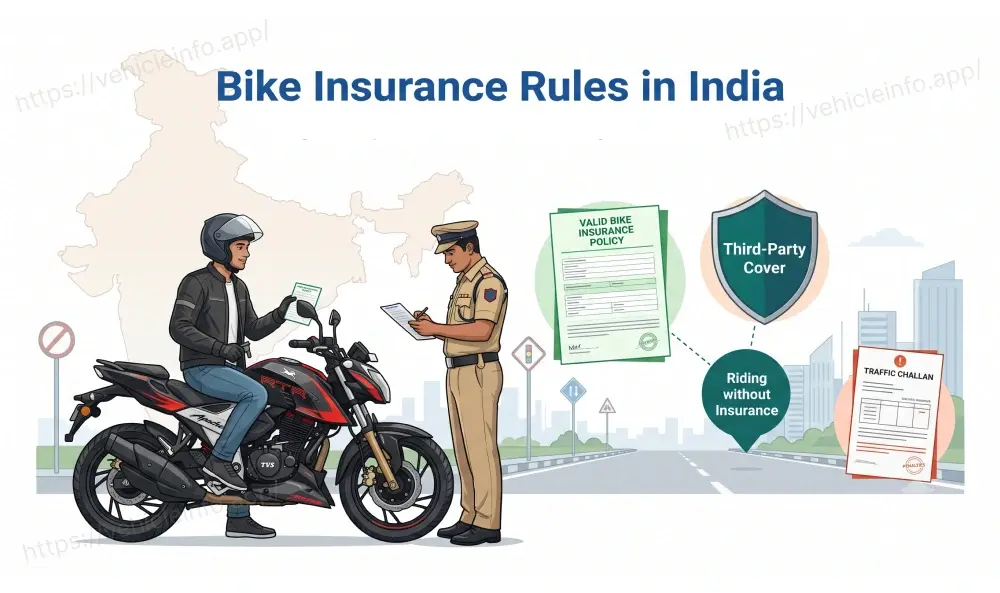
Driving without valid third-party insurance is a punishable offence under Section 196 of the Motor Vehicles Act. For a first offence, the penalty is a fine of Rs 2,000, imprisonment of up to three months, or both. A repeat offence raises the fine to Rs 4,000, again with the possibility of imprisonment.
Beyond the fine, an uninsured driver loses the financial protection the mandate was designed to provide. If your car causes an accident and you have no valid policy, you personally bear the entire cost of any compensation awarded by the tribunal, with no insurer standing between you and that liability.
Long-Term Third-Party Policies: The 3-Year Car Rule
Since September 2018, IRDAI has required that new private cars be sold with a long-term third-party policy covering three years, paid as a single upfront premium at the time of purchase. This followed a Supreme Court direction aimed at reducing the number of vehicles that end up uninsured simply because an owner forgot to renew a one-year policy.
Under current rates, the three-year single premium for a new car works out to roughly Rs 6,521 for cars below 1000cc, Rs 10,640 for cars between 1000cc and 1500cc, and Rs 24,596 for cars above 1500cc. The own-damage component of a comprehensive policy, if you choose one, is usually still renewed annually even while the third-party portion runs on its three-year cycle.
How to Verify Your Third-Party Status Online
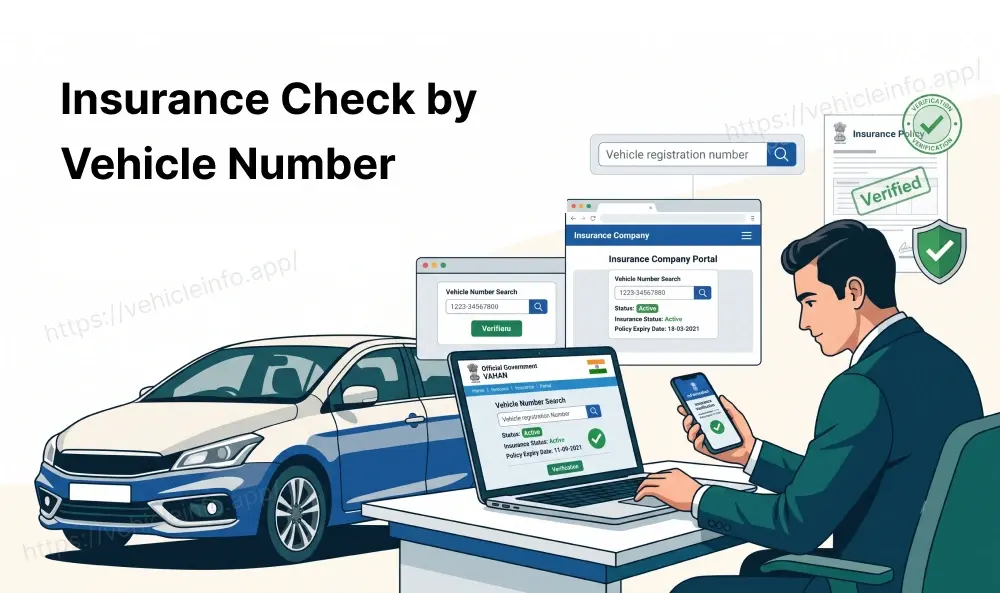
If you are ever unsure whether your third-party policy is active, or you want to confirm a used car's insurance before buying it, you can check directly using the vehicle's registration number.
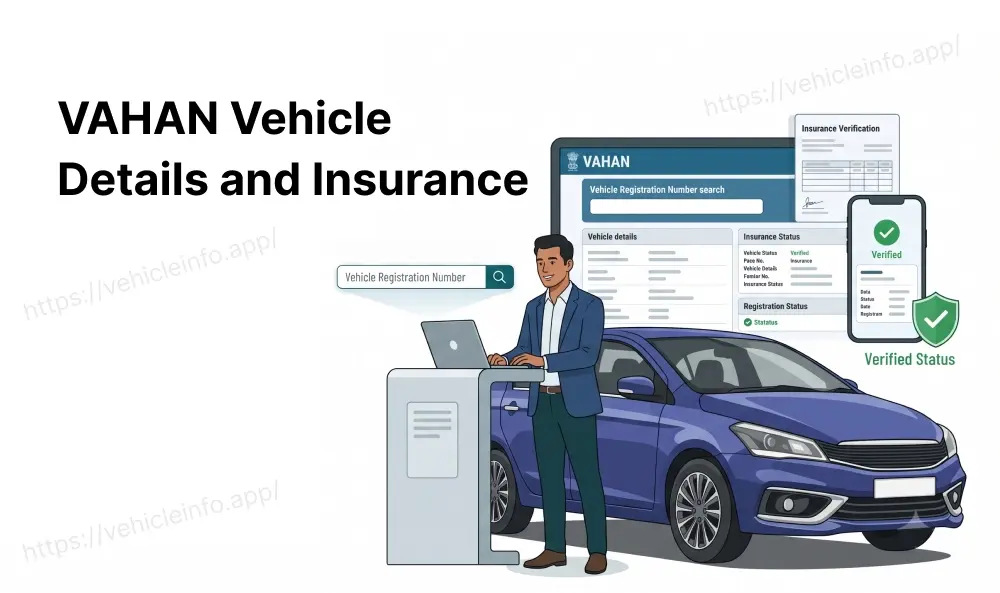
- Go to the VAHAN citizen services portal or open the mParivahan app
- Enter the registration number
- Complete the CAPTCHA on the website version
- Review the insurance section, which shows the insurer's name and the policy's validity window
Since insurers feed data into VAHAN directly, this is generally a reliable way to confirm compliance without needing to call the insurance company. Just be aware that very recent purchases or renewals can take a few days to appear.
Minimum Legal Compliance vs Adequate Financial Protection
For those wondering what the law requires in terms of car insurance, the answer is a third-party policy and nothing more. But for those wondering what actually protects you financially, the answer is usually broader than the legal minimum.
Third-party insurance keeps you compliant and shields you from unlimited liability toward others. It does nothing for your own car. If your vehicle is new, expensive, or your only means of transport, the gap between legal compliance and real financial protection can be significant, since a single accident could leave you paying for your own repairs entirely out of pocket while still being fully legal on paper. Deciding between third-party only and comprehensive cover is really a decision about how much of that gap you are comfortable carrying yourself.
Common Misconceptions About the Mandate
Because mandatory third party car insurance rules in India have existed for decades, a few myths have settled in that are worth clearing up directly.
Myth: My car is old, so third-party insurance does not matter as much.
The age of the vehicle has no bearing on the mandate. A fifteen-year-old sedan is held to the exact same third party insurance legal requirement as a car bought yesterday. What changes with age is whether comprehensive cover makes financial sense, not whether third-party cover is legally required.
Myth: I have a driver, so the insurance responsibility is theirs, not mine.
The obligation to keep the vehicle insured sits with the registered owner, regardless of who is behind the wheel at any given time. If your car is being driven by a hired driver, a family member, or a friend, the third party insurance legal requirement still applies to the vehicle itself, and any lapse in cover is ultimately the owner's liability.
Myth: If I only drive occasionally, is third party car insurance mandatory even then?
Yes. There is no exemption for low mileage or infrequent use. The requirement is tied to the vehicle being present and usable on a public road, not to how often you actually drive it.
Myth: A learner's permit driver does not need the car to be insured.
Insurance is tied to the vehicle's registration, not the licence status of whoever is driving. A car being used for practice driving on public roads still needs valid third-party cover in force.
Clearing up these assumptions matters because none of them offer any legal protection if a vehicle is found uninsured. The safest approach is simply to treat the third party car insurance mandatory India rule as a fixed cost of car ownership, the same way you would treat road tax or registration.
FAQs
1. Is third party car insurance mandatory in India for every vehicle?
Ans: Yes, every motor vehicle used on a public road, including private cars, must carry at least a valid third-party insurance policy under Section 146 of the Motor Vehicles Act.
2. Why is third party car insurance compulsory in India rather than left to individual choice?
Ans: It is compulsory because it guarantees compensation to accident victims regardless of whether the at-fault driver can personally afford to pay. Without a legal mandate, injured third parties would have no reliable path to compensation.
3. What does mandatory third party car insurance cover exactly?
Ans: It covers death or injury to third parties with no upper limit and third-party property damage up to Rs 7.5 lakh. It does not cover your own car or your own injuries beyond the compulsory personal accident benefit.
4. What are the IRDAI third party car insurance premium 2024-25 rates for private cars?
Ans: Roughly Rs 2,094 annually for cars below 1000cc, Rs 3,416 for cars between 1000cc and 1500cc, and Rs 7,897 for cars above 1500cc, before GST and any additional covers.
5. Can I legally drive with only comprehensive insurance and no third-party cover?
Ans: This is not a real choice to make, since every comprehensive policy already includes third-party liability as a core, non-removable component.
6. What is the penalty for having no third-party cover?
Ans: A fine of Rs 2,000 for a first offence, or Rs 4,000 for a repeat offence, along with the possibility of imprisonment up to three months under Section 196 of the Motor Vehicles Act.
7. Why is a new car's third-party policy valid for three years?
Ans: Since September 2018, IRDAI has required new private cars to be sold with a mandatory three-year third-party policy, aimed at preventing coverage gaps from missed annual renewals.
8. How do I check if my third-party insurance is currently valid?
Ans: Search your car's registration number on the VAHAN portal or the mParivahan app. The result shows your insurer and the policy's validity dates.
9. Is the third-party property damage cap the same for every vehicle type?
Ans: The Rs 7.5 lakh property damage cap applies broadly to standard private vehicles under current rules. Death and injury liability remain unlimited across categories.
10. Can I be denied a third-party claim if I was not at fault?
Ans: Third-party insurance covers claims made against you when your vehicle is responsible for the accident. If another driver is at fault, the claim against them would come from their own third-party policy, not yours.
11. Does third-party insurance cover a driver other than the owner?
Ans: Generally, yes, as long as the person driving holds a valid licence and is using the vehicle with the owner's permission, since the policy is tied to the vehicle rather than a single named driver.
12. Will IRDAI's proposed premium hike change the third party insurance legal requirement itself?
Ans: No. A premium revision changes what you pay, not whether the cover is mandatory. The legal requirement to carry third-party insurance stays in place regardless of rate changes.