Is Bike Insurance Mandatory in India? Motor Vehicles Act Rules, Fines and Validity
16 July, 2026
Bike Insurance
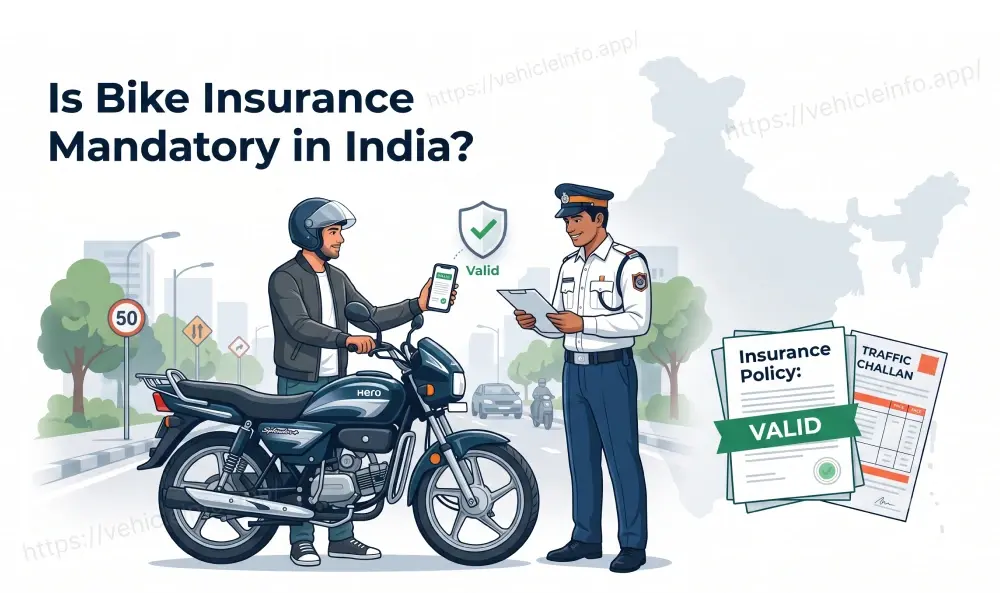
If you are a bike owner in India, chances are that you must have wondered whether bike insurance is mandatory in India, or is it one of those rules people assume applies but rarely gets enforced? Long answer short, it is very much mandatory, backed by a specific section of law, a defined fine structure, and an enforcement system that increasingly runs through digital records rather than a police officer flipping through your paperwork. This article walks through exactly how the rule works, how it gets enforced, and what constitutes valid proof when you are stopped by traffic enforcement personnel.
Section 146, Motor Vehicles Act 1988: The Bike Insurance Mandate
The legal basis for two wheeler insurance mandatory rules comes from Section 146 of the Motor Vehicles Act, 1988. It states plainly that no person shall use, or allow someone else to use, a motor vehicle in a public place unless a valid insurance policy is in force for it. This section makes no distinction between a car, a truck, and a two-wheeler. A scooter used for a short commute is covered by the exact same Motor Vehicles Act bike insurance requirement as a motorcycle used for a long highway ride.
This is a central law, which means the requirement is identical across every state. There is no version of two-wheeler ownership anywhere in India where insurance becomes optional because of local rules or the type of road you typically ride on.
Minimum Legal Cover for Two-Wheelers: Third-Party Explained
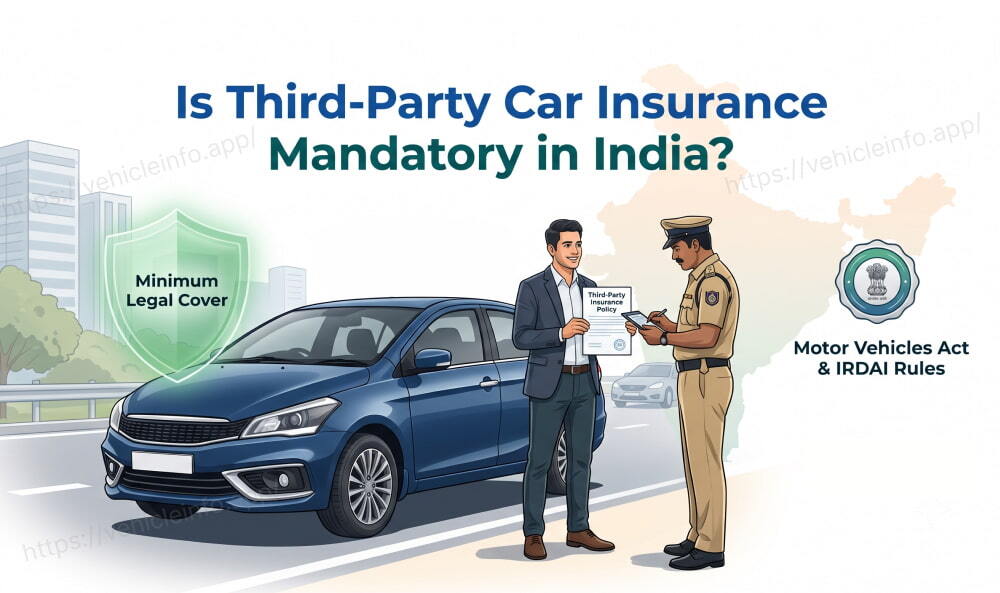
The bike insurance legal requirement does not force you to buy the most expensive policy available. It sets a floor, not a ceiling. That floor is third-party liability cover, which pays for injury, death, or property damage your bike causes to someone else.
Third-party insurance does not pay for damage to your own bike. If you want that protection, you need to add own-damage cover, which, combined with third-party makes up a comprehensive policy. But from a strictly legal standpoint, third party two wheeler insurance mandatory rules are satisfied the moment you hold a valid third-party policy, whether standalone or bundled inside a comprehensive plan.
Penalty for Riding Without Insurance
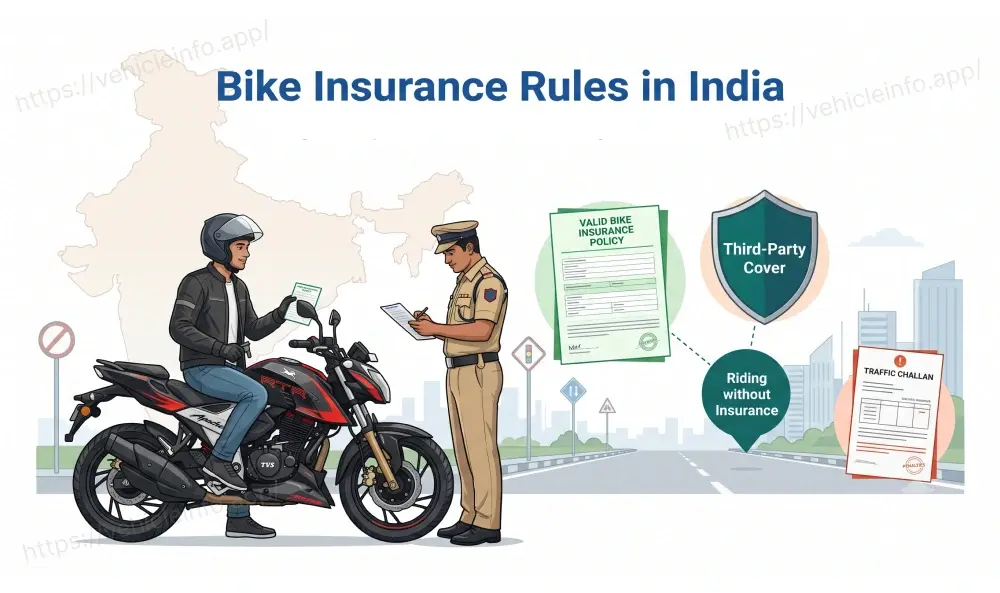
Riding a bike without valid cover is a punishable offence under Section 196 of the Motor Vehicles Act, and the structure of the penalty for no bike insurance escalates if the violation repeats.
First Offence Fine
For a first violation, you face a fine of Rs 2,000. This is the figure most riders are familiar with, and it is typically settled through the e-challan system rather than a court appearance.
Subsequent Offences
If you are caught riding uninsured a second time, the fine increases to Rs 4,000. The higher amount reflects that a repeat violation looks less like an accidental lapse and more like an ongoing failure to maintain cover.
Imprisonment Provision
Both the first and subsequent offences carry the possibility of imprisonment for up to three months, in addition to or instead of the fine, depending on how the case is handled. In practice, imprisonment is rare for a straightforward no-insurance violation and is more commonly reserved for cases tied to a serious accident where the absence of insurance compounds other legal issues.
How Police Verify Bike Insurance During Spot Checks
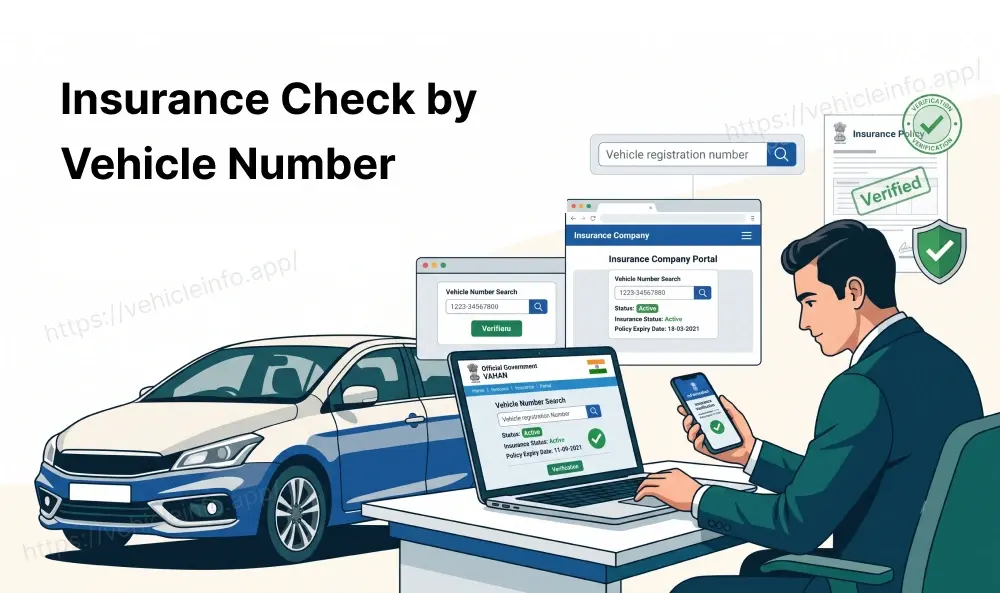
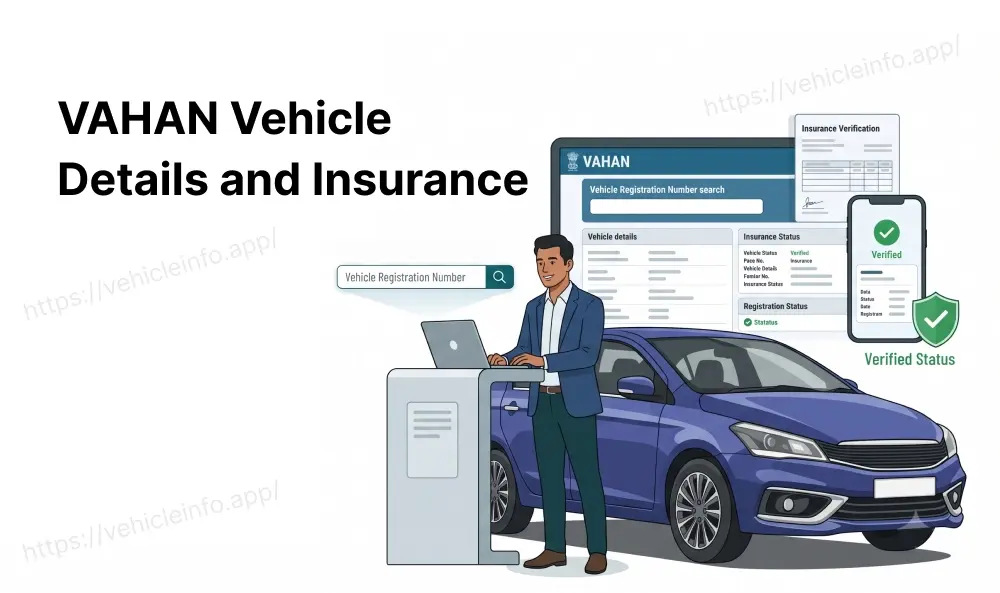
Traffic police no longer rely purely on a physical document during a spot check. When an officer stops a rider, verification typically happens in one of a few ways: checking a physical insurance certificate if the rider carries one, checking a digital copy shown on a phone, or cross-referencing the vehicle's registration number against the VAHAN database directly.
This last method matters because it means your insurance status is, in effect, always on record the moment your insurer updates it, regardless of what you happen to be carrying with you that day. If your policy is genuinely active but you left your documents at home, an officer checking VAHAN can usually confirm your compliance without you needing to produce anything physical.
DigiLocker and mParivahan: Digital Insurance as Legal Proof
A frequent point of confusion is whether a digital copy of your insurance actually counts during enforcement or whether you technically need the original paper certificate. The government has settled this question directly. Insurance documents stored in DigiLocker or visible through the mParivahan app carry the same legal standing as the physical original, under a notification recognising digital documents as valid proof at traffic stops.
This is genuinely useful in practice. Instead of keeping a paper folder in your bike's storage compartment, you can link your policy to DigiLocker once and have it accessible on your phone indefinitely, including after a renewal, as long as the updated document is uploaded.
E-Challan for No-Insurance on Two-Wheelers
When a rider is found without valid insurance, the violation is usually recorded as an e-challan tied to the vehicle's registration number. This challan can be issued during a manual spot check or, increasingly, generated automatically when enforcement systems cross-check number plates against the VAHAN insurance database and find no active policy.
Once issued, the challan can typically be paid online through the Parivahan portal or the relevant state traffic police portal. Ignoring an unpaid no-insurance challan does not make it disappear. Unpaid challans can accumulate, and in some states, a pattern of unpaid violations can complicate other RTO services, such as renewals or ownership transfers, until the outstanding amount is cleared.
Does Zero Dep or Comprehensive Replace Third-Party Legally?
Riders sometimes assume that upgrading to a comprehensive policy with add-ons like Zero Depreciation somehow sits apart from the legal requirement, as if third-party and comprehensive were two separate boxes to tick. They are not. A comprehensive policy already includes third-party liability as a built-in, non-removable component. Add-ons like Zero Depreciation apply only to the own-damage portion of the policy and have no bearing on third-party compliance one way or the other.
In other words, if your comprehensive policy is active, you are automatically meeting the third-party mandate too. The only scenario where this breaks down is if the policy itself lapses entirely, in which case you lose both the own-damage protection and the third-party compliance at the same moment.
Long-Term Bike Insurance and the 5-Year Third-Party Rule
If your two-wheeler was purchased new after September 2018, its third-party cover is very likely a five-year policy rather than an annual one. This followed a Supreme Court direction in S. Rajaseekaran v. Union of India, after which IRDAI made a five-year long-term third-party policy compulsory for new two-wheelers, paid as a single premium at purchase.
The intent behind this rule was straightforward: a large share of uninsured bikes on Indian roads were not deliberately uninsured; they simply had an annual policy that the owner forgot to renew. Locking in five years of third-party cover at the point of sale removes that annual renewal risk for a meaningful chunk of a bike's early life, even though the own-damage portion of a comprehensive package, if chosen, is usually still renewed every year.
IRDAI-Regulated Premiums for Two-Wheeler Third-Party Cover
Third-party premiums for two-wheelers are fixed by IRDAI based on engine cubic capacity, and the rate is identical across every insurer. Under the rates that have applied for several years, the annual premium works out to roughly Rs 538 for bikes up to 75cc, Rs 714 for 75cc to 150cc, Rs 1,366 for 150cc to 350cc, and Rs 2,804 for bikes above 350cc.
For the five-year long-term policy applied to new bikes, the single premium works out to approximately Rs 2,901, Rs 3,851, Rs 7,365, and Rs 15,117 across the same four engine capacity slabs, respectively. Electric two-wheelers are priced differently, based on motor power in kilowatts rather than cc, and typically carry a discount of around 15 per cent compared to an equivalent petrol model.
How Expired Insurance Exposes You to Legal Liability
The moment a bike's third-party policy expires, the rider is legally uninsured, even if the lapse happened by accident or the owner simply forgot the renewal date. This has two separate consequences. First, the Section 196 penalty applies immediately if the rider is caught, regardless of intent. Second, and often more serious, is the financial exposure: if an accident happens while the policy is lapsed, there is no insurer standing behind the rider, meaning any compensation awarded to a third party through the Motor Accident Claims Tribunal becomes the rider's personal financial responsibility, with no cap.
This is worth taking seriously even for riders who consider themselves careful. Liability in a serious accident is not limited to what a rider can comfortably afford, and an expired policy removes the one layer of protection the bike insurance legal requirement was designed to guarantee.
Renewing Lapsed Bike Insurance: What the Rules Say
If your bike insurance has already expired, renewing is still possible, but the process depends on how long the lapse has been. A short lapse, typically renewed within a similar window as before, usually goes through with minimal friction. A longer lapse often triggers a break-in inspection, where the insurer requires a physical check of the bike's condition before issuing a new policy, since the risk profile of an uninspected vehicle after a gap is harder to assess.
If you had built up a No Claim Bonus on a previous comprehensive policy, a lapse that extends beyond a certain window, commonly around 90 days, can also put that discount at risk. The practical takeaway is that renewing before expiry, rather than after, avoids both the legal exposure of riding uninsured and the added friction of a break-in inspection or lost NCB.
FAQs
1. Is bike insurance mandatory in India for every type of two-wheeler?
Ans: Yes. Motorcycles, scooters, and mopeds used on public roads all fall under the same Section 146 requirement, regardless of engine size or usage pattern.
2. Is two wheeler insurance mandatory even if I only ride occasionally?
Ans: Yes. The mandate is tied to the vehicle being used on a public road, not to how frequently it is ridden. Occasional use does not create an exemption.
3. Is two wheeler insurance compulsory in India across all states, or does it vary by location?
Ans: It is compulsory everywhere in the country. The requirement comes from central law, so it applies identically whether you live in a metro city or a small town.
4. What is the bike insurance legal requirement in terms of minimum cover?
Ans: Third-party liability insurance is the legal minimum. Comprehensive cover, which adds protection for your own bike, goes beyond what the law strictly requires.
5. What is the fine for riding bike without insurance in India?
Ans: Rs 2,000 for a first offence, rising to Rs 4,000 for a repeat offence, with the possibility of imprisonment up to three months in either case.
6. What insurance is required for bike in India if I just bought it new?
Ans: New two-wheelers purchased after September 2018 are typically sold with a mandatory five-year third-party policy, satisfying the legal requirement for that entire period without an annual renewal for the third-party portion.
7. Does a digital insurance copy on my phone count as valid proof?
Ans: Yes. Copies stored in DigiLocker or shown through the mParivahan app are recognised as legally valid, carrying the same weight as a physical certificate.
8. How is a no-insurance violation recorded these days?
Ans: Typically, an e-challan is tied to your registration number, either issued during a manual check or generated automatically when enforcement systems cross-check number plates against VAHAN records.
9. Does buying Zero Depreciation cover mean I no longer need third-party insurance?
Ans: No. Zero Depreciation is an add-on to the own-damage portion of a comprehensive policy. Third-party liability remains a separate, mandatory component regardless of which add-ons you choose.
10. What happens if my bike insurance expires and I get into an accident before renewing?
Ans: You become personally liable for any compensation owed to a third party, since no insurer is covering the claim during a lapse. There is no cap on this personal liability for death or injury claims.
11. Does renewing bike insurance after a long lapse require anything extra?
Ans: Often yes. A lapse beyond a certain period, commonly around 90 days, can trigger a break-in inspection of the bike and may affect any accumulated No Claim Bonus.
12. Are electric two-wheelers held to the same insurance mandate as petrol bikes?
Ans: Yes. The requirement to carry third-party insurance is identical. Only the premium calculation method differs, since electric bikes are priced by motor power rather than engine cc.