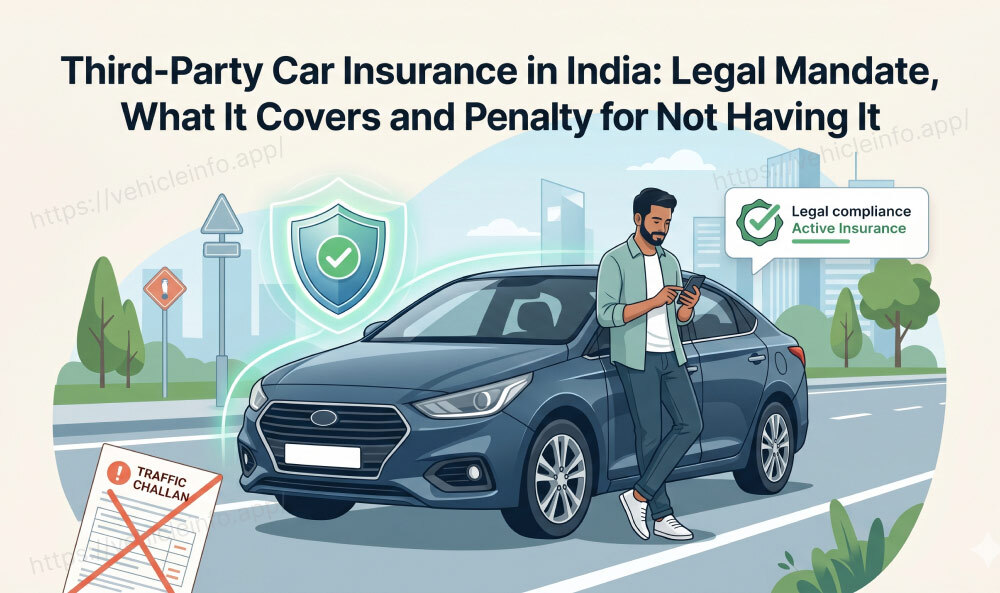
Third-Party Car Insurance in India: Legal Mandate, What It Covers and Penalty for Not Having It
24 June, 2026
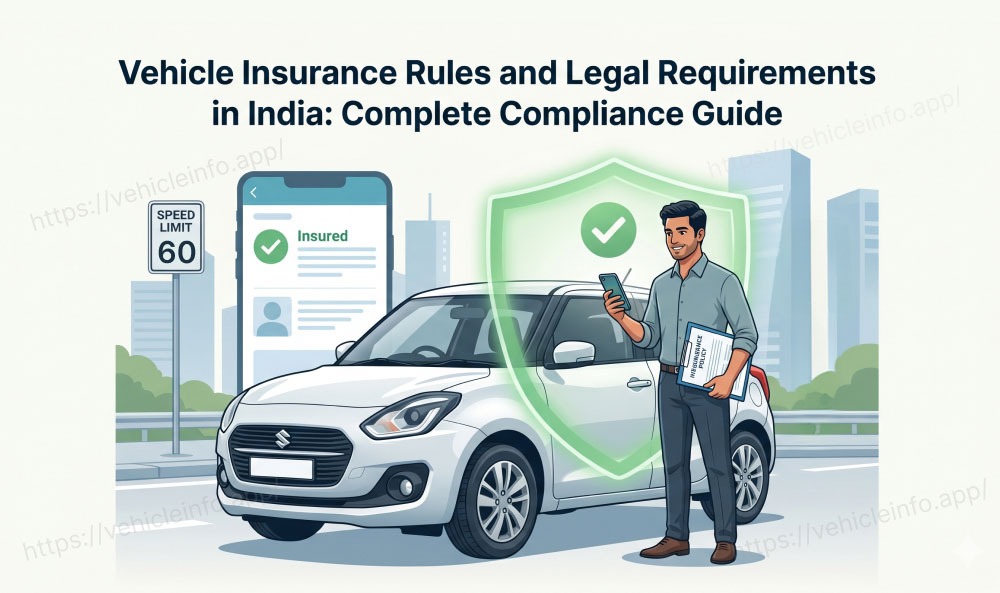
If you own a car in India, third party car insurance is not a choice you weigh. It is a duty the law places on you the moment your car touches a public road. Yet most owners buy it without understanding what it actually does, why it is compulsory, or what happens if they skip it. This guide clears that up completely.
In this article, we decode mandatory car insurance and talk about it in a legal context, which is largely the most relevant aspect. Insurers generally promote third-party insurance as an economical way of fulfilling a component of vehicle ownership. This is, however, largely misleading, as the purpose of this insurance is to provide financial protection from loss as a result of an auto accident to a person who may suffer damages as a result of the actions of the insured party. Understanding the legal requirement behind mandatory third-party insurance will change your perception of the policy you keep in your glovebox. This guide will provide you with a complete guide about all aspects of third party car insurance as well as the consequences of driving an uninsured motor vehicle. Read on to know what the cover includes, what it leaves out, what it costs under regulator-fixed rates, how a claim against it works through the courts, and the exact penalty for driving without it.
Third-Party Car Insurance: The Legal Definition
A Third party car insurance is a policy that covers your legal liability for harm your car causes to other people and their property. The three parties are simple to identify. You are the first party. Your insurer is the second party. Anyone else your car injures or whose property it damages is the third party, and this cover protects them.
The defining feature of this cover is what it does not do. It does not pay for damage to your own car. If you crash and your own vehicle is wrecked, this policy pays nothing toward its repair. Its entire purpose is to make sure that when your car harms someone else, that victim can be compensated even if you cannot pay from your own pocket.
This is why the law cares about it so deeply. The State is not trying to protect your car. It is trying to protect the public from the financial fallout of accidents. Mandatory third party car insurance is, at its core, a victim-protection mechanism dressed as a vehicle policy.
Why Is a TP Cover Compulsory in India?
The compulsion comes straight from the Motor Vehicles Act 1988. Two sections create the duty, and together they explain why third party car insurance in India treats this cover as non-negotiable.
Section 146 is the rule that makes a TP cover compulsory. It states that no person shall use, or allow anyone to use, a motor vehicle in a public place unless a valid policy covering third-party risk is in force. This is a flat prohibition. No valid third-party cover means no legal right to drive, full stop.
Section 147 of the act specifies the conditions necessary for an effective insurance policy to be enforceable. In order to be lawful, the third party insurance will have to include coverage for:
- Death and bodily injury suffered by a third party
- Damage to the property of a third party.
Any policies which do not describe these kinds of coverage are legally invalid, regardless of whether or not the insured has already paid for their policy. Sections 146 and 147 together form the basis of the legal minimum requirement for third-party automobile liability insurance in India.
There is also a compelling historical reason behind this law. Before the law came into force, there were accident victims who were injured due to the negligence of other individuals and were left without any money because the person causing the injury did not have sufficient money (or adequate insurance) to compensate them. After the enforcement of the mandatory TP cover rule, this injustice was done away with.
Third-Party Car Insurance Coverage
The third party car insurance coverage is specific and defined by law. It pays out in three core situations, each tied to the harm your car causes to others. Understanding the in-depth coverage of a third party policy tells you exactly what you are buying and clears the air for those wondering what does third party car insurance cover in India. Here's what a TP policy has under its coverage:
Bodily Injury or Death Liability
If your car injures or kills another person, this cover meets the compensation you are legally liable to pay. This is the most serious head of liability, because the sums awarded for death or serious injury can be very large. The cover here is what stands between you and financial ruin if your car causes a fatal or disabling accident.
Third-Party Property Damage up to Rs 7.5 Lakh
If your car damages another person's vehicle, wall, shopfront, or other property, this cover pays for it, up to a maximum of Rs 7.5 lakh. This cap is set under the regulator's framework. So if you reverse into an expensive car or damage a building, the policy covers the repair cost up to this limit. Beyond Rs 7.5 lakh for property damage, the excess would fall on you.
Unlimited Liability for Personal Injury
This is the most important point to grasp about the coverage. For death or bodily injury to a third party, the liability is unlimited. There is no cap. The compensation is decided by the Motor Accident Claims Tribunal based on factors like the victim's age, income, and dependents. The cover absorbs whatever the tribunal awards, which is why this protection is so valuable despite the policy's low price.
What It Does Not Cover
Knowing the gaps in this cover is as important as knowing what it includes. This policy is narrow by design, and several common losses fall entirely outside it:
- It does not pay for damage to your own car, whatever the cause.
- It does not cover theft of your vehicle, fire damage to it, or damage from floods and other natural events.
- It does not cover injury to yourself as the driver beyond the separate owner-driver personal accident cover.
- It does not cover property damage beyond the Rs 7.5 lakh cap.
- It does not cover damage you cause while breaking the policy conditions, such as driving without a valid licence or while intoxicated.
This narrowness is the trade-off for the low price, but it is also justified considering the specific purpose of a TP plan. Mandatory third-party car insurance keeps you legal and protects victims, but it leaves your own vehicle and many of your own losses unprotected. That gap is exactly what comprehensive cover is designed to fill, which we will compare later.
IRDAI Premium Rates for Third-Party Car Insurance 2024-25
The third party car insurance premium is not set by insurers. It is fixed by the Insurance Regulatory and Development Authority of India (IRDAI), which is why the rate is identical across every company for the same vehicle. No insurer can charge you more or less than the notified rate for your car category.
Engine Capacity Slabs
The third party car insurance premium depends on your car's engine capacity, measured in cubic centimetres. The regulator notifies the base annual rates for each slab. The indicative base rates for private cars are set out below:
| Engine Capacity | Indicative Annual Base Premium |
|---|---|
| Up to 1000cc | Rs 2,094 |
| 1000cc to 1500cc | Rs 3,416 |
| Above 1500cc | Rs 7,897 |
These are base figures notified by the regulator and are subject to revision. The amount you pay will also include 18% GST and the cost of any add-on covers you choose. Because the third party car insurance premium is standard across insurers, there is no point shopping around on price for this portion alone. Any competition between companies happens on the own-damage part of a comprehensive policy, not on the regulated third-party rate.
The 3-Year Mandatory Policy for New Cars
If you are buying a brand-new car, a special rule applies. Following a Supreme Court direction effective from September 2018, new private cars must carry a three-year third-party policy at the time of purchase. You cannot buy just a one-year third-party cover for a new car.
Buying the bundle is a practical solution for both insurers and the buyers. Many new car owners forget to renew their insurance after the first year, resulting in a lack of coverage after only 12 months of ownership. By bundling the three-year third party insurance with a new car purchase, the gap created by the purchase process is closed. However, you can also purchase an annual own damage insurance coverage for your own vehicle (in addition to the long-term third-party policy) so that you have flexibility on the protection for your own vehicle and long-term mandatory insurance for three years.
How Third-Party Claims Are Filed: The Motor Accident Claims Tribunal
When your car injures or kills someone, the claim does not go through a simple insurance form. It goes through the Motor Accident Claims Tribunal, a special court set up to decide compensation in road accident cases. This is the legal machinery behind the cover.
The victim, or their family in a fatal case, files a claim before the tribunal. The tribunal examines the accident, the fault, and the victim's circumstances, then decides the compensation. For death or injury, it weighs factors like the victim's age, income, and number of dependents to arrive at a figure. Once the tribunal awards compensation, your insurer pays it under your third party car insurance, up to the unlimited liability the law provides for personal injury.
This process protects the victim above all. Even if there is a dispute over your policy, the law often requires the insurer to pay the victim first and then recover from you if a policy condition was breached. So the tribunal route ensures that the injured party is not left waiting while the insurer and the owner argue. Understanding this shows why the cover is so valuable, because it links your policy directly to a court-backed compensation system.
Third-Party vs Comprehensive: The Legal Distinction
Buyers constantly ask which to choose, so it helps to set the two side by side. The question of third party car insurance vs comprehensive, which is better, depends on what you want protected and what the law requires.
| Feature | Third-Party | Comprehensive |
|---|---|---|
| Required by law | Yes, mandatory | No, optional |
| Covers other people and property | Yes | Yes |
| Covers your own car | No | Yes |
| Covers theft, fire, and natural events | No | Yes |
| Price | Low, regulator-fixed | Higher, varies by insurer |
When you have third-party car insurance, you fulfil your legal obligation to have insurance. Comprehensive insurance is not legally obligatory. However, it does include the required third-party cover, therefore, it continues to meet your legal obligations.
So the answer to third party car insurance vs comprehensive, which is better, is rather contextual. If your car is old and low in value, mandatory third party car insurance alone is legal and economical. If your car is new, valuable, or financed, comprehensive cover is the wiser choice because it also protects your own vehicle.
Penalty for Having Only a Lapsed Third-Party Policy
A policy only protects you while it is valid. The moment your third party car insurance lapses, you are back to being uninsured in the eyes of the law, and the third party car insurance penalty applies in full.
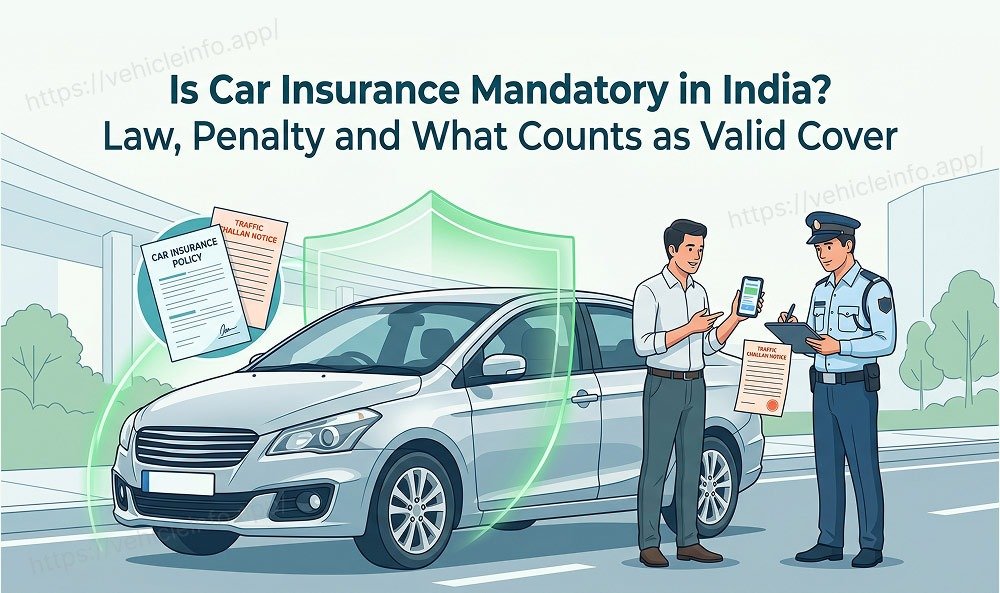
A motor vehicle's insurance requires compliance with the law. Section 196 of the Motor Vehicles Act prohibits uninsured driving and establishes various penalties for different circumstances. For example, if an individual has committed the offence of driving without cover for the first time, he/she will face a maximum fine of Rs 2000 and/or up to 3 months imprisonment. A second or subsequent offence will result in a maximum fine of Rs 4,000 and/or up to 3 months' imprisonment. Such penalties are applicable to both the driver and the owner of the insured vehicle who allows his/her vehicle to be operated by an uninsured driver.
The fine is not the real danger. If your car causes an accident during the lapse, you personally pay the entire compensation the tribunal awards, with no insurer to absorb it. A lapsed policy, therefore, exposes you to a liability that could run into many lakhs. This is why renewing before the expiry date, never after, is the only safe habit.
How to Verify Your Third-Party Status on the Parivahan Portal
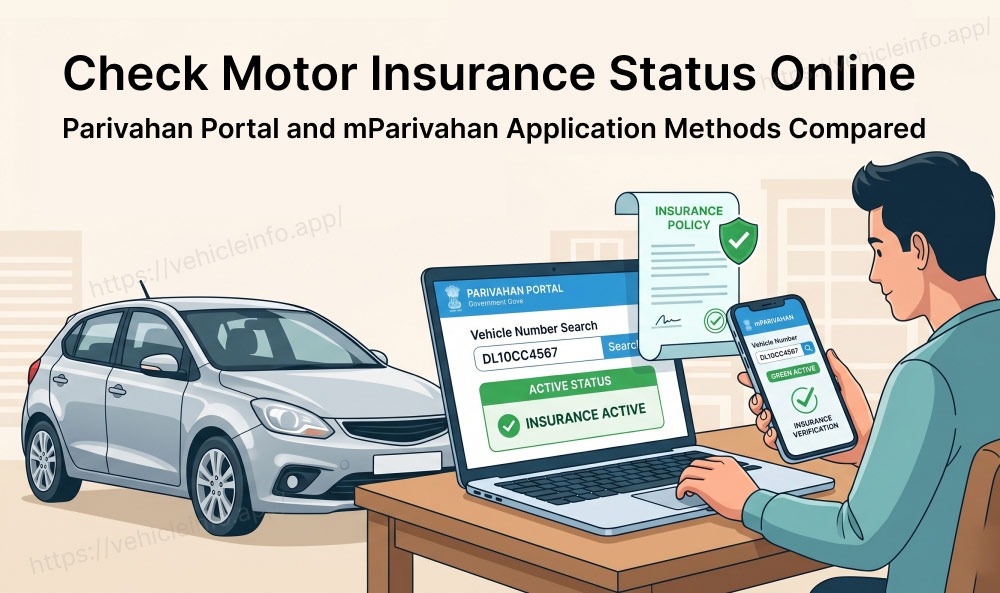
You can confirm your third party car insurance is active and showing correctly using the official Parivahan database. This matters because the police and RTO check the same record during enforcement, so a clean status there is what keeps you compliant in practice.
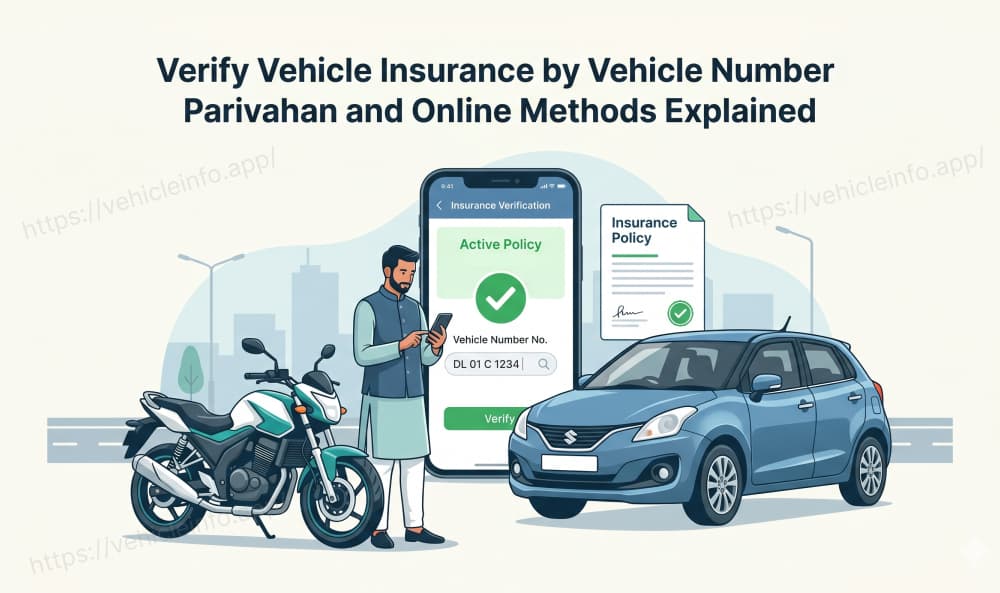
To verify, visit the Parivahan e-services portal, log in with your mobile number, enter your car's registration number and the verification code, and view the record. The result shows your insurer's name and the validity date of your cover. If the validity date is current, your mandatory third party car insurance reads as active in the system the authorities rely on.
While the method to verify your TP cover online is seamless, it can take time for your newly purchased or renewed insurance policy to be updated in the Parivahan portal, which may result in you seeing nothing on file soon after buying coverage. In such a case, be patient and continue to check back until your data is synced, and at this point, you will have proof of your purchase by using the policy document as support. Once your data is synced, your third party auto insurance records will show correctly throughout the applicable platforms. Periodic inspections of your information will help you identify any reporting inconsistencies before they become a legitimate challenge.
Frequently Asked Questions
1. Is third-party car insurance mandatory in India?
Ans: Yes. Mandatory third party car insurance is required under Section 146 of the Motor Vehicles Act for every car used on a public road. Driving without it is an offence, regardless of how old or rarely used the car is.
2. What is the third-party car insurance premium for 2024-25?
Ans: The third party car insurance premium is set by the regulator and depends on engine capacity. Indicative base rates are around Rs 2,094 for cars up to 1000cc, Rs 3,416 for 1000cc to 1500cc, and Rs 7,897 for above 1500cc, plus GST.
3. What is the third-party car insurance cost in India?
Ans: The third party car insurance cost in India is the regulator-fixed base premium for your engine slab plus 18 per cent GST. Because the rate is standard across insurers, the third party car insurance cost in India does not change from one company to another for the same car.
4. What is the penalty for driving without third-party insurance?
Ans: The third party car insurance penalty under Section 196 is up to Rs 2,000 or three months' imprisonment for a first offence, and up to Rs 4,000 for a repeat offence. Both the driver and the owner can be penalised.
5. Does third-party car insurance cover my own car?
Ans: No. Third party car insurance covers only harm to others and their property. Your own car's damage, theft, or fire loss is not covered. For that protection, you need comprehensive cover, which includes the mandatory third-party portion.
6. Third-party car insurance vs comprehensive, which is better?
Ans: The answer to third party car insurance vs comprehensive which is better depends on your car. Third-party alone is legal and cheap, suiting older cars. Comprehensive costs more but protects your own vehicle too, suiting new or financed cars. Both satisfy the law.
7. What does third-party car insurance not cover?
Ans: It does not cover your own car, theft, fire, natural events, or property damage above Rs 7.5 lakh. It also fails if you breach policy conditions like driving without a valid licence. These gaps are the trade-off for the low premium.
8. How are third-party claims decided?
Ans: Through the Motor Accident Claims Tribunal. The victim files a claim, the tribunal decides compensation based on the victim's age, income, and dependents, and your insurer pays it under your third party car insurance. Personal injury liability is unlimited.
9. Is the three-year policy compulsory for new cars?
Ans: Yes. New private cars must carry a three-year third party car insurance policy at purchase, effective since September 2018. You can add a separate annual own-damage cover, but the long-term mandatory third party car insurance is fixed at the time of sale.
10. What happens if my third-party policy lapses?
Ans: You become uninsured under the TP car insurance law and face the Section 196 penalty. Worse, any accident during the gap leaves you personally liable for the full tribunal award. There is no grace period, so renew before the expiry date.
11. Is the third-party premium the same across all insurers?
Ans: Yes. The third party car insurance premium is fixed by the regulator, so every insurer charges the same base rate for the same engine slab. Companies compete only on the own-damage part of a comprehensive policy, never on the regulated third-party rate.
12. How do I check my third-party insurance status?
Ans: Use the VAHAN portal. Enter your registration number to see your insurer and validity date. This confirms your mandatory third party car insurance is active in the database the police and RTO use, though a new policy may take a few weeks to appear.
13. Does third-party insurance protect the driver?
Ans: Only through a separate owner-driver personal accident cover. The core third party car insurance coverage protects third parties, not the driver's own injuries. The personal accident element is added alongside the liability cover to protect the owner-driver.
14. Why is third-party insurance so cheap compared to the cover it gives?
Ans: Why is third-party insurance so cheap compared to the cover it gives? Because the regulator fixes the third party car insurance premium low to keep mandatory cover affordable for all. Its purpose under the TP car insurance law is victim protection rather than profit, so the price stays modest while personal injury liability remains unlimited.