Consequences of Expired Car Insurance in India: Legal Liability, Claim Rejection and Fine
24 June, 2026
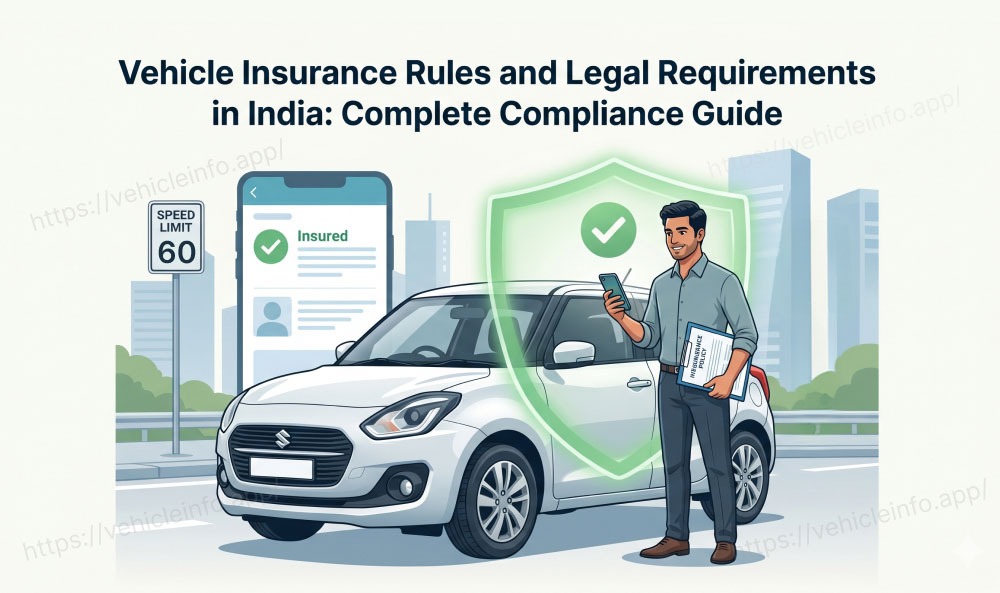
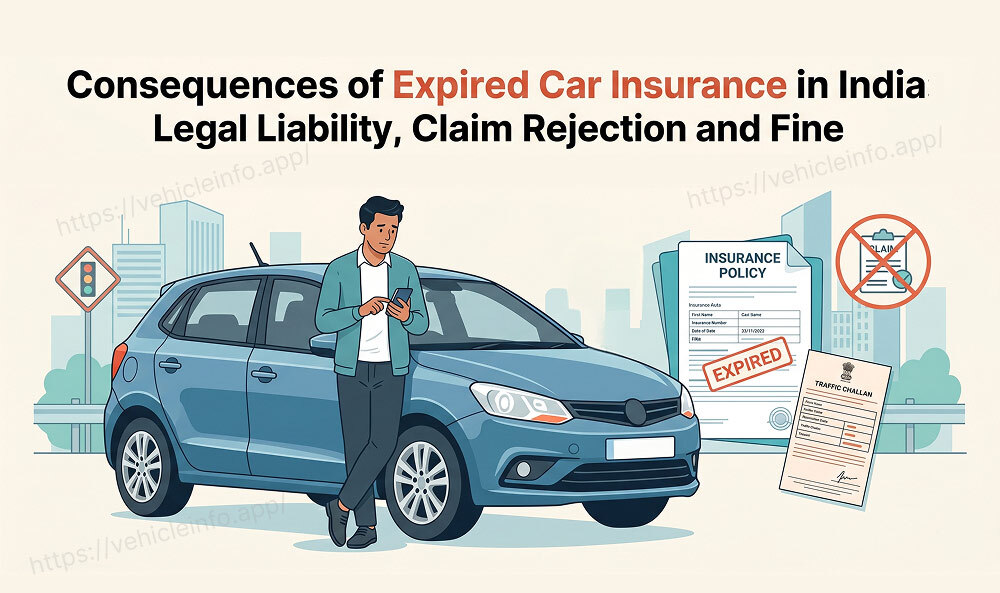
The day your car insurance expires, your car becomes illegal to drive, and you lose every protection the policy gave you. Not in 90 days, not after a warning, but immediately. From that moment, you face the severe consequences of expired car insurance in India: an accident makes you personally liable for the full compensation a court awards, a traffic stop invites a fine of up to Rs 2,000, and any damage to your own car comes out of your own pocket.
Most owners underestimate this because nothing visible changes the day the cover ends. The car still starts and drives. But the legal and financial exposure switches on the instant the policy expires, and it compounds the longer the gap runs. The question of what are the consequences of expired car insurance in India, has a precise answer, and it pays to know it before a gap catches you out.
What Counts as an Expired Policy Under Indian Insurance Law
A car insurance policy is valid for a fixed term, usually one year for the own-damage portion, after which it expires on its due date. Once that date passes without renewal, the policy lapses and loses legal validity.
The instant the policy expires, the contract between you and the insurer ends. You are no longer covered for anything, and your car no longer satisfies the legal requirement to carry insurance. The expired car insurance consequences begin on the very first day of the gap.
People often confuse the 90-day window with a grace period that keeps them covered. It does not. That window only protects your No Claim Bonus, not your insurance cover. During the lapse, your car is uninsured in every sense that matters.
Legal Consequence 1: You Are Driving Without Insurance Under the Motor Vehicle Act
The first consequence is legal. The moment your policy expires, driving with expired car insurance in India treats you exactly as driving with no insurance at all. Section 146 of the Motor Vehicles Act requires valid third-party cover for any car used in a public place, and a lapsed policy fails that test. This is the first of the expired car insurance consequences, and it triggers the rest.
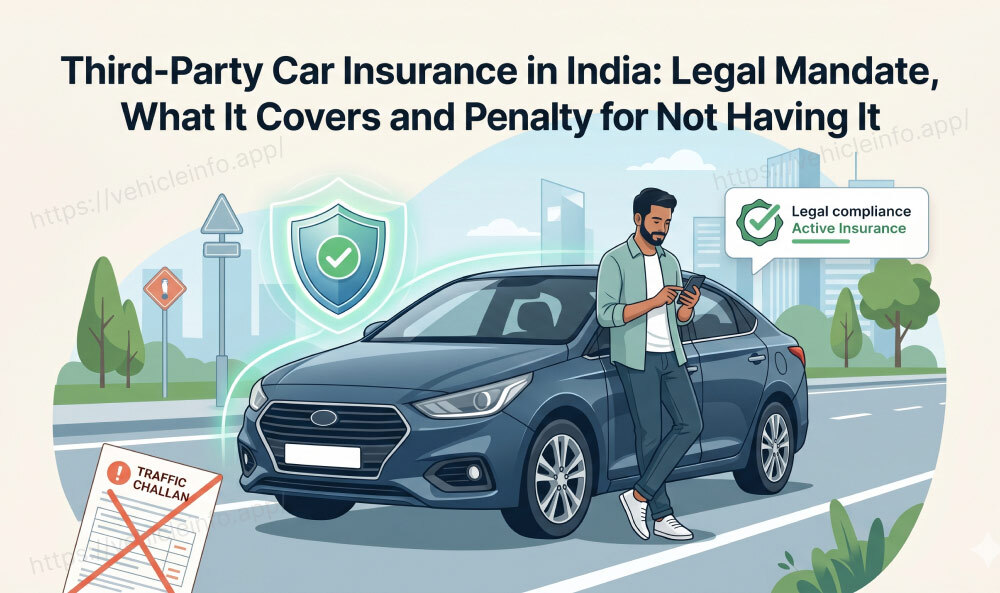
This exposes you to the penalty under Section 196. For a first offence, the fine is up to Rs 2,000, or imprisonment of up to three months, or both. A repeat offence carries a fine of up to Rs 4,000 and/or a three-month imprisonment. The penalty applies whether the lapse was deliberate or simply forgotten, because the law looks at whether valid cover exists, not at your intention.
Legal Consequence 2: Full Liability for Third-Party Injury or Death
The fine is a small risk. The large one is personal liability. If your uninsured car injures or kills someone during the lapse, you pay the entire compensation a court awards, with no insurer to absorb it.
Compensation for death or serious injury is decided by the Motor Accident Claims Tribunal, which weighs the victim's age, income, and dependents. These awards routinely run into several lakhs. With valid cover, your insurer would meet this in full, since third-party personal injury liability is unlimited. Without it, the entire sum falls on you. This is the consequence that turns a forgotten renewal into a life-altering event.
Financial Consequence: No Claim Payout for Own Damage
A lapse also strips the protection for your own car. If your vehicle is damaged in an accident, stolen, or caught in a fire or flood during the gap, the insurer pays nothing. The contract that would have covered these losses has ended.
This is what happens if car insurance expires and you then suffer a loss. There is no claim to file because there is no live policy to claim against. A claim rejected expired insurance India outcome is automatic here, since the contract has ended. Whatever the repair or replacement costs, you bear them yourself. This own-damage gap is one of the most expensive expired car insurance consequences of a lapse, and it applies from the first uninsured day.
IRDAI Rules on Break-in Insurance and Re-inspection
When you renew after a lapse, the insurer treats it as a break-in policy. The most important rule is inspection. A policy that has lapsed, even by a single day, usually requires the insurer to inspect the vehicle before issuing fresh cover.
This re-inspection lets the insurer confirm the car's current condition and that no damage occurred during the uninsured gap. During this process, your car remains uninsured and illegal to drive. The inspection delay is one of the practical car insurance lapse consequences, and a timely renewal completed before expiry skips it entirely.
How Lapse Duration Affects Renewal
The length of the gap changes what you keep and what you lose. The rules treat a short lapse very differently from a long one, especially regarding your No Claim Bonus.
| Lapse Duration | Effect |
|---|---|
| Under 90 days | NCB retained, but re-inspection is usually required |
| Over 90 days | NCB lost entirely, re-inspection required |
| Over 1 year | Treated as a fresh policy, NCB gone, full underwriting |
Under 90 Days
Renew within 90 days of expiry, and you keep your accumulated No Claim Bonus. But you were still uninsured during the gap, and a re-inspection is usually needed before the new policy issues.
Over 90 Days
Cross the 90-day mark and your No Claim Bonus resets to zero, which raises your future premium. The vehicle still needs inspection.
Over 1 Year
A very long lapse is treated almost like insuring a car for the first time. The NCB is gone, the policy is underwritten afresh, and inspection is mandatory.
Can You Drive to a Garage for Renewal After Expiry?
A common question is whether you can drive a car with expired car insurance to a garage or inspection point. Legally, the answer is no. The car is uninsured the moment the policy expires, so any driving on a public road during the gap is an offence and leaves you fully liable for an accident.
Many insurers now allow you to complete a break-in inspection through photos or a video on a mobile app, which avoids driving an uninsured car entirely. For those wondering Can I drive with expired car insurance, the clear legal answer is no. Plan your renewal so the car does not need to move while uninsured.
Penalty at Traffic Checkpoints for Expired Insurance
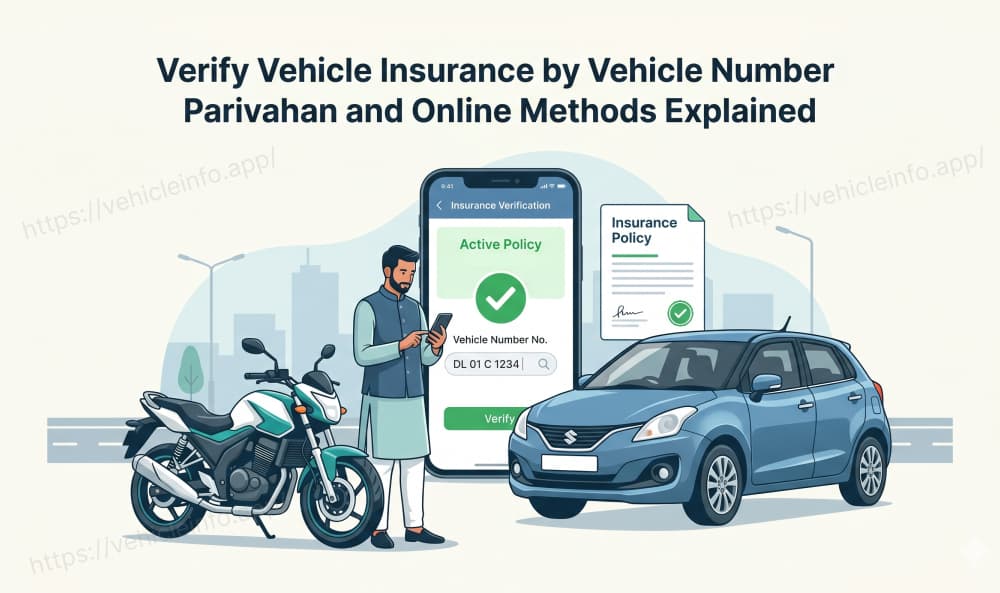
At a checkpoint, expired cover is caught the same way as no cover. The officer enters your registration number into the mParivahan app, which pulls your insurance validity from the central database. If the validity date has passed, the system shows the lapse, and the car insurance expired fine applies on the spot.
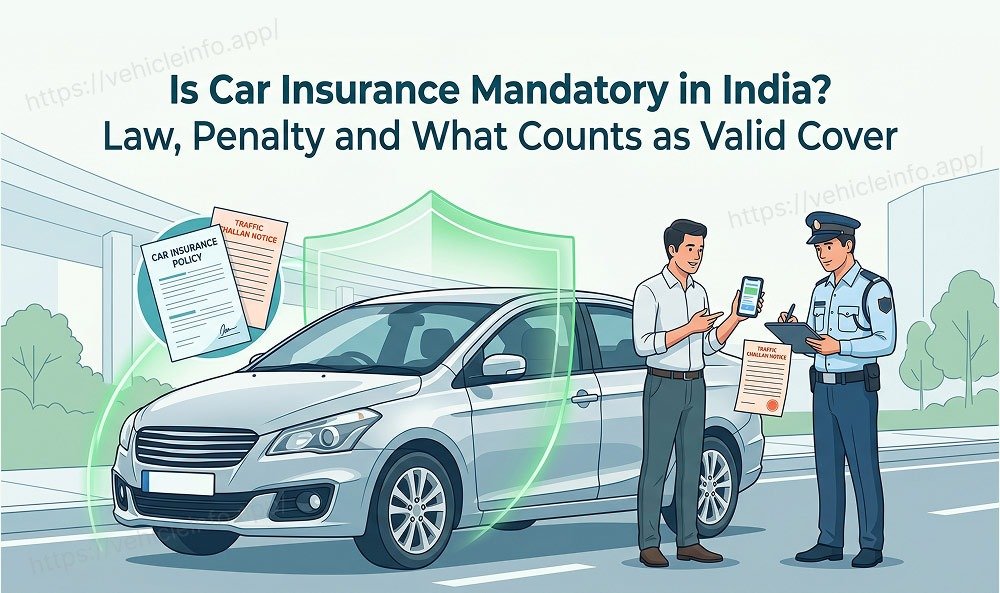
The fine follows Section 196, up to Rs 2,000 for a first offence and up to Rs 4,000 for a repeat. Because verification is digital, there is no way to talk around an expired record. A digital copy of a current policy is the only proof that helps, and a lapsed policy cannot provide it.
How Insurers Treat a Vehicle with a Lapsed Policy
To an insurer, a vehicle with a lapsed policy carries more uncertainty because they cannot know what happened during the uninsured gap. A lapsed car insurance India renewal usually brings a mandatory inspection, as the insurer checks for any damage incurred while uninsured. If the lapse crossed 90 days, the lost No Claim Bonus pushes your premium higher. The practical effect is clear: a lapsed car insurance India renewal tends to cost more and take longer than a timely one, on top of the legal exposure during the gap itself.
NCB Loss: The Hidden Cost of Letting Insurance Lapse
The No Claim Bonus is the discount you earn for every claim-free year, and it can cut your own-damage premium by up to 50% over time. A lapse can wipe it out.
The rule is firm. Renew within 90 days of expiry, and you keep your NCB. Let the gap exceed 90 days, and the entire accumulated bonus resets to zero, and your next premium jumps accordingly. Among the car insurance lapse consequences, this is the one that follows you for years rather than ending when you finally renew.
How to Renew Expired Car Insurance Without Inspection
Avoiding inspection comes down to timing, because the break-in rule applies once cover has lapsed. The cleanest way to renew without inspection is never to let the policy expire in the first place.
Within the Grace Period
There is no grace period that keeps you covered, but renewing fast after expiry limits the damage. If you renew within the 90-day window, you keep your No Claim Bonus, though an inspection is still usually required. Some insurers offer app-based inspections that make this quick.
After the Grace Period
Once the gap exceeds 90 days, inspection is unavoidable, and the NCB is gone. The car will be inspected, the policy underwritten fresh, and your premium reset without the bonus. The only real cure is prevention, renewing before the expiry date, so the question of inspection never arises. Set a reminder ahead of your due date and keep continuous cover.
Frequently Asked Questions
1. What are the consequences of expired car insurance in India?
Ans: The consequences of expired car insurance in India include driving illegally under the Motor Vehicles Act, a fine of up to Rs 2,000, full personal liability for any accident, no payout for your own car's damage, loss of No Claim Bonus after 90 days, and a mandatory re-inspection at renewal.
2. Can I drive with expired car insurance?
Ans: No. The answer to Can I drive with expired car insurance is a clear no. Your car is uninsured the moment the policy expires, so driving on a public road is an offence and leaves you fully liable for any accident.
3. What happens if car insurance expires and I have an accident?
Ans: If your car insurance expires and you cause an accident, you pay the entire compensation the tribunal awards for third-party injury or death, which can run into lakhs. Your own car's damage is also not covered.
4. Is there a fine for driving with expired insurance?
Ans: Yes. The car insurance expired fine under Section 196 is up to Rs 2,000 for a first offence and up to Rs 4,000 for a repeat. At checkpoints, officers verify your status digitally, so an expired record is caught automatically.
5. Will my claim be rejected if my insurance is expired?
Ans: Yes. A claim rejected expired insurance India scenario is certain, because there is no live policy to claim against once it lapses. Any loss during the gap, whether accident, theft, or fire, comes out of your own pocket.
6. Does an expired policy mean I lose my No Claim Bonus?
Ans: Only if the gap exceeds 90 days. Renew within 90 days, and you keep your NCB. Beyond that, the bonus resets to zero, raising your future premium.
7. Do I need a vehicle inspection to renew after expiry?
Ans: Usually yes. A lapse of even one day makes the renewal a break-in policy, which generally requires inspection before fresh cover issues. Some insurers offer app-based inspection to make this quick.
8. How does lapse duration affect my renewal?
Ans: Under 90 days, you keep your NCB but still need inspection. Over 90 days, the NCB is lost. Over a year, the policy is treated as fresh with full underwriting. The longer the gap, the worse the car insurance lapse consequences.
9. Can I drive my car to a garage after the policy expires?
Ans: No. Driving with expired car insurance in India on a public road is illegal, even to reach a garage. Use a remote or app-based inspection where available.
10. How do I avoid all these consequences?
Ans: Renew before the expiry date so the cover never lapses. Continuous cover avoids the fine, the liability, the claim rejection, the NCB loss, and the inspection. The consequences of expired car insurance in India all stem from the gap.
11. Does lapsed car insurance cost more to renew?
Ans: Often yes. A lapsed car insurance india renewal can cost more if the gap crossed 90 days and the NCB was lost. The break-in inspection also adds a step, making renewal slower.
12. What counts as the start of the lapse?
Ans: The lapse begins on the day after the policy's expiry date. From that first day, what happens if car insurance expires in full, you are uninsured, exposed to fines, and personally liable for any loss until you renew.