RC and Car Insurance: Transfer Rules, Name Change and Used Car Checklist
25 June, 2026
When you buy a used car, the keys and the Registration Certificate are not the only things that must change hands. The insurance has to follow the ownership too, and the law gives you just 14 days to make it official. Miss that window and the new owner can be left holding a car whose own-damage cover will not pay out, because the policy still names the seller.
This connection is built into the Motor Vehicles Act and enforced through the VAHAN database, where your registration and insurance records sit side by side. When the names on those two records do not match, claims get disputed, liability lingers with the wrong person, and both buyer and seller stay exposed. Understanding how the RC and car insurance relationship works and how the RC transfer car insurance process runs alongside the change of ownership process protects your money and your legal standing on either side of a deal.
What Is the Legal Link Between RC and Car Insurance in India?
The Registration Certificate proves who owns a vehicle, and the insurance policy proves who carries its cover. Indian law requires these two to align. A valid policy must sit in the name of the registered owner, which is why the RC and car insurance records are treated as a matched pair rather than two separate documents.
This link exists because insurance depends on insurable interest. You can only claim on a policy for a vehicle you legally own. If the RC names one person and the policy names another, the insurer can question whether the claimant has the right to claim at all. That mismatch is the single most common reason a used-car buyer finds their own-damage claim rejected. So whenever ownership changes, the insurance must be updated to match the new RC. The car insurance RC linkage is the foundation of a valid claim, and the law builds enforcement around keeping the two records in step.
VAHAN: How RC and Insurance Are Stored Together
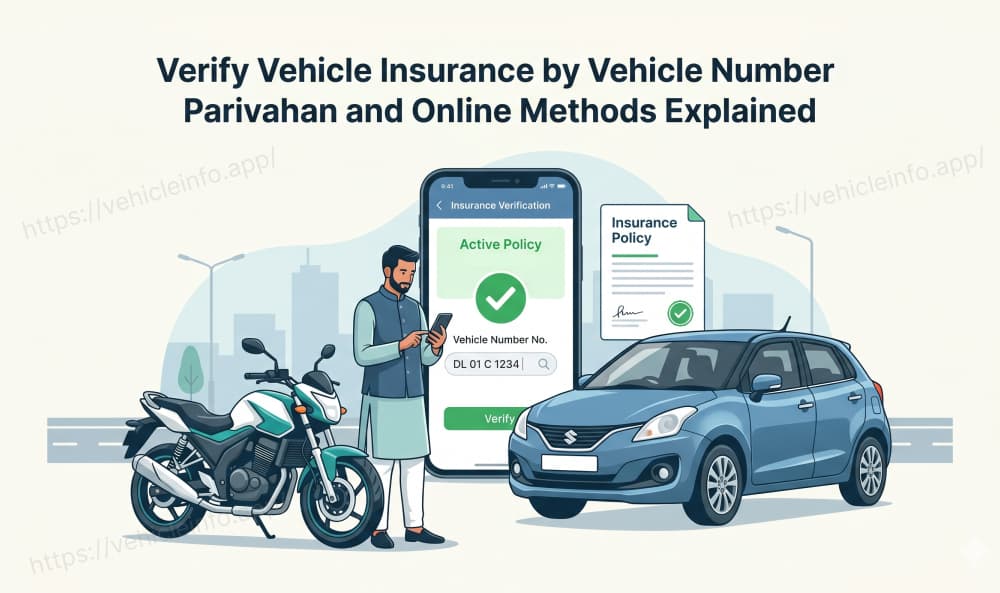
VAHAN is the national vehicle registry run by the Ministry of Road Transport and Highways, and it stores registration and insurance data together for every vehicle. When you look up a vehicle, the Vahan RC insurance record shows the owner details and the insurance validity in one place.
This shared storage is what makes the RC and car insurance match enforceable. The police, the RTO, and the public can all see whether a vehicle's insurance is active and whether the records line up. For a buyer, this database is a powerful check. Before completing a purchase, you can verify the vehicle's insurance status and confirm the RC details using the registration number. The car insurance RC linkage stored in VAHAN gives you an official window into whether the seller's claims about cover and ownership actually hold up.
When You Buy a Used Car: Insurance and RC Transfer Rules
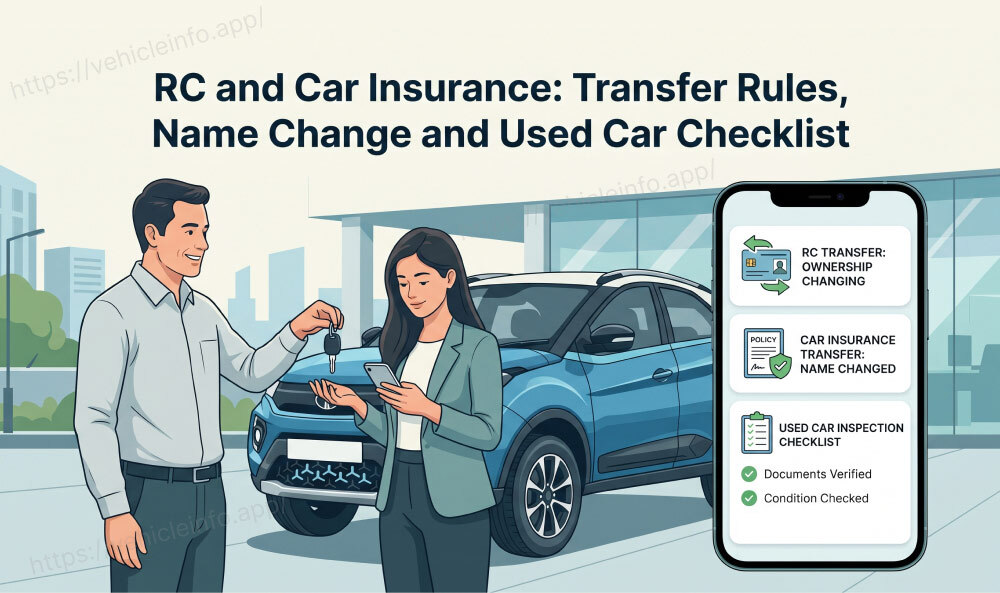
Buying a used car triggers two transfers that must happen together: the RC into your name and the insurance into your name. The insurance and RC transfer process in India follows a clear sequence. The RC is transferred first at the RTO using Forms 29 and 30, because the insurer needs the updated RC as proof of ownership before they will transfer the policy. Once the RC shows your name, you approach the insurer. So, for those wondering Do I need new insurance after buying used car is nuanced: you can transfer the existing policy rather than always buying fresh, but the transfer is mandatory and time-bound.
The critical rule is the deadline. Under Section 157 of the Motor Vehicles Act, the insurance must be transferred within 14 days of the ownership change. During those 14 days, the third-party cover passes automatically to the new owner, but the own-damage cover does not. So if you crash in that window before transferring, your own car's damage may not be paid. This is why the insurance and RC transfer process in India should be completed quickly rather than left for later.
MV Act Requirements: Insurance Must Match RC Owner
Section 157 of the Motor Vehicles Act sets the legal duty behind the transfer. It requires that when a vehicle changes ownership, the insurance policy transfers to the new owner, and it fixes the 14-day timeline for making this formal. The law treats the RC and car insurance match as a compliance requirement, not a courtesy.
The reasoning is protective. The mandatory third-party cover must always follow the vehicle so that accident victims can be compensated regardless of who owns the car. By moving the third-party cover automatically for the first 14 days, the law ensures victims are never left unprotected during a sale. The own-damage portion, which protects the owner rather than the public, only transfers when you formally apply for it.
This split is the heart of the rule. What happens to car insurance when RC is transferred depends on which part of the cover you mean. The third-party element moves with the vehicle to protect the public, while the own-damage element waits for your formal transfer. Both need to be settled within the 14-day window, so the RC transfer car insurance step is inseparable from the change of ownership.
Transferring Insurance to a New Owner: IRDAI Process
The insurance regulator sets out how the transfer is actually done. The process runs through the insurer who issued the original policy, and it involves an endorsement, a timeline, and a defined set of documents.
Endorsement
Transferring the policy is done through an endorsement, a formal change recorded on the existing policy to replace the seller's name with the buyer's. This car insurance on name change is the step that makes the own-damage cover valid for you. You fill in a fresh proposal form, the insurer records the change, and the policy is reissued in your name. The insurer may inspect the vehicle first, and a nominal transfer fee usually applies.
Timeline
The transfer should be completed within 14 days of the ownership change, in line with Section 157. The third-party cover carries over automatically during this period, but the own-damage cover only becomes valid for you once the endorsement is done. Acting within the 14 days keeps both parts of your protection intact.
Documents Required
To transfer the policy, you typically need the updated Registration Certificate in your name, Forms 29 and 30 used for the RC transfer, the seller's no-objection certificate, and the original policy document. Having these ready before approaching the insurer speeds up both the RC and the insurance transfer.
What Happens If You Drive on the Previous Owner's Insurance
Driving on the seller's policy after buying a used car is a trap that catches many buyers. The car may look insured because a policy exists, but if it still names the previous owner, your protection is far weaker than it appears.
For the mandatory third-party portion, the cover passes to you automatically for the first 14 days, so a third-party victim can still be compensated. But the own-damage portion does not transfer on its own. If your car is damaged, stolen, or destroyed while the policy still names the seller, the insurer can reject your own-damage claim because you lack insurable interest. The seller is exposed too, since until the records are updated, they may still face liability questions. Leaving the policy in the previous owner's name benefits no one.
RTO's Role in Validating the RC-Insurance Match
The RTO sits at the centre of the transfer because it controls the Registration Certificate that the insurance must match. When you transfer the RC into your name, the RTO updates the official ownership record, which then feeds the VAHAN database.
The RTO requires valid insurance as part of various processes, including the transfer itself. This is where the RC and car insurance records meet in practice, because the RTO will not treat the paperwork as complete unless the insurance position is in order. For the buyer, the RC transfer at the RTO is the anchor of the whole exercise. Once the RTO records your name on the RC, you have the proof the insurer needs to transfer the policy.
No-Objection Certificate from Insurer for RC Transfer
A no-objection certificate, or NOC, often forms part of the transfer paperwork. The seller's NOC confirms they have no objection to the ownership and insurance moving to the buyer, which helps the insurer process the endorsement cleanly.
Insurers require the seller to inform them in writing of the transfer, and the NOC serves this purpose. Without clear confirmation from the seller, the insurer may hesitate to record the endorsement. For a smooth transfer, the buyer should collect the seller's NOC along with the other documents at the time of sale, since chasing the seller later can be difficult once contact fades. A complete document set keeps the insurance and RC transfer process in India quick and dispute-free.
How Insurance Is Verified During RTO RC Transfer
During the RC transfer, the RTO confirms the vehicle's insurance position as part of validating the change. Because registration and insurance data sit together in VAHAN, the RTO can see the current cover against the vehicle when processing the transfer.
This verification keeps the mandatory cover requirement intact through the change of ownership. The Vahan RC insurance entry is the reference point, showing whether valid cover exists as the ownership moves. The lesson for buyers is to confirm the insurance is active before starting the RC transfer. If the cover has lapsed, you may need to arrange fresh insurance to complete the process. Checking the Vahan RC insurance status in advance prevents a stalled transfer and ensures the insurance after RC transfer stays valid and correctly recorded in your name.
Penalties for Mismatched RC and Insurance Owner Names
A mismatch between the RC owner and the insurance owner is not just a paperwork issue. It carries real consequences, the worst of which is a rejected claim at the moment you most need cover.
If your own-damage policy still names the previous owner, the insurer can refuse your claim on the grounds that you lack insurable interest, and you could lose the full cost of repairing or replacing your car. The seller may also face lingering liability for incidents involving the car, and courts have upheld this exposure in multiple cases. There is no fine specifically labelled for a name mismatch, but the practical penalty is severe: a denied claim and disputed liability. Keeping the rc and car insurance names aligned is the only way to avoid this, and the cost of transferring is small against a claim that can run into lakhs.
Used Car Buyers: What to Check on VAHAN Before Completing the Deal
Before you hand over money for a used car, a few minutes on VAHAN can save you from inheriting a problem. The database lets you confirm the vehicle's key records using only its registration number. Run through this checklist before closing the deal:
- Confirm the insurance is active and note the validity date, so you are not buying a vehicle with lapsed cover.
- Check that the registered owner's name matches the person selling you the car, to avoid a fraudulent or disputed sale.
- Note the policy type, since comprehensive cover means own-damage protection is in place, while third-party only means it is not.
- Verify there are no obvious mismatches between the RC details and what the seller has told you.
The Vahan RC insurance record shows you the official position, independent of the seller's claims. Confirming the car insurance RC linkage before paying means you know exactly what you are buying and what you will need to transfer.
FAQs
1. What happens to car insurance when RC is transferred?
What happens to car insurance when RC is transferred depends on the cover. The third-party portion passes to the new owner automatically for 14 days, while the own-damage portion only transfers when you formally apply through an endorsement within that window.
2. Do I need new insurance after buying a used car?
Not necessarily. The answer to Do I need new insurance after buying used car is that you can transfer the existing policy into your name within 14 days. If the policy is near expiry, buying fresh may be simpler than transferring.
3. How long do I have to transfer car insurance after buying a used car?
You have 14 days under Section 157 of the Motor Vehicles Act. The insurance and RC transfer process in India must be completed in this window, or your own-damage cover stays invalid even though third-party cover passes over automatically.
4. What documents are needed for the insurance transfer?
You typically need the updated RC, Forms 29 and 30, the seller's NOC, and the original policy. The insurer uses these to process the endorsement that moves the policy into your name and keeps the rc and car insurance records aligned.
5. What is the VAHAN RC insurance check?
The Vahan RC insurance check lets you see a vehicle's registration owner and insurance status together using the registration number. It is the official record the RTO and police rely on, and it helps buyers confirm the car insurance RC linkage before a purchase.
6. Can I drive on the previous owner's insurance?
For 14 days, the third-party cover passes to you automatically, so you are legally covered for third-party risk. But the own-damage cover does not transfer on its own, so any damage to your own car may not be paid until you complete the transfer.
7.Does the No Claim Bonus transfer with the car?
No. The NCB stays with the seller, since it belongs to the person, not the vehicle. When the policy is transferred, the premium is recomputed without the seller's NCB, so budget for a higher premium on your insurance after RC transfer.
8. What happens if RC and insurance names do not match?
A mismatch can cause your own-damage claim to be rejected because you lack insurable interest under a policy in the seller's name. Timely car insurance on a name change keeps the RC and car insurance names aligned and is the only way to avoid this.
9. Who is responsible for transferring the insurance?
The buyer usually drives the RC transfer car insurance step, since they have the most to lose if cover lapses. But the seller must inform the insurer in writing and provide an NOC, so it is a shared responsibility completed within 14 days.
10.Is the insurance transfer the same as the RC transfer?
No, they are two linked steps. The RC transfer happens at the RTO, and the insurance transfer happens with the insurer, but the insurer needs the updated RC first. Together, they complete the car insurance RC linkage for the new owner.
11. How does the RTO check insurance during RC transfer?
The RTO refers to the VAHAN database, where insurance data sits with registration data. The Vahan RC insurance record shows the current cover, which the RTO confirms while validating the ownership change.
12. What should I check on VAHAN before buying a used car?
Confirm the insurance is active, the registered owner matches the seller, and the policy type and validity. This Vahan RC insurance check protects you from buying a vehicle with lapsed cover or disputed ownership before you complete the deal.