How to Buy Bike Insurance Online: A Step-by-Step Comparison and Purchase Guide
19 June, 2026
The days of visiting a branch or calling an agent to renew your two-wheeler policy are largely behind us. Today, you can compare and buy two-wheeler insurance in under ten minutes online, get quotes from multiple insurers on one screen, and receive a valid digital policy document instantly. The online route is not just more convenient: it is almost always cheaper, since you bypass the agent commission that adds to offline policy costs. This guide covers how to buy bike insurance online step by step, what to compare before selecting, and the mistakes that leave buyers underinsured or overpaying.
Where to Buy Bike Insurance Online: Your Options
There are three main routes for two-wheeler insurance online purchase:
- Insurer websites directly: Every major insurer has a direct online portal where you can buy or renew your policy. Going direct is straightforward but limits you to one insurer's pricing and terms.
- Insurance aggregators: Platforms like Policybazaar, Coverfox, and InsuranceDekho allow you to compare bike insurance quotes from multiple insurers on one screen. This is the recommended starting point for most buyers, as it makes the bike insurance compare process easy.
- Insurer apps: Most major insurers now have mobile apps where you can purchase cover, track your policy, and file claims digitally.
For scooter insurance online buy specifically, the same platforms work regardless of whether you have a motorcycle or a scooter.
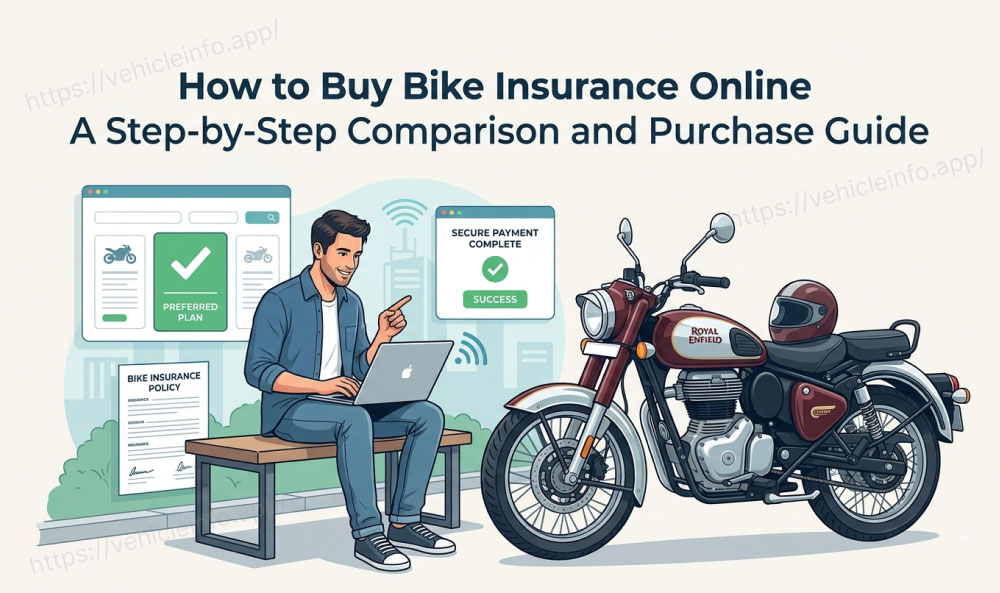
Step-by-Step: How to Buy Bike Insurance Online
Here is the complete process from start to policy delivery:
- Gather your details. You will need your bike's registration number, your mobile number, and either the previous policy number (for renewal) or the bike's make, model, and year (for a new policy).
- Go to an aggregator or insurer website. For the cheapest bike insurance online comparison, start with an aggregator to see multiple quotes simultaneously.
- Enter your vehicle registration number. Most platforms auto-populate the bike's details from the RTO database, saving manual input.
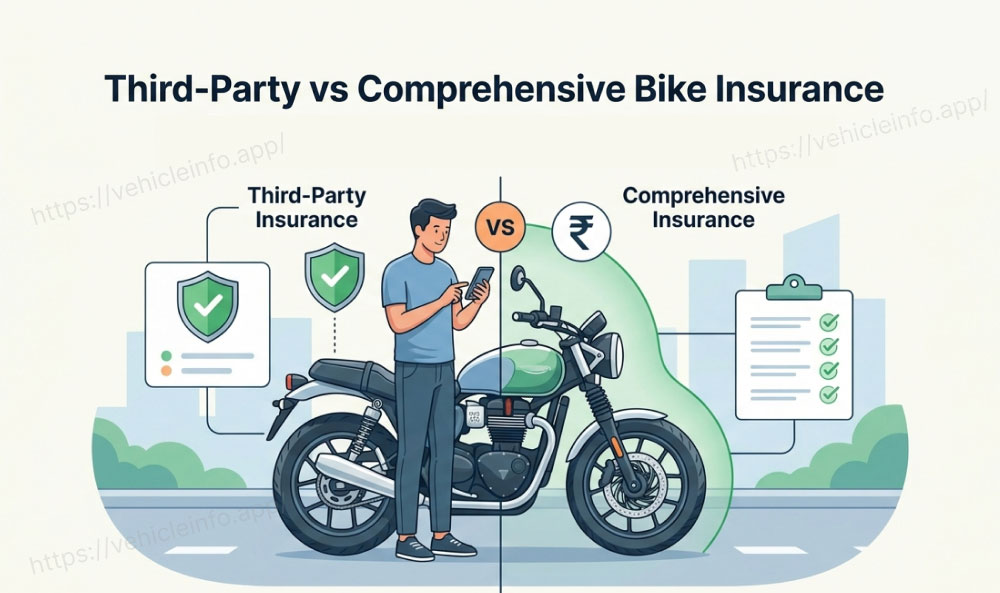
- Select the policy type. Choose between third-party (mandatory minimum) and comprehensive cover. For bikes under five years old, comprehensive is strongly recommended.
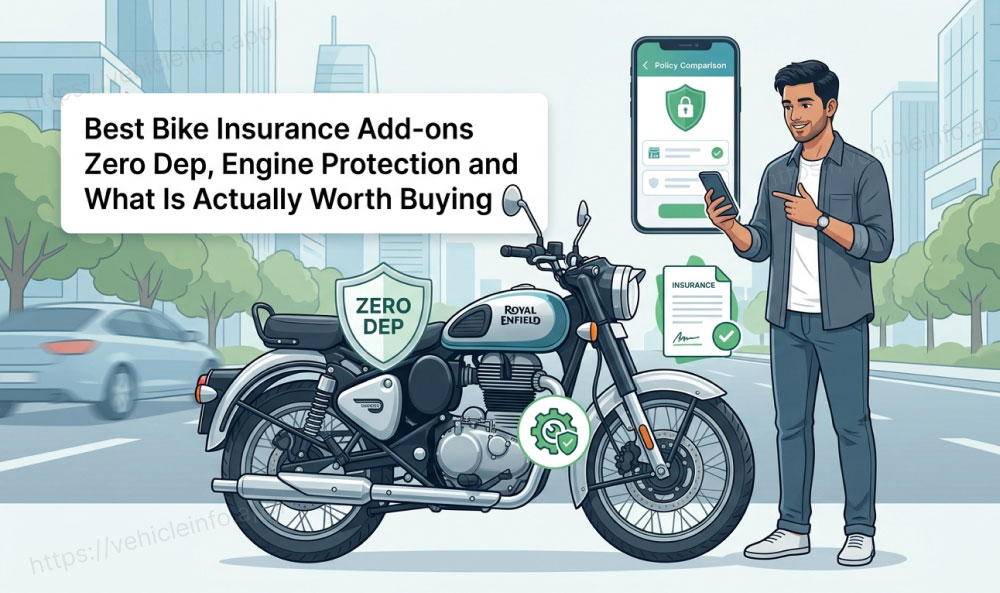
- Choose your add-ons. Refer to the add-on guide: zero dep for new bikes, engine protection for monsoon cities, NCB protection if you have accumulated bonus.
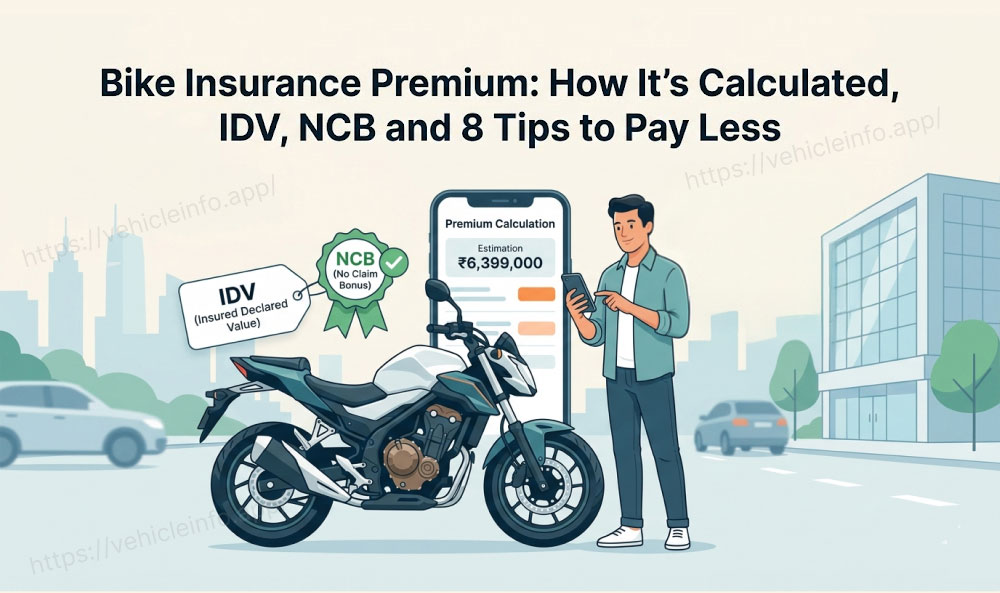
- Review the IDV. Check that the IDV shown is appropriate for your bike's current market value.
- Get a bike insurance quote. The platform displays the final premium. Compare across at least two or three insurers before deciding.
- Complete KYC. Upload your Aadhaar, PAN, and bike RC document as required.
- Pay online. UPI, debit card, credit card, and net banking are all accepted.
- Receive your policy. The digital document arrives by email within minutes. Store it in DigiLocker, which is legally accepted at traffic checkpoints.
What to Compare When You Buy Bike Insurance Online
The bike insurance compare process should go beyond just the premium amount. Here is what to look at carefully before making a decision:
- Claim Settlement Ratio (CSR): The percentage of claims the insurer settled in the previous financial year. An insurer with a CSR above 95 per cent is generally reliable. Do not choose a dramatically cheaper insurer with a significantly lower CSR, as that saving becomes costly when you need to actually claim.
- Network Garages: The number of cashless garages in your city. A large garage network means you are more likely to find a convenient cashless option near you.
- Add-on Availability: Confirm that the specific add-ons you want (zero dep, engine protection) are offered by the insurer you are considering and are available for your bike's age. Not all insurers offer all add-ons for all bike ages, so checking availability before committing avoids disappointment.
- Premium Breakdown: Understand how much of the premium is the mandatory TP component (fixed by IRDAI and identical across all insurers) and how much is the own damage component (where insurers genuinely compete on price). The TP amount cannot be reduced by any insurer; the OD component is where comparing delivers real savings.
- Customer Reviews: For purely digital insurers like ACKO and Digit, read customer reviews specifically about the claim process, as the claim experience is the ultimate test of any insurance product's value.
Common Mistakes When Buying Bike Insurance Online
- Undervaluing the IDV: Choosing the lowest available IDV to reduce the premium is a common mistake. A lower IDV means a lower payout in a total loss. Set IDV at the correct current market value of your bike.
- Not comparing before renewing: Many riders simply renew with the same insurer every year without checking whether a better option is available. The two-wheeler policy comparison process takes five minutes and can save hundreds of rupees annually. Which website for cheapest bike insurance gives the best results? Aggregators like Policybazaar, Coverfox, and InsuranceDekho aggregate live quotes from 10 to 15 insurers simultaneously, making them the most efficient starting point.
- Ignoring the CSR: Choosing purely on premium can mean selecting an insurer with poor claim settlement practice. A slightly higher premium from a reliable insurer is better value than the cheapest option that makes claims difficult.
- Skipping useful add-ons: For a new bike, not adding zero dep to save a few hundred rupees in annual premium can cost thousands in a claim. Evaluate add-ons properly before dismissing them.
- Buying on a non-IRDAI-registered platform: Always purchase from IRDAI-registered insurers or aggregators only. Check the IRDAI registration status if you are unsure about a platform. A legitimate platform will always show the insurer's IRDAI registration number on the policy document.
- Not reading the policy exclusions: Most buyers focus only on what the policy covers and skip the exclusions section entirely. Reading exclusions before purchase tells you exactly when a claim will be rejected, which is as important as knowing what is covered.
Which website for cheapest bike insurance is most reliable? The IRDAI website at irdai.gov.in lists all registered aggregators and insurers if you need to verify a platform's credentials before purchasing.
After purchase, verify your two-wheeler's insurance status through Vehicle Info by entering your registration number. The platform confirms your insurance is active and shows the expiry date alongside your RC and PUC status.
Frequently Asked Questions
1. How do I buy bike insurance online?
Ans: To purchase a two-wheeler policy online, visit an insurance aggregator like Policybazaar or Coverfox, enter your bike's registration number, select your cover type and add-ons, compare bike insurance quotes across insurers, complete KYC, and pay online. The digital policy arrives by email within minutes. The entire two-wheeler insurance online purchase process typically takes under ten minutes for a renewal.
2. Which website is best for cheapest bike insurance online?
Ans: For the cheapest bike insurance online, aggregators like Policybazaar, Coverfox, and InsuranceDekho allow you to compare quotes from 10 to 15 insurers simultaneously. The cheapest premium is not always the best choice: compare the Claim Settlement Ratio and network garage count alongside the price to find the best overall value rather than just the lowest number.
3. Can I get a bike insurance quote online instantly?
Ans: Yes. Every major aggregator and insurer website provides an instant bike insurance quote when you enter your registration number and select your cover type. The quote reflects the current premium including add-ons you select. Quotes from aggregators are live and reflect actual insurer pricing, so the amount shown is what you pay.
4. Is online bike insurance valid and legal?
Ans: Yes. Two-wheeler cover purchased online from IRDAI-registered insurers is fully valid under Indian law. The digital policy document is legally recognised and can be stored in DigiLocker for use as a valid policy certificate during traffic checks. Platforms that let you compare bike insurance source policies from the same IRDAI-registered insurers as offline agents, so there is no difference in legal validity between online and offline purchases.
5. Can I buy scooter insurance online in India?
Ans: Yes. Scooter insurance online buy is identical to the motorcycle insurance purchase process. All aggregator platforms and insurer websites cover scooters, mopeds, and all two-wheeler categories. The premium differs based on the scooter's engine capacity and IDV, but the purchase steps are the same. First-time buyers purchasing scooter insurance online buy their policy in the same steps as any bike owner. The insurer does not differentiate between scooters and motorcycles during the online purchase process.