Electric Bike Insurance in India: Rules, Coverage, Battery Protection and Lower Premiums
19 June, 2026
India's electric two-wheeler market has grown rapidly, with brands like Ola Electric, Ather Energy, TVS iQube, Hero Vida, and Bajaj Chetak now accounting for a significant and growing share of new vehicle registrations. As EV adoption increases, so does the number of riders asking how EV two-wheeler cover differs from conventional petrol bike insurance, whether the battery is covered, and why premiums for EVs are sometimes lower.
This guide covers everything specific to EV two-wheeler cover: how IRDAI regulates electric two wheeler insurance India differently, the critical question of battery coverage, lower premium reasons, EV-specific add-ons, and what to check when buying EV scooter insurance for an Ola S1, Ather 450X, or any other electric two-wheeler.
How EV Bike Insurance Differs from Petrol Bike Insurance
At the fundamental level, EV two-wheeler cover works the same way as petrol bike policies. Third-party insurance is mandatory under Section 146 of the Motor Vehicles Act for all two-wheelers, including electric ones. Comprehensive policies cover own damage, theft, fire, and natural disasters for EVs just as they do for petrol bikes.
The differences are in the details:
- Lower mandatory TP premium: IRDAI has set lower third-party premium rates for electric two-wheelers as a policy incentive for EV adoption. An electric scooter with a motor under 3 kW pays Rs 457 per year in TP premium, compared to Rs 538 for a petrol bike up to 75cc. For more powerful EVs, the savings are proportionally significant.
- Battery as a unique asset: The battery pack in an electric bike is typically the most expensive single component, often representing 30 to 50 per cent of the vehicle's ex-showroom price. Standard comprehensive policies may or may not cover battery damage by default. This needs to be checked explicitly.
- Different IDV calculation: IDV for an EV is calculated on the ex-showroom price inclusive of the battery (unless the battery was separately leased, as in some Ola models). The depreciation schedule is the same as petrol bikes under IRDAI rules.
- No engine: EVs have no engine, so engine protection add-ons are not applicable. Instead, motor and controller damage coverage is the relevant protection.
Battery Coverage: The Key Question for EV Insurance
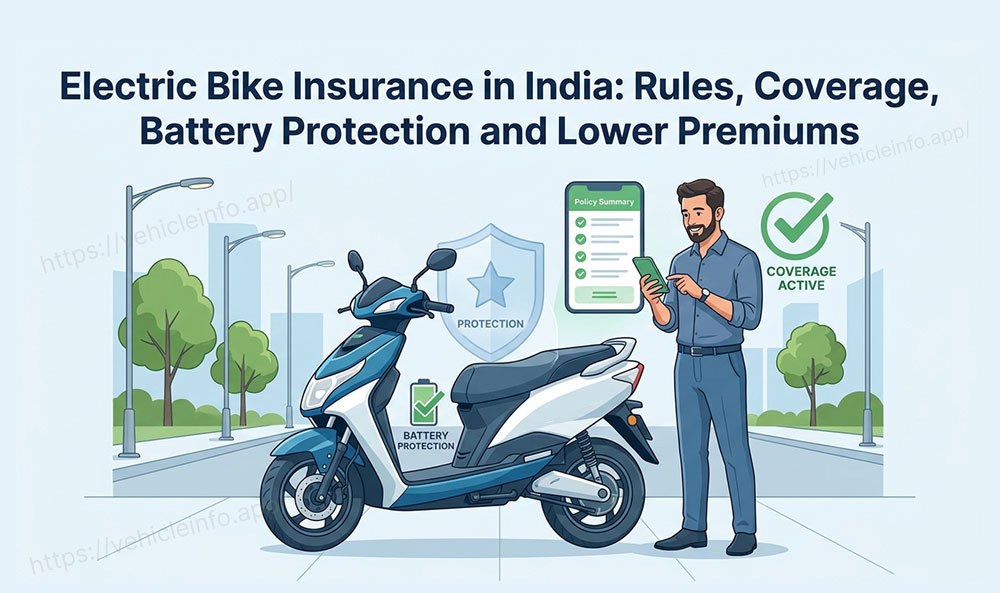
Does EV bike insurance cover the battery? This is the single most important question for electric two-wheeler owners, and the answer depends on the specific insurer and policy. EV bike insurance coverage for batteries is not uniform across all insurers, which makes it essential to read the policy schedule before purchasing.
Battery coverage bike insurance provisions vary by insurer. Most standard comprehensive policies now include battery cover for damage arising from fire, accident, and natural disasters. However, EV bike insurance coverage for battery damage due to manufacturing defects, capacity degradation over time, or electrical faults unrelated to an accident is generally excluded.
The specific risks covered for the battery under a comprehensive EV policy typically include:
- Damage in a road accident
- Fire and self-ignition
- Flood and natural disaster damage
- Theft (if the entire vehicle is stolen)
The battery is generally not covered for:
- Normal capacity degradation over the battery's life
- Damage from improper charging
- Manufacturing defects (covered under manufacturer warranty)
For Ola S1 insurance and Ather insurance policies specifically, both brands have tied up with insurance partners and offer bundled insurance products at the time of purchase. These products often include battery cover as part of the comprehensive plan. However, reading the policy document carefully to confirm battery cover terms is important regardless of the brand.
Lower Premiums: Why Electric Bike Insurance Can Cost Less
Electric bike insurance lower premium outcomes stem from two factors: IRDAI's subsidised TP rates for EVs and the lower Own Damage claims profile of EVs relative to petrol bikes in early data.
The IRDAI-mandated TP premium rates for electric two-wheelers as of 2025:
| Motor Output | TP Premium (Annual) |
|---|---|
| Up to 3 kW | Rs 457 |
| 3 kW to 7 kW | Rs 607 |
| 7 kW to 16 kW | Rs 1,161 |
| Above 16 kW | Rs 2,383 |
For comparison, a petrol bike above 350cc pays Rs 2,804 in TP premium. A high-powered EV (above 16 kW) pays Rs 2,383 for the same mandatory component, a saving of over Rs 400.
The Own Damage premium component for EVs is calculated on IDV, which means a high-IDV electric scooter (Rs 1.5 lakh to Rs 2 lakh) will have a higher OD premium than a low-IDV petrol commuter. The electric scooter insurance premium total can therefore still be higher than a basic commuter petrol bike's premium despite the lower TP rate, if the EV has a significantly higher IDV.
Is EV cover cheaper overall? For high-value EVs replacing mid-range petrol bikes, premiums may be similar or slightly higher. For lower-capacity EVs compared to equivalent petrol bikes, the EV is typically cheaper to insure due to the lower TP rate.
EV-Specific Add-ons to Consider
Standard add-ons like zero depreciation and roadside assistance apply equally to EVs. In addition, some insurers now offer EV-specific covers:
- Charging Equipment Cover: Covers damage to the home charging unit associated with the vehicle.
- Motor and Controller Cover: Similar in concept to engine protection for petrol bikes, this covers damage to the electric motor and controller unit caused by electrical faults, short circuits, or water damage. Given that EVs lack the conventional engine, this add-on fills the equivalent role for EV-specific mechanical risk.
- Extended Battery Warranty Cover: Some insurers offer a supplementary cover that extends protection for the battery beyond the standard comprehensive policy terms, including for degradation beyond a specified threshold.
For Ola S1 insurance and Ather insurance, the bundled policies often include some of these covers by default. Check your policy schedule to confirm what is included.
FAME Subsidy and Its Impact on Insurance
The FAME II subsidy (Faster Adoption and Manufacturing of Hybrid and EV) provided central government subsidies on qualifying electric two-wheelers. Where a FAME subsidy was applied, the purchase price of the vehicle was reduced, which in turn affects the IDV used for insurance calculation.
If your EV was purchased with a FAME subsidy applied, your IDV should be based on the actual purchase price after subsidy, not the pre-subsidy ex-showroom price. Some insurers calculate IDV on the pre-subsidy price (which gives a higher IDV and higher premium); others use the post-subsidy price. Clarify this with your insurer at the time of purchase.
The distinction matters at claim time: if your IDV was set on the higher pre-subsidy price but the insurer disputes the valuation, settlement in a total loss may be lower than expected.
For buyers who received FAME II subsidies, it is also worth confirming with the insurer that the policy document reflects the correct post-subsidy IDV. A mismatch between the insurer records and the actual purchase price can complicate claim settlement. Ask your insurer to confirm the IDV in writing at the time of purchase, especially if the subsidy was applied through the dealer rather than directly by the manufacturer.
Checking Your Electric Two-Wheeler's Insurance Status
After purchasing electric two-wheeler insurance India for your EV, you can verify all coverage details, including the insurance expiry date, through Vehicle Info. Enter your EV's registration number to see the insurance status, expiry date, RC details, and PUC requirements. Checking insurance status this way takes under a minute and works for all registered EV brands in India. This works for Ola S1, Ather, TVS iQube, and all other registered electric two-wheelers.
Frequently Asked Questions
1. Does electric bike insurance cover the battery?
Ans: Does EV bike insurance cover battery damage? In most comprehensive policies, yes, for damage arising from accidents, fire, flood, and theft. The battery is not covered for capacity degradation over time, manufacturing defects, or damage from improper charging. Ola S1 insurance and Ather insurance bundled policies often include more specific battery protection terms; always read the policy schedule to confirm exactly what battery coverage bike insurance includes for your EV. Does EV bike insurance cover battery degradation or warranty issues? No — those remain the manufacturer's responsibility.
2. Is electric bike insurance cheaper than petrol bike insurance?
Ans: Whether electric bike insurance is cheaper depends on the specific comparison. IRDAI has set lower mandatory TP premiums for EVs, and electric bike insurance lower premium outcomes are common for low-capacity EVs replacing basic commuter petrol bikes. However, higher-value EVs with IDVs of Rs 1 lakh to Rs 1.5 lakh may have similar or higher total premiums than mid-range petrol bikes with lower IDVs. Compare actual quotes for your specific vehicles to get a clear answer.
3. Do I need special insurance for an electric scooter?
Ans: Do I need special insurance for electric scooter? No, the same IRDAI-regulated framework applies. Do I need special insurance for electric scooter from a different insurer? No again — all IRDAI-registered insurers can cover EVs. EV scooter insurance uses the same policy types, claims process, and regulatory oversight as petrol bike cover. The differences are the lower TP rate, the battery coverage question, and EV-specific add-on availability.
4. What is the IRDAI TP premium for an Ola S1 or Ather 450X?
Ans: The Ola S1 and Ather 450X both have motors in the 4 kW to 6 kW range, placing them in the 3 kW to 7 kW category. The EV scooter insurance mandatory TP premium for this category is Rs 607 per year under current IRDAI rates. This is the fixed component; the OD premium varies by IDV and add-ons. For an Ola S1 or Ather with an IDV of Rs 1 to Rs 1.5 lakh, total first-year comprehensive electric scooter insurance premium typically ranges from Rs 3,000 to Rs 6,000 depending on add-ons.
5. Can I buy electric two wheeler insurance India online?
Ans: Yes. Electric two wheeler insurance India is available for online purchase from all major insurers and aggregators. The process is identical to petrol bike insurance: enter your registration number, select cover type and add-ons, get a quote, and pay. Policies are delivered digitally and are immediately valid. EV-specific add-ons like motor cover and charging equipment protection are available from select insurers on their online platforms.