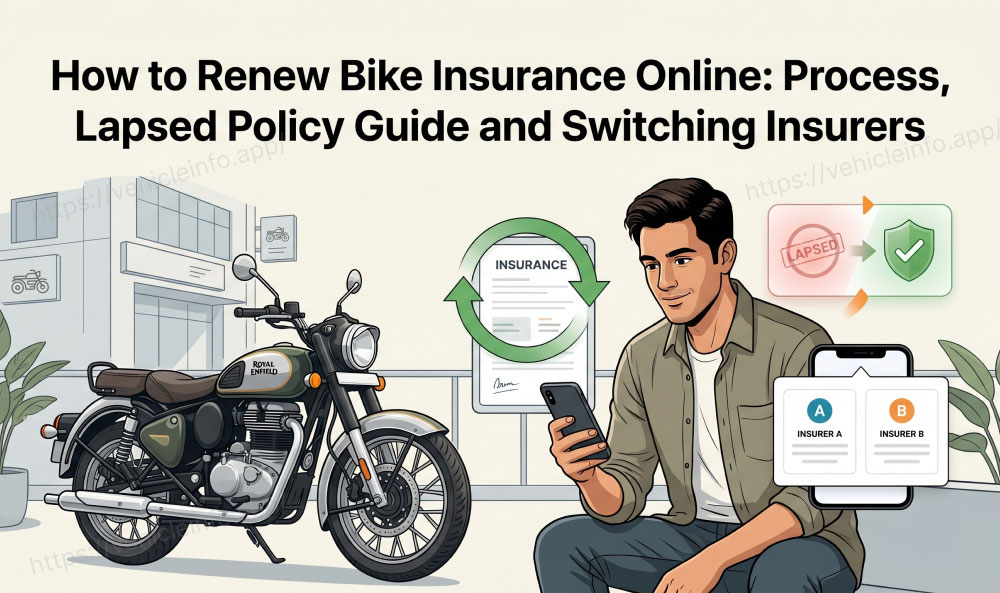
How to Renew Bike Insurance Online: Process, Lapsed Policy Guide and Switching Insurers
22 June, 2026
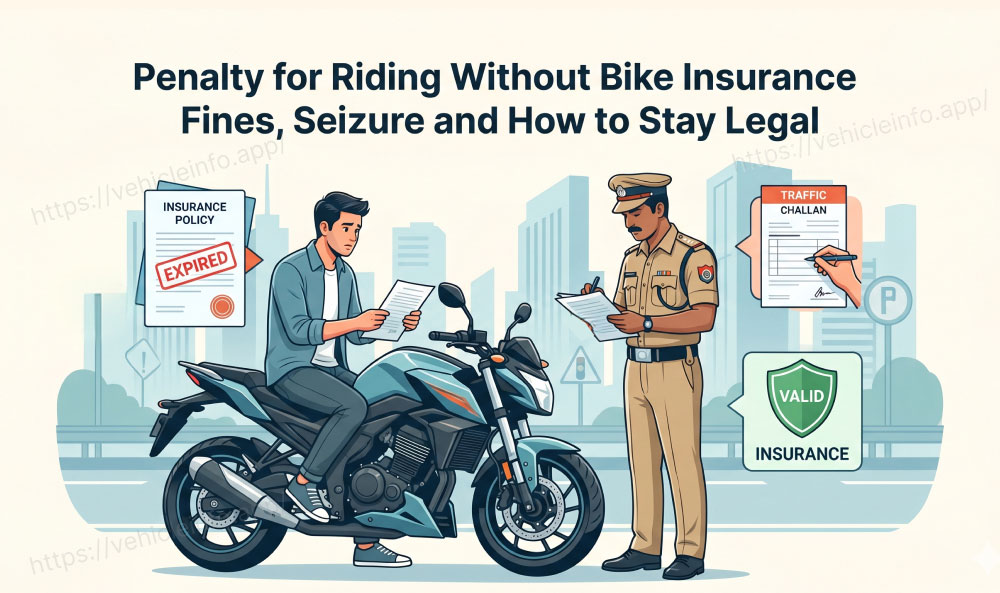
Renewing your two-wheeler insurance on time is one of the simplest compliance tasks you have as a vehicle owner. Yet, a large proportion of Indian bike owners let their policies lapse every year. When you renew bike insurance online, the process takes under ten minutes and eliminates the risk of riding on an expired policy. Driving on a lapsed policy is both illegal (the MV Act fine is Rs 2,000 for a first offence) and financially dangerous: if you have an accident with no active insurance, you bear the full cost of third-party liability and your own vehicle damage. The solution is straightforward: you can renew bike insurance online through any insurer's website or an aggregator, without visiting any office or interacting with any agent.
This guide covers the exact renewal steps, what to check when you renew, the specific process for lapsed policies and break-in insurance, and how to switch to a better insurer at renewal.
When to Renew: Timing Your Renewal Correctly
Two-wheeler insurance renewal is most straightforward when done before the current policy expires. Most insurers allow you to renew up to 60 days before the expiry date without any break in coverage. This window gives you time to compare options without the pressure of an expiring deadline.
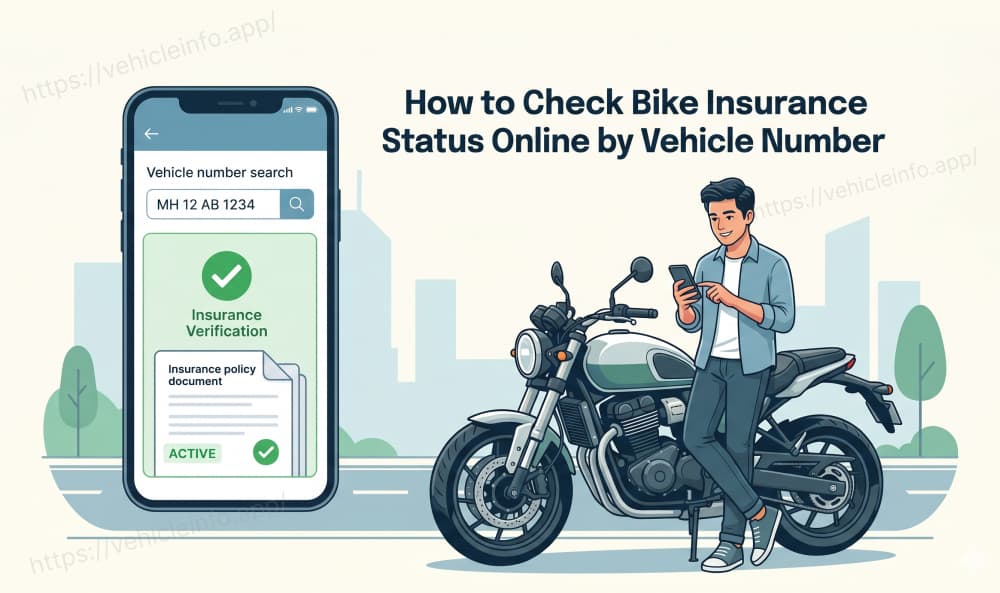
To check bike insurance online and when your policy expires, enter your vehicle registration number at Vehicle Info. The platform shows your insurance expiry date alongside your RC and PUC status in one view. This is particularly useful if you have lost your policy document or are unsure of the exact expiry date.
The best practice is to set a calendar reminder 45 days before the expiry date. This gives you 15 days to compare quotes, decide whether to switch insurers, and complete the renewal before any gap in coverage occurs.
How to Renew Bike Insurance Online: Step-by-Step
Here is the complete process to renew bike insurance online for a policy that has not yet expired:
- Gather your current policy details. You will need your vehicle registration number and the current policy number if you are renewing with the same insurer.
- Visit the insurer's website or an aggregator. To renew with your current insurer, go directly to their website. To compare and potentially switch, use an aggregator like Policybazaar or Coverfox.
- Enter your registration number. For renewal, the system recognises your existing policy and pre-fills most details.
- Confirm your IDV. Check that the IDV has been calculated correctly for your bike's current age using the IRDAI depreciation schedule. Some insurers automatically reduce IDV at renewal; verify this reflects fair market value.
- Review your NCB. The system should automatically apply your accumulated NCB based on your claim-free years. Confirm the percentage shown matches your entitlement.
- Select add-ons. Review whether the add-ons from your previous policy are still appropriate. As your bike ages, some add-ons (like zero dep) become less cost-effective.
- Complete payment. UPI, debit card, credit card, and net banking are all accepted. The renewed policy is delivered to your email immediately.
- Save your policy. Store it in DigiLocker, which is legally accepted as a valid insurance certificate at traffic checkpoints.
Lapsed Bike Insurance: What to Do When Your Policy Has Expired
Lapsed bike insurance is one of the most common problems facing Indian two-wheeler owners. If you have already missed the renewal date, the process to renew depends on how long the policy has been lapsed.
- Lapsed for up to 90 days: Most insurers offer renewal with a break-in inspection. This is a physical or virtual inspection of the bike to confirm it is in good condition with no pre-existing damage that occurred after the policy lapsed. Break-in bike insurance renewal for short lapses is the most common scenario and is typically resolved within one to three business days. Once the inspection is approved, the bike insurance renewal online process continues exactly as a standard renewal.
- Lapsed for 90 days to 1 year: A break-in inspection is mandatory. The insurer may restrict some add-ons (particularly zero dep) until the next renewal cycle. The expired bike insurance renewal process at this stage is more involved and may require an in-person survey. Understanding how to renew expired bike insurance at this stage means accepting that the break-in inspection cannot be skipped.
- Bike insurance lapsed 2 years or more: After a lapse of two years or more, most insurers treat the policy as a fresh purchase rather than a renewal. This means you lose all accumulated NCB. Break-in bike insurance for bike policies in this category is handled as a new policy issuance. Knowing how to renew expired bike insurance after a long lapse means starting the process as a new customer, including a fresh physical inspection.
What if bike insurance lapsed 3 years ago? The situation is the same as two years: a fresh policy, no NCB, and a mandatory physical inspection. The only way to avoid this outcome is to renew before the gap reaches this stage.
Break-in Insurance for Bikes: How It Works
Break-in insurance for bike is the term used for renewing a policy that has already lapsed. It is not a separate type of insurance: it refers to the process and inspection requirements that apply when renewing a policy after a coverage gap.
The inspection in a break-in bike insurance situation serves one purpose: to confirm that no damage occurred during the uninsured period that the insurer could be asked to cover. Common forms of break-in inspection:
- Virtual inspection: The insurer sends you a link via SMS. You use your smartphone to photograph the bike from specific angles (front, rear, both sides, close-up of chassis number). The photographs are reviewed by the insurer's team, typically within a few hours.
- Physical inspection: An inspector visits your location. This takes one to two business days to schedule.
For lapsed policies under 90 days, virtual inspection is usually accepted. For longer lapses, physical inspection is often required before break-in insurance for bike renewal is approved.
Switching Insurers at Renewal: How to Get a Better Deal
Two-wheeler insurance renewal is the only time you can switch insurers without any penalty or loss of cover, assuming the switch is completed before the current policy expires. Many riders do not realise they can renew bike insurance online with a completely different insurer in the same time it takes to renew with the current one. Here is why and how to switch bike insurers:
- Why switch: Premium rates for the same cover can vary by 20 to 40 per cent across insurers. Claim settlement ratios differ. Network garage counts differ. A comparison at each renewal ensures you are not overpaying simply because switching feels complicated.
- How to switch: At renewal time, visit an aggregator and compare quotes for your exact bike profile (registration number, correct IDV, your current NCB percentage). When you select a new insurer, they will ask for your current NCB certificate from your outgoing insurer. Request this certificate by email or download it from your current insurer's portal before the policy expires.
The switch bike insurer process involves:
- Compare bike insurance quotes 45 days before expiry.
- Identify the insurer offering the best combination of premium and CSR.
- Request your NCB certificate from your current insurer.
- Buy the new policy before your current one expires.
- The new insurer accepts the NCB certificate and applies your discount.
There is no inspection required when switching at renewal if the policy has not lapsed. The switch is seamless from the rider's perspective.
What to Check When Comparing Renewal Quotes
When you renew bike insurance online across insurers, do not compare only the final premium figure. Check these four things carefully:
- Correct NCB applied: Confirm the quote reflects your actual NCB percentage. Some systems may not auto-populate your NCB if you are switching insurers for the first time. Request your NCB certificate in advance and have the percentage ready to input manually if needed.
- IDV accuracy: Verify the IDV shown matches the current market value of your bike, not an artificially lowered figure. An undervalued IDV saves a small amount on premium but reduces the payout significantly in a total loss scenario.
- Add-on availability: Confirm the add-ons you want are available from the insurer you are comparing and for your bike's specific age. Not all insurers offer all add-ons for bikes over five years old.
- Network garage count in your city: Check that the insurer has a reasonable number of cashless garages in your area. A policy with the best premium but no nearby network garage makes cashless claims difficult in practice.
Frequently Asked Questions
1. How do I renew expired bike insurance?
Ans: To renew expired bike insurance, visit the insurer's website or an aggregator and enter your registration number. If lapsed for under 90 days, a break-in inspection (virtual or physical) is usually required before the renewal is approved. For lapsed bike insurance beyond 90 days, a physical inspection is typically mandatory. Once the inspection passes, the bike insurance renewal online process completes the same way as a standard renewal.
2. What happens if my bike insurance is lapsed for 2 years?
Ans: With bike insurance lapsed 2 years, you lose your accumulated NCB entirely and cannot claim any discount at renewal. The policy is treated as a fresh purchase. A mandatory break-in inspection is required. Most add-ons like zero dep may not be available for the first renewal cycle after a long lapse. Avoid reaching this stage by setting calendar reminders well before expiry.
3. What is break-in insurance for a bike?
Ans: What is break-in insurance for a bike? Break-in insurance for bike is the process of renewing a two-wheeler policy that has already lapsed. It is not a separate product: it refers to the inspection-and-renewal process where the insurer verifies the bike's condition before reinstating cover. Virtual inspections are common for lapses under 90 days; physical inspections are required for longer lapses. Once the inspection passes, the policy resumes normally.
4. Can I switch insurers when I renew bike insurance online?
Ans: Yes, and you should compare at every renewal. The switch bike insurer process involves comparing quotes, requesting your NCB certificate from your current insurer, and buying the new policy before expiry. There is no inspection or penalty for switching at renewal. The new policy takes effect the day after your current one expires, with no gap in coverage if timed correctly.
5. What if bike insurance lapsed for 3 years?
Ans: If bike insurance lapsed for 3 years, you are starting fresh: no NCB, a mandatory physical break-in inspection, and potentially restricted add-on options for the first renewal year. The expired bike insurance renewal at this stage is a new policy issuance rather than a renewal. The inspection confirms the bike's condition before the insurer accepts the risk.
6. How do I check my bike insurance expiry date?
Ans: Enter your vehicle registration number at Vehicle Info (vehicleinfo.app/pay-challan-online) to see your insurance status and expiry date immediately. You can also check through the mParivahan app or by logging into your insurer's portal. Two-wheeler insurance renewal should ideally begin 45 days before the expiry date to allow time for comparison, obtaining your NCB certificate, and switching if a better option is available.