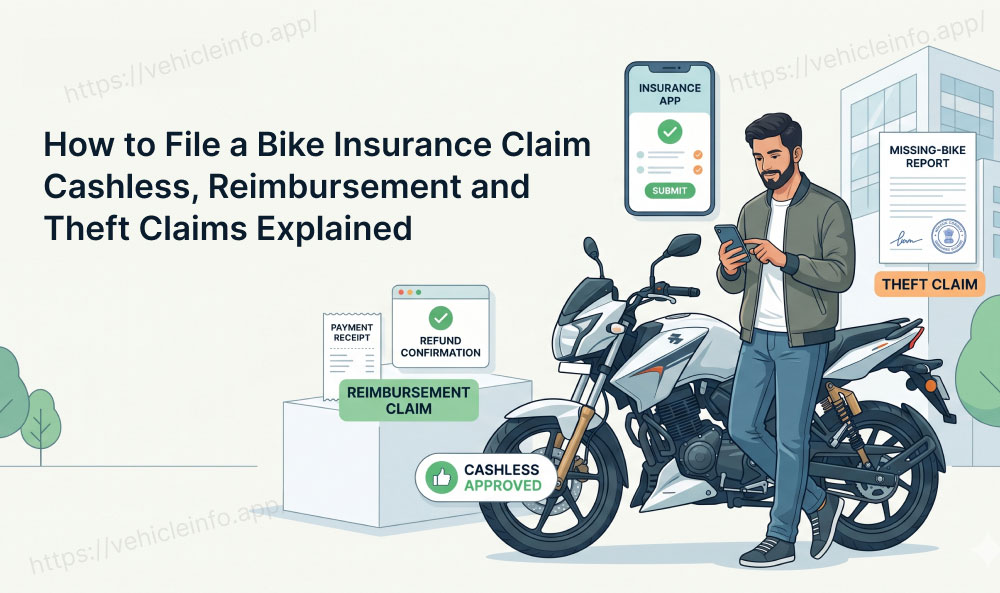
How to File a Bike Insurance Claim: Cashless, Reimbursement and Theft Claims Explained
22 June, 2026
Filing a claim for the first time can feel complicated, particularly in the aftermath of an accident when you are already dealing with stress, possible injury, and bike damage. The good news is that the bike insurance claim process is well-defined once you understand the structure. There are two main claim types for own damage (cashless and reimbursement), a separate process for theft, and a set of documents that will be required in every case.
This guide covers exactly when you can file a claim, the step-by-step process for both cashless and reimbursement claims, how to handle a theft claim including the FIR requirement, which documents you need, what the claim timeline looks like, and tips that protect your settlement.
When Can You File a Bike Insurance Claim?
A comprehensive two-wheeler policy covers claims in the following circumstances:
- Accidental damage: collision, overturning, or impact with another vehicle or fixed object
- Natural disasters: flood, cyclone, earthquake, landslide, or hailstorm
- Fire or explosion damage
- Theft of the entire vehicle (subject to FIR and a mandatory waiting period)
- Damage caused by riots, strikes, or malicious acts
- Third-party liability: injury or property damage you cause to another person
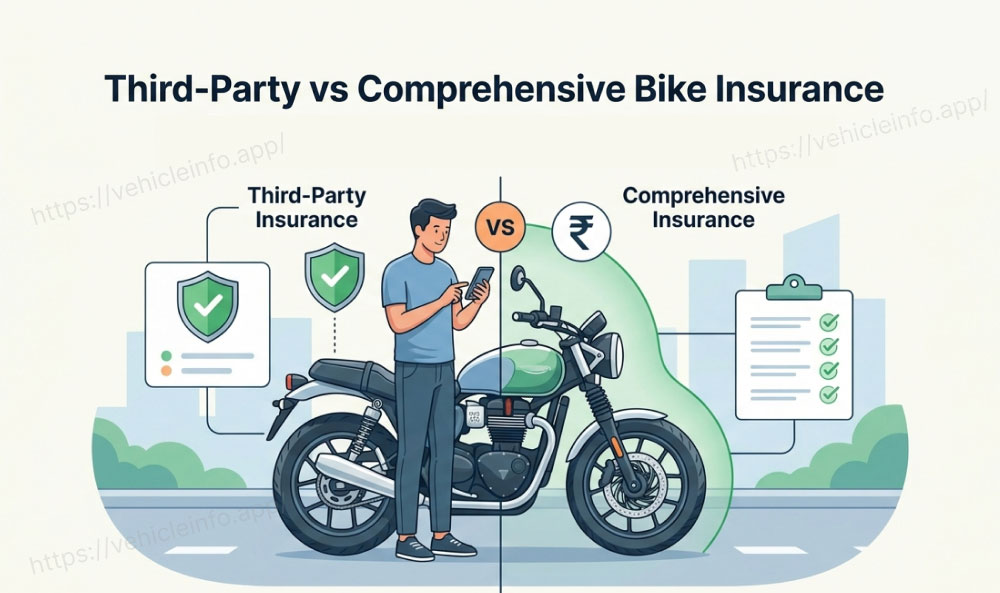
A third-party-only policy does not cover own vehicle damage claims. Owners of TP-only policies can claim only for third-party liability (injury or damage to others) and cannot initiate a bike accident insurance claim for damage to their own bike.
Before raising any claim, also consider whether the repair cost is significantly higher than the NCB you would lose by claiming. If the repair cost is Rs 4,000 to Rs 6,000 and your NCB discount is worth Rs 1,200 per year over several future renewals, paying out of pocket may be the more economical decision.
Cashless Claim vs Reimbursement Claim: The Core Difference
Every own damage claim falls into one of two categories:
- Cashless claim: You take your bike to a garage in the insurer's network. The insurer pays the garage directly for approved repairs. You pay only the deductible (compulsory and any voluntary deductible you chose) plus any non-payable items such as depreciation on parts (unless you have zero dep cover).
- Reimbursement claim: You take your bike to any garage, pay the repair bills yourself, and then submit the bills and claim form to the insurer for reimbursement of the approved amount. This route is used when a network garage is not conveniently available.
The bike cashless claim route is generally faster and more convenient because you do not need to arrange the funds for repair upfront. The bike reimbursement claim route offers more flexibility in choice of garage but requires you to manage the financial side of the repair yourself and wait for the reimbursement to arrive after assessment.
Accident Claim: Step-by-Step Process
Whether using the cashless or reimbursement route, here is how to claim bike insurance after an accident, step by step. The bike insurance claim process step by step for an accident follows this sequence:
- Ensure safety first. Move to a safe location, check for injuries, and call emergency services if needed.
- Photograph the scene. Take photographs of the bike damage, the accident location, any other vehicles involved, and any injuries. These photos are important evidence for your claim.
- Intimate the insurer immediately. Call your insurer's claim helpline within 24 to 48 hours of the incident. Most policies require intimation within this window; late intimation can complicate the claim. Provide the incident date, location, and a brief description.
- Do not repair the bike before surveyor inspection. This is a common mistake. Repairing damage before the insurer's surveyor has inspected the bike can result in the claim being partially or fully rejected. Wait for the surveyor to complete their inspection.
- Take the bike to a network garage (for cashless), or to a garage of your choice (for reimbursement). For cashless claims, the network garage coordinates with the insurer's surveyor directly.
- Complete the claim form. Your insurer will provide a claim form online or at the garage. Fill this accurately. Inaccuracies in the claim form constitute grounds for rejection.
- Submit two-wheeler claim documents. The surveyor will confirm what is needed, but the standard set is listed in the documents section below.
- Receive settlement. For cashless claims, the insurer pays the garage, and you collect your bike after paying your share. For a bike reimbursement claim, funds are transferred to your bank account after the insurer approves the assessed amount.
Theft Claim: The FIR-First Process
A bike theft insurance claim has a significantly different process from an accident claim. The key elements:
- File an FIR with the police immediately. This is mandatory for a theft claim. The FIR must be filed at the police station with jurisdiction over the area where the theft occurred. Obtain a copy of the FIR with a police seal.
- Intimate your insurer within 24 to 48 hours. Submit the FIR copy as the initial document. Most insurers have a specific claim helpline for theft. The insurer will open a theft claim file on receiving the intimation.
- Submit original keys. Most policies require you to submit the original keys of the bike as part of the theft claim settlement process. This confirms the keys were not provided to a third party.
- Wait for the mandatory search period. Police are required to investigate before the insurer can settle a theft claim. The mandatory search period is typically 30 to 90 days depending on the state and insurer. During this period, the police issue a Final Report or Non-Traceable Certificate confirming the bike could not be recovered.
- Receive settlement. Once the insurer receives the Non-Traceable Certificate and all required documents, the settlement is made at the IDV value minus any depreciation (or at full IDV if you have RTI cover). The entire bike theft insurance claim process, from intimation to settlement, typically takes 60 to 120 days.
Documents Checklist for Bike Insurance Claims
Two-wheeler claim documents required for a standard accident claim:
- Filled and signed claim form (provided by insurer)
- Copy of insurance policy
- Copy of Registration Certificate (RC) of the bike
- Copy of the driver's licence of the person riding at the time of accident
- FIR copy (required for third-party claims and major accident claims; some insurers require it for all claims)
- Repair estimates from the garage
- Original repair bills and payment receipts (for reimbursement claims)
For a bike theft insurance claim, add:
- Original FIR copy with police seal
- Non-Traceable Certificate from the police
- Both sets of keys (original and duplicate)
- Form 28, 29, and 30 (for transfer of ownership to insurer on total loss settlement)
- Any relevant RTO documents
Bike insurance claim documents needed are the same across all insurers for a given claim type. Having all documents ready before initiating the claim process significantly reduces delays.
Claim Timeline: What to Expect
- Cashless accident claim: Surveyor inspection typically within 24 to 72 hours of intimation. Repair authorisation within 2 to 5 working days. Bike collection after repairs: Varies by damage extent but typically 7 to 21 days.
- Bike reimbursement claim: After submission of bills and all documents, reimbursement is typically processed within 14 to 30 working days. Complex or high-value claims may take longer.
- Theft claim: From intimation to settlement, expect 60 to 120 days, including the mandatory police search period. This is the longest claim type by design.
How long does bike claim take if delayed? If your claim is delayed beyond these timeframes, follow up in writing with your insurer's grievance team. IRDAI requires insurers to resolve complaints within 30 days. Escalating to the Insurance Ombudsman is an option if the insurer does not resolve your grievance within that window.
7 Tips That Protect Your Claim Settlement
- Intimate the insurer within 24 hours, not after the bike is repaired. Late intimation is one of the most common reasons for claim complications.
- Photograph everything at the accident scene, including the position of vehicles, road conditions, and any witnesses. These photographs support your account if the claim is disputed.
- Never admit liability at the accident scene. Your insurer handles the liability assessment. An admission at the scene can affect third-party claim outcomes.
- Keep the original repair bills. For reimbursement claims, original bills are non-negotiable. Photocopies are generally not accepted.
- Disclose accurately on the claim form. Any misrepresentation on the form, including understating the extent of the incident, gives the insurer grounds to reject the claim entirely.
- Check whether your repair cost justifies the claim. A bike accident insurance claim of Rs 3,000 to Rs 5,000 may cost you more than Rs 3,000 in additional premium over the next two to three years due to NCB loss.
- Use a network garage for cashless settlement wherever possible. It is faster, requires less paperwork, and removes the risk of reimbursement disputes over specific line items.
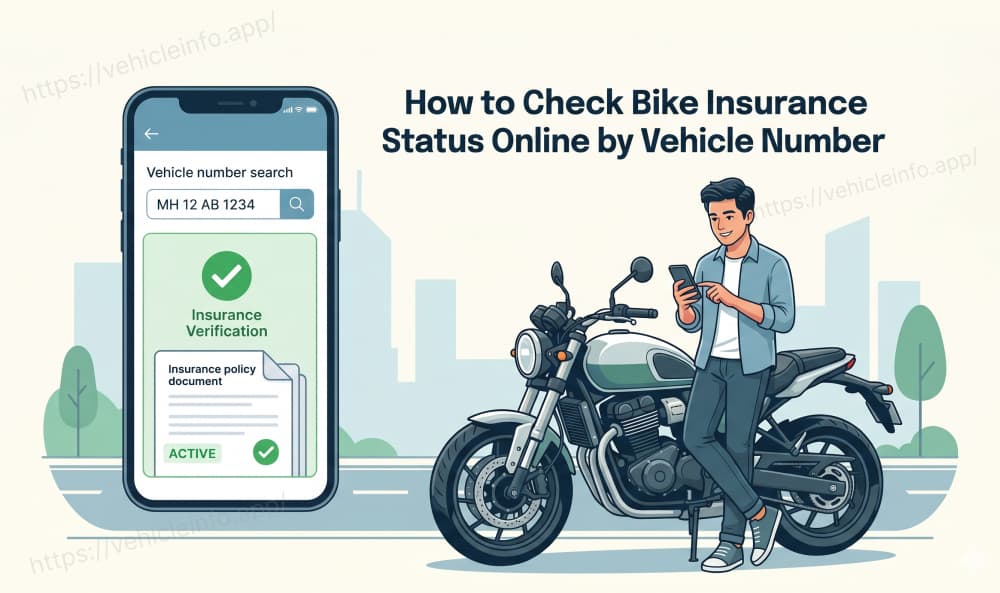
Check your bike insurance status and ensure your policy is active before any journey through Vehicle Info. Enter your vehicle registration number to see your insurance validity alongside RC and PUC details.
Frequently Asked Questions
1. How to claim bike insurance after accident?
Ans: To make a claim after an accident: how to claim bike insurance after accident is straightforward once you know the steps: photograph the scene, intimate your insurer within 24 to 48 hours, do not repair the bike before the surveyor inspects it, take it to a network garage for a bike cashless claim or to any garage for reimbursement, submit the required two wheeler claim documents, and receive settlement after approval. The claim process step by step is the same for all insurers.
2. What documents are needed for a bike insurance claim?
Ans: Bike insurance claim documents needed are: the claim form, policy copy, RC copy, driving licence copy, repair estimate and bills, and FIR if required. For a theft claim: FIR with seal, Non-Traceable Certificate, both sets of keys, and transfer ownership forms. Keeping these documents organised before an incident occurs makes the process much faster when you actually need to claim.
3. How long does a bike insurance claim take?
Ans: How long does bike claim take depends on the type: a bike cashless claim typically resolves in 7 to 21 days after surveyor approval. A bike reimbursement claim takes 14 to 30 working days after document submission. A bike theft insurance claim takes 60 to 120 days, including the mandatory police search period. Complex claims with disputed liability may take longer.
4. What is the difference between cashless and reimbursement claims?
Ans: In a bike cashless claim, the insurer pays the network garage directly. You only pay the deductible and any non-payable items. In a bike reimbursement claim, you pay the garage out of your own pocket and submit bills for repayment. The two-wheeler insurance claim process is similar for both routes; the difference is in who pays the garage and when.
5. Can I file a claim if I was riding without a valid licence?
Ans: No. Riding without a valid driving licence at the time of the accident is a standard exclusion in all two-wheeler policies. A bike accident insurance claim will be rejected if the rider did not hold a valid licence when the incident occurred. This exclusion applies even if the accident was not your fault.
6. Will filing a small claim affect my premium?
Ans: Yes. Any bike insurance claim, regardless of size, resets the NCB to zero for that policy year. After a claim, your next renewal OD premium increases because the NCB discount is lost. For repairs under Rs 5,000 to Rs 8,000, paying out of pocket and preserving your NCB is typically more cost-effective over the medium term.
7. What happens if my bike is stolen and not recovered?
Ans: You file a bike theft insurance claim by reporting to police, intimating the insurer, and waiting the mandatory 30 to 90 day search period. Once the police issue a Non-Traceable Certificate confirming the bike is unrecovered, the insurer settles at the IDV value. All required documents, including original keys, must be submitted. The total two-wheeler insurance claim process for theft typically takes 60 to 120 days end to end.
8. What should I do if my claim is rejected?
Ans: If your claim is rejected, request a written explanation of the reason from your insurer. If you believe the rejection is unjustified, file a formal grievance with the insurer's grievance team. If unresolved within 30 days, escalate to the Insurance Ombudsman for your region. IRDAI oversees complaint resolution, and insurers must respond within stipulated timelines.