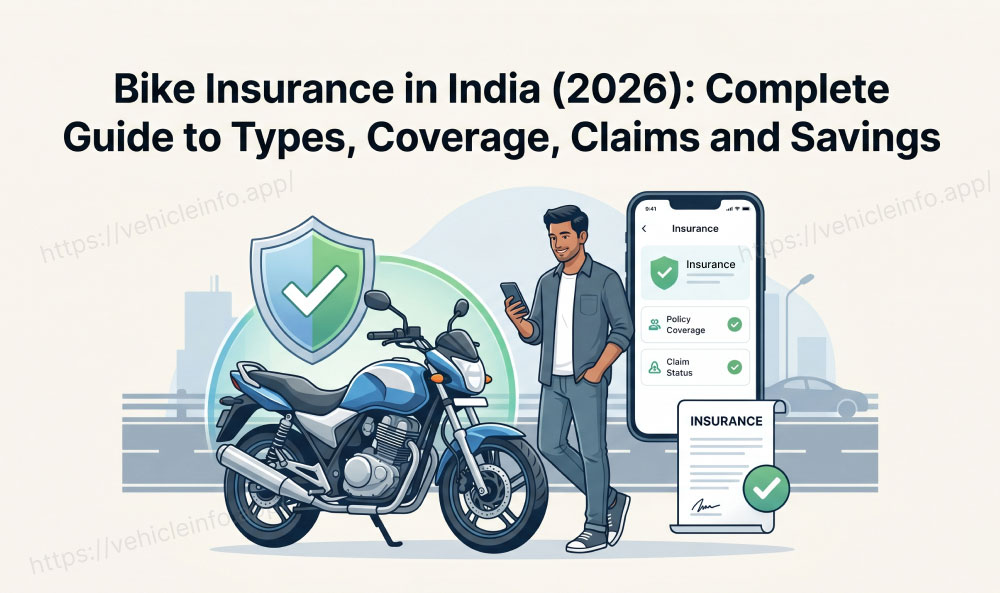
Bike Insurance in India (2026): Complete Guide to Types, Coverage, Claims and Savings
18 June, 2026
Two-wheeler insurance is one of those things most riders buy once and forget until renewal or until something goes wrong. The result is that the majority of two-wheeler owners in India are either underinsured (holding only the mandatory third-party cover), uninsured (policy has expired), or have a policy they do not fully understand. This guide is designed to fix that. Whether you are buying bike insurance India for the first time, switching insurers at renewal, or trying to understand what your current policy actually covers, this is the most complete reference you will find.
This guide to bike insurance India covers everything: the two policy types, what each covers and excludes, which add-ons are worth buying, IDV and NCB calculations, how to file a claim, which insurers are worth considering, and what EV two-wheeler insurance looks like compared to petrol. We have also answered the twelve most commonly asked questions at the end.
What is Bike Insurance and Why Is It Mandatory in India?
Two-wheeler insurance is a contract between the vehicle owner and an insurance company in which the insurer agrees to pay for specified financial losses arising from the vehicle in exchange for a premium. It is governed by the Insurance Regulatory and Development Authority of India (IRDAI) and is mandatory under Section 146 of the Motor Vehicles Act.
Is bike insurance mandatory in India? Yes, without exception. Every motor vehicle on a public road in India must have at least a third-party liability policy. Driving a bike without any insurance is a criminal offence under the MV Act, punishable with a fine of Rs 2,000 for a first offence and Rs 4,000 for a repeat, in addition to potential imprisonment. The mandatory nature covers all two-wheelers: motorcycles, scooters, mopeds, and electric two-wheelers.
Third-party insurance protects other people and their property from damage your vehicle causes. It does not protect your own vehicle. For the vast majority of bike owners, particularly those with newer or more expensive bikes, third-party cover alone leaves a significant gap.
Types of Bike Insurance: TP vs Comprehensive Comparison
Two categories of two-wheeler insurance exist in India:
- Third-Party (TP) Insurance: The mandatory third-party bike insurance covers damage or injury caused to a third party (another person, vehicle, or property) by your bike. Does not cover your own bike.
- Comprehensive Insurance: Covers everything third-party insurance covers, plus damage to your own bike from accidents, theft, fire, natural disasters, and other specified causes.
| Feature | Third-Party | Comprehensive |
|---|---|---|
| Mandatory? | Yes | No |
| Third-party liability | Yes | Yes |
| Own bike damage (accident) | No | Yes |
| Theft cover | No | Yes |
| Fire damage | No | Yes |
| Natural disaster damage | No | Yes |
| Add-on covers available | No | Yes |
| Premium | Lower | Higher |
| Recommended for | Old bikes with low IDV | New and mid-age bikes |
The two-wheeler insurance comparison above makes the core distinction clear. A third-party policy is the legal minimum. Comprehensive bike insurance is what most owners of bikes worth more than Rs 30,000 to Rs 40,000 should seriously consider, since the cost of repair or replacement after an accident can far exceed the additional comprehensive premium.
What Bike Insurance Covers and What It Excludes
A standard comprehensive two-wheeler policy in India covers:
What is covered:
- Accidental damage to your own bike (collision, overturning)
- Theft (subject to FIR requirement)
- Fire, explosion, and self-ignition damage
- Natural calamities: flood, cyclone, earthquake, landslide
- Third-party bodily injury or death
- Third-party property damage (up to Rs 7.5 lakh under standard third-party cover)
- Personal accident cover for the owner-driver (Rs 15 lakh mandatory PA cover)
What is not covered (standard exclusions):
- Normal wear and tear and mechanical/electrical breakdown
- Damage when driving without a valid licence
- Damage when driving under the influence of alcohol or drugs
- Damage from deliberate acts or illegal activities
- Damage from racing or speed testing
- Damage to tyres and tubes (unless the bike is also damaged in the same incident)
- Electrical or mechanical failure
Understanding exclusions is as important as understanding what is covered. An insurance claim will be rejected if any of the exclusions apply at the time of the incident.
Best Add-ons for Bike Insurance: What Is Worth Buying
Bike insurance add-ons, sometimes called riders, are optional covers attached to a comprehensive two-wheeler policy in India for an additional premium. The most useful ones:
- Zero Depreciation (Zero Dep) Cover: Among the best bike insurance add-ons available, zero depreciation is the most popular. Without this cover, your insurer deducts depreciation from the settlement for parts replaced during a claim. With zero dep, you receive the full replacement cost without any depreciation deduction. For bikes less than three years old, this is almost always worth buying. The additional premium is typically 10 to 20 per cent of the base comprehensive premium.
- Engine Protection Cover: Covers damage to the engine that is caused by factors not covered under the standard policy, such as water ingress (flooding) or oil leakage. Particularly useful if you live in a flood-prone city or ride on waterlogged roads. Insurers typically exclude hydrostatic lock damage from standard policies.
- Roadside Assistance (RSA): Provides emergency help including towing, minor repairs on-site, fuel delivery, and alternative transport if your bike breaks down. Useful for long-distance riders and older bikes.
- Consumables Cover: Covers the cost of consumables such as engine oil, nuts, bolts, and brake fluid used during repairs. These small items add up in a major repair and are excluded from standard policies.
- Return to Invoice (RTI) Cover: In the event of total loss (bike stolen or beyond repair), the standard policy pays only the current IDV. RTI cover pays the full original invoice value including registration and road tax, which is significantly higher for a new bike.
For most bike owners with a bike less than three to four years old, zero dep and engine protection are the two add-ons that offer the best value for money.
How to Buy Bike Insurance Online in Minutes
Online purchase has become straightforward. Here is the process:
- Gather your documents. You will need your bike's registration number, the previous policy number (for renewal), and your personal details. For a new bike, you will need the invoice and RTO registration certificate.
- Visit an insurer's website or an aggregator. For a direct purchase, visit the HDFC ERGO, Bajaj Allianz, or ACKO website. For a comparison, visit Policybazaar or Coverfox. Aggregators allow you to compare premiums across multiple insurers in one place, which is the quickest way to find the best value.
- Enter your vehicle registration number. Most platforms can automatically pull the bike's details from the RTO database using the registration number, saving manual entry.
- Select the policy type (TP or comprehensive) and choose add-ons.
- Complete KYC, pay online, and receive the policy document digitally. Policy delivery is typically instant for renewal and within a few hours for new purchases.
After buying, you can verify your two-wheeler insurance status through Vehicle Info by entering your vehicle registration number. The platform shows your insurance status, expiry date, RC details, and PUC status in one view.
When to Renew and What to Check: A Bike Insurance Renewal Guide
Bike insurance renewal is one of the most commonly deferred tasks in vehicle ownership. A lapsed policy is one of the leading causes of uninsured riding in India, and the financial and legal consequences are significant. Renew at least 30 days before your policy expires. Most insurers send SMS reminders, but do not rely solely on these.
At every bike insurance renewal, check the following:
- Whether your NCB has been correctly applied. A 50 per cent NCB on the OD component represents substantial savings.
- Whether the IDV has been set accurately. Some insurers lower it automatically at renewal; you can request a correction.
- Whether your current add-ons still make sense. Zero dep on a five-year-old bike with a low IDV may no longer be worth the extra cost.
- Whether switching insurers would offer better rates. Bike insurance renewal is the right moment to compare across providers.
Lapsed policy renewal: If your policy has lapsed for under 90 days, most insurers will renew it after a break-in inspection. For a lapse exceeding 90 days, the inspection is mandatory and some add-ons may be unavailable until the next renewal cycle.
8 Ways to Reduce Your Bike Insurance Premium
Reducing your premium does not mean reducing cover. These tips lower cost while maintaining protection:
- Accumulate NCB: Five consecutive claim-free years give 50 per cent off the Own Damage premium, the single largest lever for reducing costs.
- Set an accurate IDV: Do not inflate it artificially. Accurate valuation saves premium consistently across renewal years.
- Install an approved anti-theft device: Some insurers offer small discounts for ARAI-approved devices installed on the bike.
- Choose only relevant add-ons: Zero dep adds genuine value for bikes under three years old but less so for older bikes with low IDVs.
- Compare quotes every year: An aggregator at renewal often reveals a competing insurer offering better value for the same cover.
- Opt for a higher voluntary deductible: A higher deductible you can genuinely afford to pay out of pocket at claim time will lower your annual premium.
- Avoid small claims: Filing for minor repairs under Rs 5,000 to Rs 8,000 resets your NCB. Paying out of pocket and preserving the bonus is typically more economical over time.
- Renew on time: A policy lapse costs you NCB and triggers a break-in inspection. Timely renewal avoids both inconveniences.
Premium Factors: What Determines How Much You Pay
How much does bike insurance cost? The bike insurance premium for a comprehensive policy is calculated based on several variables:
- Engine Capacity (CC): Directly affects the third-party premium component, which is fixed by IRDAI. A 100cc bike pays a lower TP premium than a 350cc bike. The OD (Own Damage) premium also scales loosely with engine size.
- IDV (Insured Declared Value): The current market value of your bike. The higher the IDV, the higher the OD premium. A new Rs 1.5 lakh bike will have a higher OD premium than a three-year-old bike of the same model because its IDV is higher.
- NCB (No Claim Bonus): A discount applied to the OD premium if you have not made any claims in the preceding year(s). NCB ranges from 20 per cent after one claim-free year to 50 per cent after five consecutive claim-free years. This is the single biggest tool for reducing your premium over time.
- Age of the Bike: Older bikes have lower IDVs and therefore lower OD premiums. However, some add-ons like zero dep are not available for very old bikes.
- City and Zone: Insurers categorise cities into zones that affect premium rates. Metro cities (Delhi, Mumbai, Chennai, Kolkata) typically attract higher premiums than smaller cities.
- Rider Age and Driving History: Some insurers factor in the owner's age and claims history for the OD component.
IDV for Bikes: How It Is Calculated
IDV stands for Insured Declared Value. It is the maximum amount your insurer will pay in the event of total loss (theft or complete damage beyond repair). The IDV is calculated as:
IDV = Manufacturer's listed selling price (minus) applicable depreciation percentage
The standard depreciation schedule for two-wheelers set by IRDAI:
| Bike Age | Depreciation Rate |
|---|---|
| Up to 6 months | 5% |
| 6 months to 1 year | 15% |
| 1 to 2 years | 20% |
| 2 to 3 years | 30% |
| 3 to 4 years | 40% |
| 4 to 5 years | 50% |
| Over 5 years | Mutually agreed value |
For old bikes beyond five years, the IDV is agreed between you and the insurer. For older bikes with low IDVs (under Rs 20,000), some owners choose to continue with only third-party insurance since the OD premium becomes relatively high compared to the potential payout.
Setting the IDV accurately matters. A lower IDV reduces your premium but means less payout in a total loss. Do not voluntarily understate your IDV just to save a small amount on premium.
NCB for Bikes: Slabs, Transfer and Protection
No Claim Bonus (NCB) is a reward for not making any claims during a policy year. It is applied as a discount on the Own Damage component of your comprehensive premium.
NCB slab table for two-wheelers:
| Claim-Free Years | NCB Discount |
|---|---|
| 1 year | 20% |
| 2 years | 25% |
| 3 years | 35% |
| 4 years | 45% |
| 5 or more years | 50% |
NCB is transferable: if you switch insurers at renewal, your accumulated NCB goes with you. You will receive an NCB certificate from your current insurer that the new insurer accepts. NCB is linked to the owner, not the bike, so if you sell your bike and buy a new one, you can use the accumulated NCB on the new bike's policy.
NCB is lost if you make a claim in that policy year. Some insurers offer an NCB Protection add-on that allows one claim per year without losing the NCB. This add-on is typically worth buying if you have accumulated 35 per cent or 50 per cent NCB.
When you renew your two-wheeler insurance, always declare the correct NCB. Mis-declaring a higher NCB constitutes misrepresentation and can lead to a claim being rejected.
How to File a Bike Insurance Claim: Cashless and Reimbursement
A two-wheeler insurance claim can be filed in two ways: cashless (the insurer pays the garage directly) or reimbursement (you pay and the insurer reimburses you).
Cashless Claim Process:
- Take your bike to a network garage listed by your insurer
- Intimate the insurer immediately (within 24 to 48 hours of the incident)
- The insurer sends a surveyor to assess the damage
- The surveyor approves the repair estimate
- The garage repairs the bike and the insurer pays the approved amount directly
Reimbursement Claim Process:
- Take your bike to any garage (not necessarily a network garage)
- Intimate the insurer before repairs begin
- Get written estimates and retain all bills and receipts
- The insurer's surveyor assesses the damage
- You pay the garage and submit bills to the insurer for reimbursement
For a theft insurance claim for your bike, the process differs:
- File an FIR with the police immediately
- Intimate the insurer within the stipulated period (usually 24 to 48 hours)
- Submit the FIR copy, registration certificate, and original keys
- The insurer waits for a mandatory police search period (typically 30 to 90 days before declaring the bike untraceable)
- Settlement is made at the IDV value after verification
Always carry a copy of your insurance policy document on your phone (via DigiLocker) and know your insurer's 24-hour claim helpline number.
Top Bike Insurance Companies in India (2026): A Quick Comparison
Choosing the best insurer depends on what you prioritise: premium cost, claim settlement speed, network garages, or digital ease. Here is a quick reference of the leading insurers:
| Insurer | Claim Settlement Ratio | Network Garages | Digital Experience |
|---|---|---|---|
| Bajaj Allianz General Insurance | High (96%+) | 4,000+ | Good |
| HDFC ERGO General Insurance | High (95%+) | 6,800+ | Excellent |
| ICICI Lombard General Insurance | High (96%+) | 5,600+ | Excellent |
| Acko General Insurance | High (97%+) | 7,500+ | Excellent (app-first) |
| Digit Insurance | High (96%+) | 5,300+ | Excellent |
| New India Assurance | Moderate | 3,000+ | Moderate |
| Reliance General Insurance | Moderate | 3,800+ | Good |
| Kotak General Insurance | High | 4,000+ | Good |
| United India Insurance | Moderate | 3,000+ | Moderate |
| Oriental Insurance | Moderate | 2,500+ | Moderate |
Which bike insurance is best depends on your priorities. For purely digital buyers who want the smoothest app experience, Acko and HDFC ERGO lead. For PSU loyalists who prefer a government-backed insurer, New India Assurance remains reliable. For the widest network of garages, HDFC ERGO and ICICI Lombard have the deepest coverage.
The Claim Settlement Ratio (CSR) is one of the most useful metrics: it tells you what percentage of claims the insurer settled in the previous financial year. A CSR above 95 per cent is generally considered strong.
EV Bike Insurance: What Is Different for Electric Two-Wheelers
Two-wheeler insurance for electric bikes has some specific characteristics that differ from petrol bike coverage, and the scooter insurance market for EVs has grown rapidly alongside the adoption of brands like Ola Electric, Ather, TVS iQube, and Bajaj Chetak.
- Lower TP Premium: IRDAI has set lower third-party premium rates for electric two-wheelers compared to petrol equivalents, as an incentive for EV adoption. The TP premium for an electric scooter under 3 kW is Rs 457, compared to Rs 538 for a petrol bike up to 75cc.
- Battery Coverage: The battery is the most expensive component of an EV and is not automatically covered under a standard comprehensive policy in all cases. Some insurers include battery cover in the base comprehensive policy; others offer it as an add-on. Always check explicitly whether your policy covers the battery against damage, fire, and theft.
- Standard Perils Still Apply: Fire, theft, and natural calamity cover work the same way for EVs as for petrol bikes. The own damage premium is calculated on IDV, which for EVs is typically the ex-showroom price minus applicable depreciation.
Two-wheeler insurance for EVs is still relatively new in India, and the coverage and add-on options are expanding rapidly as the EV fleet grows. The Vehicle Info platform at vehicleinfo.app/pay-challan-online lets you check your electric bike's insurance status along with RC, PUC, and fitness details in the same place as any other vehicle.
Frequently Asked Questions
1. Is bike insurance mandatory in India?
Ans: Yes bike insurance is mandatory in India according to Section 146 of the Motor Vehicles Act: which states every two-wheeler on a public road must have at least third-party insurance. Riding without any cover is a criminal offence with a fine of Rs 2,000 (first offence) and Rs 4,000 (repeat) plus possible imprisonment. Two-wheeler cover is not optional under any circumstances.
2. How much does bike insurance cost in India?
Ans: How much it costs depends on engine size, bike age, IDV, city, and NCB accumulated. A third-party policy for a 150cc bike costs around Rs 714 per year at IRDAI-fixed rates. A comprehensive two-wheeler insurance in India policy for the same bike starts from around Rs 1,500 to Rs 3,000 per year depending on add-ons. A new 350cc bike might attract Rs 5,000 to Rs 8,000 annually for comprehensive cover.
3. What is the difference between TP and comprehensive it?
Ans: Third party bike insurance covers your liability to others: if your bike injures a person or damages property, the policy pays for it. Comprehensive bike insurance adds own damage cover, meaning it also pays for damage to your own bike from accidents, theft, fire, and natural disasters. Third-party is compulsory; comprehensive is optional but strongly recommended for bikes less than five years old.
4. Which bike insurance is best in India?
Ans: Which bike insurance is best depends on what you value most. For the highest claim settlement ratio and digital experience, HDFC ERGO, ICICI Lombard, Acko, and Digit are consistently strong performers. For the widest garage networks, HDFC ERGO and ICICI Lombard lead. For the cheapest premium, comparing quotes across aggregators like Policybazaar or Coverfox is the most reliable approach. No single insurer is best for all riders.
5. What is NCB in two-wheeler insurance?
Ans: NCB stands for No Claim Bonus. It is a discount of 20 to 50 per cent on your Own Damage premium, earned for each year without a claim. After five consecutive claim-free years, you receive the maximum 50 per cent NCB discount. NCB is transferable between insurers and between bikes. Making a claim resets the NCB to zero unless you have an NCB Protection add-on. The premium savings from accumulated NCB can be substantial over five years.
6. How do I file an insurance claim?
Ans: For a bike insurance claim on an accident, take your bike to a network garage and immediately intimate your insurer. A surveyor will assess the damage and authorise repairs. For cashless claims at a network garage, the insurer pays the garage directly. For a theft insurance claim for your bike, file an FIR immediately, intimatethe insurer within 24 to 48 hours, and submit all required documents. Settlement is made at the IDV value after the mandatory search period.
7. What is zero depreciation bike insurance?
Ans: Zero depreciation is an add-on cover for comprehensive two-wheeler policies that eliminates the depreciation deduction from your claim settlement. Under a standard policy, the insurer deducts depreciation from the replacement cost of parts. With zero dep, you receive the full replacement cost. For new bikes and bikes under three years old, this add-on typically offers excellent value. The additional premium is usually 10 to 20 per cent of the base OD premium.
8. Can I buy bike insurance online instantly?
Ans: Yes. Online purchase is instant for most renewals and takes one to two hours for new policies. You visit the insurer's website or use two-wheeler insurance online platforms like aggregators, enter your registration number, select cover type and add-ons, complete KYC, pay, and receive the digital policy document. Buying two-wheeler insurance online means the policy is valid from the moment of issuance. Keep it accessible on DigiLocker for roadside checks.
9. What add-ons should I buy with my policy?
Ans: The most valuable policy add-ons for most riders are zero depreciation (for bikes under three to four years old), engine protection (for monsoon-prone cities or older bikes), and roadside assistance (for long-distance riders). Return to Invoice is useful for new bikes in their first two years. Consumables cover is a lower-priority addition that becomes useful in high-repair incidents. Choose based on how you use your bike and where you ride.
10. What is bike insurance for old bikes?
Ans: Bike insurance for old bike policies typically means a third-party-only policy once the bike is over five years old and the IDV has dropped significantly. The OD premium relative to IDV makes comprehensive cover less cost-effective for very old bikes. However, this depends on the bike's condition and usage. An old but well-maintained bike worth Rs 40,000 to Rs 60,000 may still benefit from a low-add-on comprehensive policy, particularly in theft-prone areas.
11. How do I check my insurance status online?
Ans: Enter your vehicle registration number on the Vehicle Info platform at vehicleinfo.app/pay-challan-online to instantly see your bike's insurance status, expiry date, and policy details. You can also check through the mParivahan app or the IIB (Insurance Information Bureau) portal at iib.gov.in. Regular checks are important: an expired two-wheeler policy means you are both uninsured and in violation of the MV Act.
12. What is the scooter insurance premium for a new electric scooter?
Ans: Scooter insurance for a new electric scooter (under 3 kW motor) starts with a third-party premium of Rs 457 per year at IRDAI-fixed rates. The comprehensive scooter insurance premium adds an own damage component based on IDV. For a popular electric scooter like the Ola S1 or Ather 450X with an ex-showroom price of Rs 1 to Rs 1.5 lakh, the comprehensive first-year premium including mandatory PA cover typically falls between Rs 3,000 and Rs 5,000 depending on add-ons.