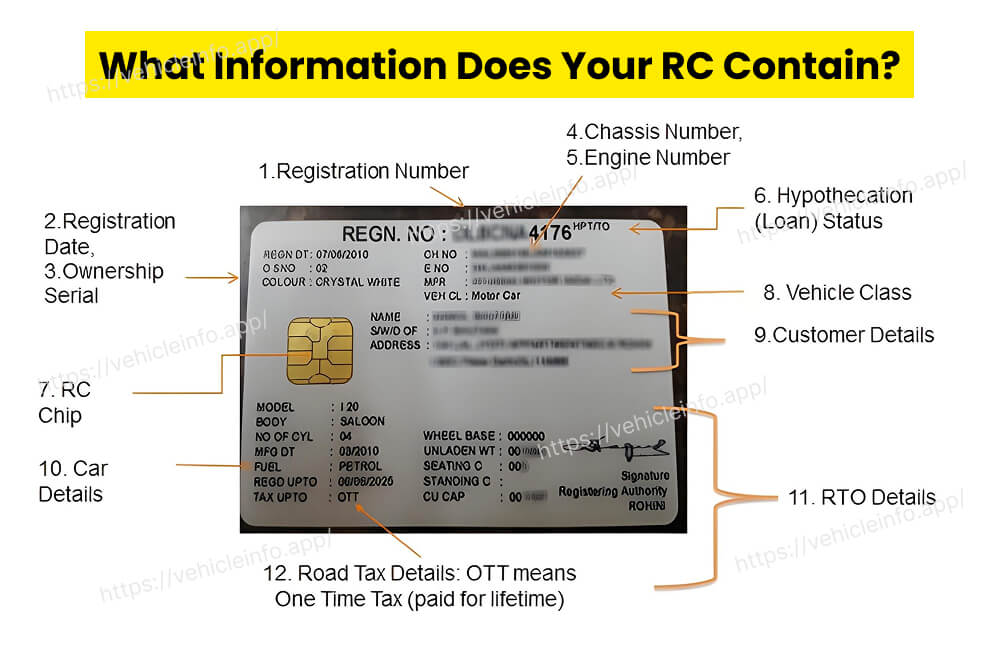
What Information Does Your RC Contain?
22 February, 2025
Your vehicle's Registration Certificate (RC) is an essential document that proves the legal registration of your car. It contains important RC details about your vehicle, ensuring its identification and compliance with traffic laws. Knowing what information your RC holds can help you during various situations like RC details check, vehicle verification, resale, or insurance claims.
Key Details in Your RC
Your RC includes several crucial pieces of information about your vehicle. Here are the major details you will find:
1. Vehicle Registration Number
The unique number assigned to your vehicle by the RTO (Regional Transport Office) for identification purposes. This number is necessary for legal and administrative processes such as insurance claims, traffic violations, and ownership transfers.
2. Owner's Name and Address
The registered owner’s details are mentioned, which helps in ownership verification and legal documentation. This information is essential when buying or selling a vehicle, applying for loans, or dealing with legal disputes regarding ownership.
3. Vehicle Class and Type
Specifies whether the vehicle is a private car, commercial vehicle, motorcycle, etc. This classification determines the type of road tax applicable, car details required for insurance premiums, and legal usage restrictions.
4. Chassis Number and Engine Number
These unique numbers help in vehicle identification and prevent fraud or theft-related issues. The chassis number is the vehicle’s primary identifier, while the engine number helps in cases of mechanical inspections, modifications, and repairs.
5. Fuel Type
Indicates whether your vehicle runs on petrol, diesel, CNG, or electricity, which is crucial for emissions and fuel policies. Knowing your fuel type is also necessary for tax calculations, pollution control measures, and vehicle maintenance.
Also Read: How to apply for fancy number allocation
6. Registration Date and Validity
Shows when the vehicle was registered and the expiry date of the registration. Keeping track of the registration validity is important to avoid fines, renewal delays, or penalties imposed by the transport authorities.
7. Seating Capacity
Specifies the number of passengers a vehicle can legally accommodate. This information is critical for compliance with safety regulations, insurance policies, and traffic laws.
8. Insurance Details
Some RCs may include insurance validity information, which is required for legal driving. Insurance details help verify coverage in case of accidents, theft, or damage claims.

9. Hypothecation Details
If your vehicle is purchased on loan, the RC will mention the financer’s name. Once the loan is cleared, this entry can be removed by applying for hypothecation removal at the RTO with relevant documents.
10. Color and Model of Vehicle
Your RC also records details like the color and model of your vehicle. This helps in easy identification and verification during resale or legal procedures. It also plays a role in insurance claims and law enforcement investigations.
11. Emission Norms Compliance
Modern RCs may include compliance details related to BS-IV, BS-VI, or any other emission norms to ensure environmental safety and regulatory adherence. Vehicles complying with the latest norms contribute to reduced pollution and sustainability efforts.
Check the Vehicle Owner Details at Vehicleinfo
Why Is RC Information Important?
- Verification & Legal Compliance: Helps in legal vehicle identification and prevents fraudulent activities.
- Resale & Ownership Transfer: Essential for selling or transferring ownership of the vehicle.
- Traffic Violations & Insurance Claims: Authorities use RC details check to track vehicle history and insurance claims.
- Lost or Stolen Vehicles: RTO vehicle details help in tracing lost or stolen vehicles.
- Avoiding Penalties: Keeping your RC details up to date ensures you avoid fines and penalties related to expired registration or insurance.
How to Check Your RC Details Online?
You can easily check your RC details check online through the official Parivahan website or your state's RTO portal. Just enter your vehicle registration number to access the details.
Final Thoughts
Your RC is a critical document that contains all essential car details about your vehicle. Keeping it updated and understanding its contents ensures smooth transactions and legal compliance. Regularly checking your RC details can help you avoid unnecessary complications in the future.
Additionally, if you ever lose your RC, you can apply for a duplicate RC through the RTO by submitting necessary documents and paying the required fees. Always keep a digital copy of your RC to ensure you have access to your RTO vehicle details at all times.