E-Challan Fraud Cases in India: How to Identify and Avoid
19 November, 2025
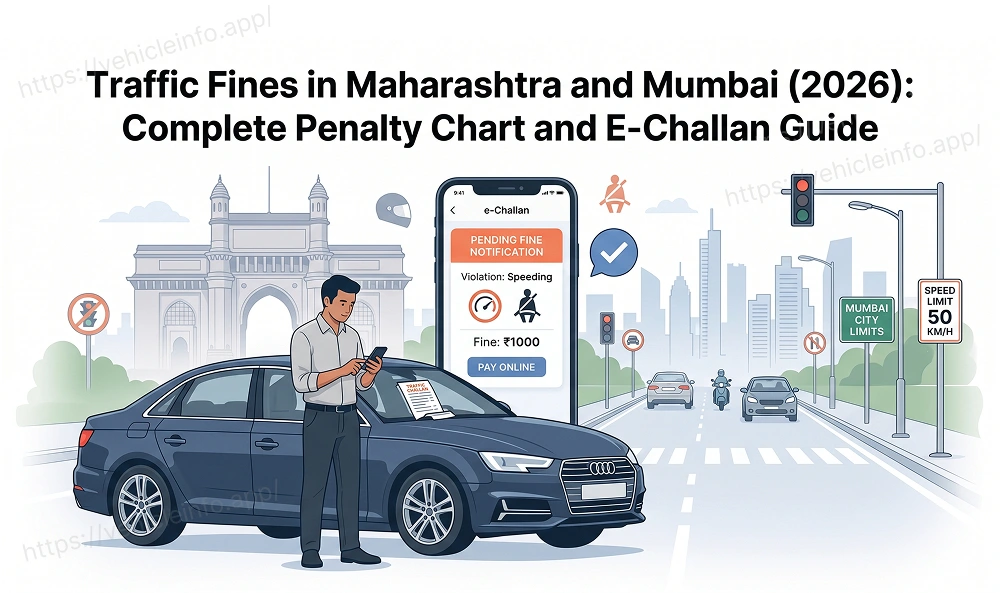
In recent years, India has rapidly moved toward digital traffic management through the e-challan system, making it easier for citizens to check and pay fines online. However, with the rise in digital convenience, there has also been an alarming increase in e-challan fraud cases. Scammers are now exploiting technology to trick vehicle owners into paying fake e-challans through phishing links and fraudulent websites.
This blog will help you understand how e-challan scams in India work, how to identify fake e-challan messages, and most importantly, how to protect yourself from such cyber fraud.
What Is an E-Challan and How Does It Work?
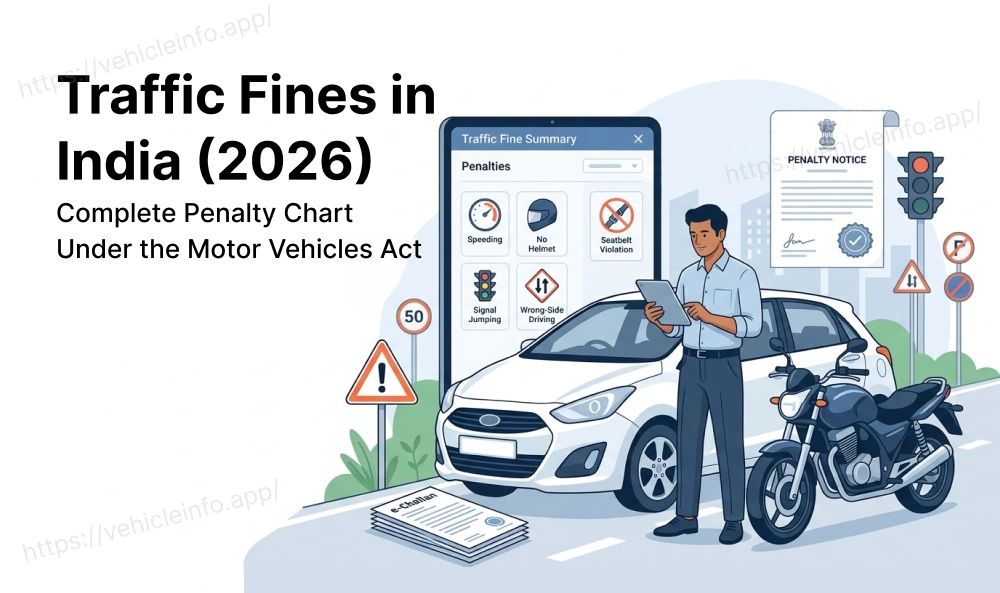
An e-challan is a digital version of a traditional traffic challan issued by traffic police for violating road rules. The system was introduced to bring transparency and ease into fine collection and to reduce manual errors.
When a traffic violation is detected–either manually by traffic police or automatically through CCTV cameras–a challan is generated on your vehicle registration number. You can then check and pay your challan through official websites.
While this system is efficient, fraudsters have started misusing it to create fake e-challan messages that appear genuine.
What Is E-Challan Fraud?
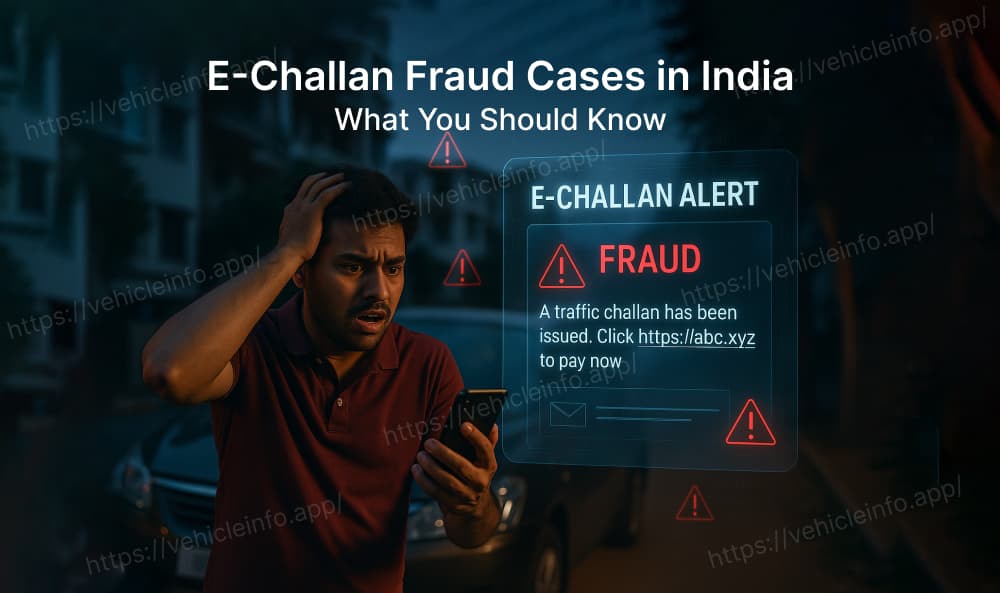
E-challan fraud occurs when scammers send fake challan messages or emails to vehicle owners, claiming that they have an unpaid traffic fine. These messages often include a fraudulent payment link or ask for personal information like your vehicle number, phone number, or bank details.
Such scams are designed to look exactly like real messages from the traffic department or Parivahan website. Once a user clicks the fake link and pays, the money goes directly into the scammer’s account.
These cyber fraud e-challan cases have become common in many Indian cities, including Delhi, Mumbai, Hyderabad, and Bengaluru.
Common Types of E-Challan Scams in India
Understanding how these scams operate can help you avoid becoming a victim. Here are some common types of e-challan scams seen across India:
1. Fake SMS Messages
Scammers send SMS alerts claiming, “You have a pending challan of ₹1000. Click here to pay.” These fake e-challan SMS links often look similar to official URLs, such as parivahan-gov.in or mparivahan-app.net – but they are fraudulent.
2. Phishing Websites
Some fraudsters create fake e-challan websites that look identical to Parivahan or MParivahan portals. Unsuspecting users enter their details and end up sharing sensitive information with scammers.
3. WhatsApp and Telegram Messages
Fake e-challan scam messages are also circulated through WhatsApp or Telegram. These messages include a link and threaten penalties if payment is not made immediately.
4. Email Scams
Scammers send emails that resemble official notifications from RTO or police departments, often with a QR code for “instant payment.”

How to Identify a Fake E-Challan
It’s easy to fall for a scam if you’re unaware of the warning signs. Here’s how to spot fake e-challan messages or phishing links:
- Check the URL carefully:
Genuine websites always end with .gov.in (e.g., parivahan.gov.in). If the link ends with .com, .net, or looks suspicious, it’s likely fake. - Cross-check challan on official platforms:
Verify your challan details on Parivahan, MParivahan, or Vehicleinfo before making any payment. - Avoid third-party payment links:
Never make payments via links shared through SMS or social media. Always visit the official site directly. - Check the sender ID:
Official messages usually come from a verified ID (like VK-VAAHAN). Messages from random numbers should be ignored. - Look for grammatical or spelling errors:
Fake messages often have small mistakes or use terms like “urgent challan payment needed.”
How to Report E-Challan Fraud
If you’ve received a fake e-challan SMS or email, don’t panic. You can take the following steps to report and safeguard your data:
- Report to Cybercrime Portal:
Visit cybercrime.gov.in and file a complaint under “Online Financial Fraud.” - Inform Local Police:
You can visit your nearest police station or send details to the cybercrime cell in your area. - Block and Report Fake Numbers:
Report fake numbers and email IDs to your telecom provider or email service. - Contact Official Helplines:
You can reach out to the official RTO helpline or contact Parivahan customer support for verification.
How to Stay Safe from E-Challan Scams
Protecting yourself from e-challan fraud cases requires awareness and careful action. Here are some practical tips to stay safe:
- Always verify your challan through official government websites or apps.
- Never click on unknown or shortened URLs in messages.
- Keep your bank details and OTPs confidential.
- Install a reliable cybersecurity or anti-phishing app on your smartphone.
- Educate your friends and family about fake e-challan scams.
Why Are E-Challan Scams Increasing in India?
The rise in digital transactions and limited public awareness has made it easier for cybercriminals to exploit users. Many people are unaware of how to check genuine challan details or differentiate between real and fake e-challan messages.
With more than 2 crore challans issued monthly across India, even a small percentage of fraud can impact thousands of people.
Hence, the need for e-challan fraud awareness is greater than ever.
FAQs on E-Challan Fraud in India
1. How can I check if my e-challan is real or fake?
Ans: You can verify your challan on the official Parivahan website, MParivahan app, or Vehicleinfo by entering your vehicle number or challan ID.
2. What should I do if I accidentally paid a fake e-challan?
Ans: Immediately file a complaint on cybercrime.gov.in and contact your bank to stop or reverse the transaction if possible.
3. Can I receive a genuine e-challan message by SMS?
Ans: Yes, but official messages come from verified IDs like “VAAHAN” or “EKCHLN.” Always verify links before clicking.
4. How can I report a fake e-challan website?
Ans: Report it to the Ministry of Road Transport & Highways (MoRTH) or file a complaint on the National Cybercrime Reporting Portal.
5. Is it safe to pay challan online through Vehicleinfo or Parivahan?
Ans: Yes. Both Vehicleinfo and Parivahan are trusted platforms for safe e-challan payment and verification.
Conclusion
The e-challan system has revolutionized traffic fine management in India, but with it, e-challan fraud cases have also increased. Scammers are getting more sophisticated, making it harder for users to distinguish between genuine and fake notifications.
Always remember – a real e-challan can only be verified on official portals like Parivahan, MParivahan, or Vehicleinfo. Avoid paying through random links and stay vigilant against phishing scams.
By staying informed and alert, you can protect yourself and others from becoming victims of e-challan payment fraud.