What is a VIN? Importance and How to Check VIN?
31 March, 2025
If you've ever purchased car insurance, you've likely come across the terms Vehicle Identification Number (VIN) and chassis number. But why do insurance companies insist on this information? Simply put, a VIN is like a fingerprint for your vehicle—a unique identifier that distinguishes it from every other car on the road.
What is a VIN or Chassis Number?
A Vehicle Identification Number (VIN) is a 17-character alphanumeric code that serves as a unique identity for a vehicle. It is often used interchangeably with the chassis number because it is stamped onto the vehicle's chassis. Technically, the chassis number is a part of the VIN, meaning that locating the VIN will also reveal the chassis number.
The assignment of a VIN is a global standard that helps identify the vehicle's make, model, manufacturer, and year of production, whether it is a private or commercial vehicle.
Why 17 Characters?
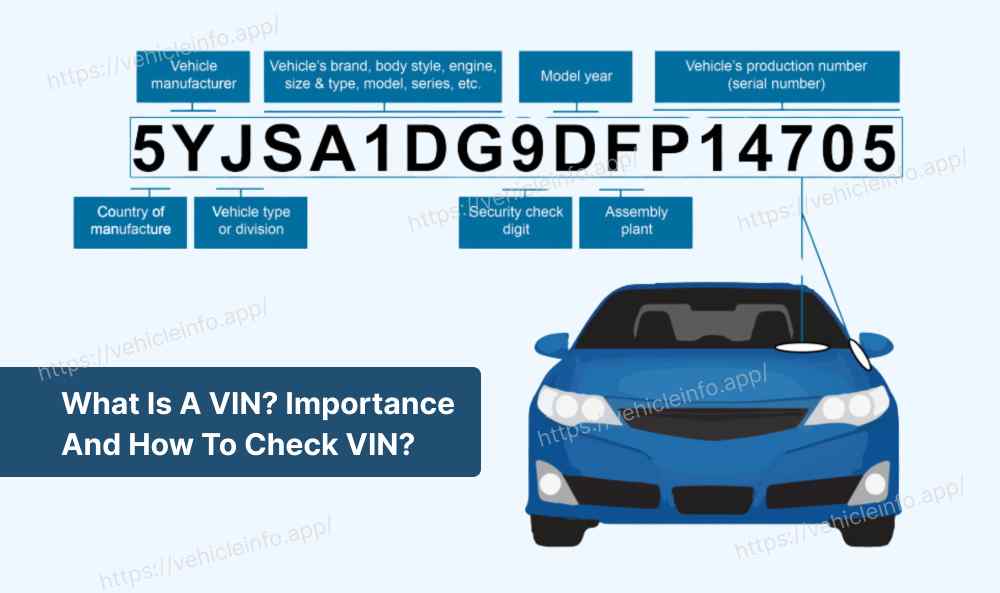
Each character in the VIN provides critical details about the vehicle. Here's a breakdown of its structure:
World Manufacturer Identifier (WMI) (First 3 Characters)
Also Read: How to Check Car VIN Number?
- Represents the country of origin and manufacturer.
- The first character signifies the country where the vehicle was built.
- The next two characters identify the manufacturer.
Vehicle Description Section (VDS) (Next 6 Characters)
- 4th Character: Indicates the vehicle type (e.g., scooter, sports bike, etc.).
- 5th Character: Represents engine movement or power range.
- 6th Character: Specifies engine type (e.g., single-stroke or double-stroke engine).
- 7th Character: Shows the design sequence.
- 8th Character: Denotes the vehicle version.
- 9th Character: A check digit to ensure VIN accuracy.
Vehicle Identifier Section (VIS) (Last 8 Characters)
- 10th Character: Identifies the manufacturing year.
- 11th Character: Indicates the plant where the vehicle was manufactured.
- 12th-17th Characters: The vehicle's serial number, commonly referred to as the chassis number.
Where to Find Your VIN
The VIN's location varies across different vehicles but is commonly found in these areas:
Cars:
- Door frame of the front doors (usually driver's side but sometimes on the passenger side).
- Dashboard near the windshield.
- Steering column or steering wheel.
- Inner wheel arch (left-hand side).
- Radiator support bracket.
- Car registration documents.
Bikes:
- Near the handle or engine.
- Mentioned on the bike registration certificate.

How to Check Your VIN Online?
Yes! The Ministry of Road Transport's VAHAN database allows you to verify your vehicle details online. Here's how:
- Visit the VAHAN website.
- Click on Know Your Vehicle Details.
- Enter your vehicle's registration number.
- Click Search Vehicle.
For privacy reasons, the website does not display the full chassis number.
Why is VIN Important for Car Insurance?
A VIN provides crucial details that help Car insurance companies validate ownership and vehicle existence. It also plays a key role in preventing fraud, such as:
- Detecting stolen or written-off vehicles sold to unsuspecting buyers.
- Authenticating a vehicle during policy purchase.
- Tracking vehicles in case of theft.
- Processing claims where a vehicle is declared a total loss.
VIN and Second-Hand Vehicle Purchases
If you're buying a used vehicle, checking its VIN can reveal:
- If the car was stolen or involved in fraud.
- If it was auctioned or written off.
- Whether the manufacturer issued a recall for that model.
History of the VIN System
VIN implementation began in 1954 in the United States, coinciding with the post-war car manufacturing boom. Initially, there was no standardized format, and manufacturers used different numbering systems. In 1981, the U.S. Department of Transportation mandated a 17-character VIN, which eventually became the global standard.
Understanding your VIN is essential not only for insurance but also for tracking your vehicle's history, maintenance, and safety recalls. Keep it handy—it might come in more useful than you think!