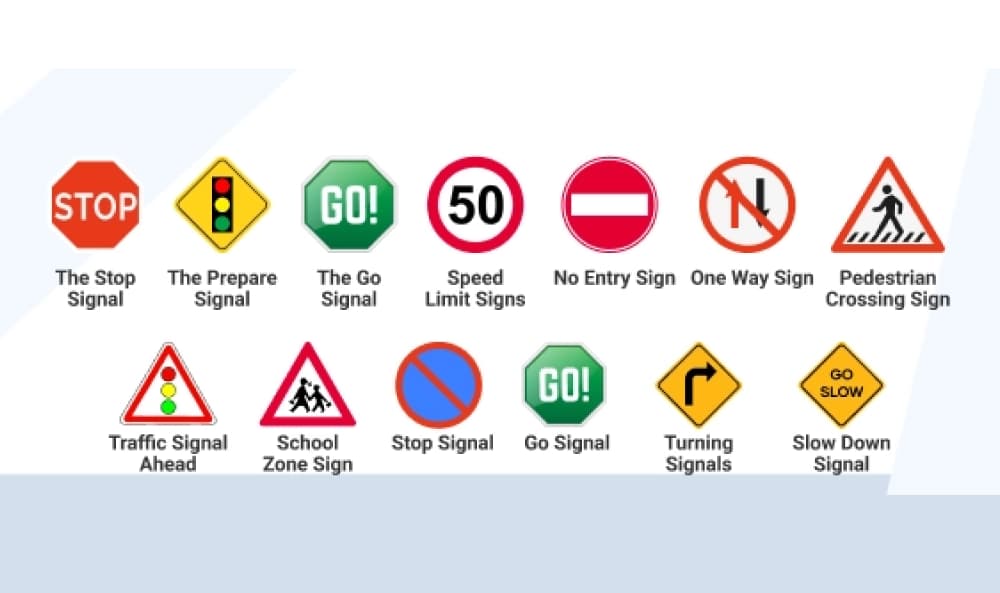
India Traffic Signs Guide: Understanding Road Safety Symbols & Meanings
23 December, 2024
Traffic signs and road safety symbols are essential components of India’s road infrastructure ensuring order and safety for all road users. These signs governed by the Motor Vehicle Act and Indian Road Congress (IRC) act as a universal language catering to pedestrians cyclists and drivers alike.
Categories of Traffic Signs in India
In India traffic signs are broadly categorized into three primary types:

1. Mandatory Signs: Represented by red and blue circular symbols these enforce rules such as speed limits and no-entry zones.
2. Cautionary Signs: Marked by red triangles they warn of potential hazards like sharp curves or steep inclines.
3. Informatory Signs: Displayed on blue rectangles these provide useful information like directions or nearby amenities.
With India's vast road network and high incidence of road accidents understanding these signs is not only a legal obligation but a crucial life skill.
How Are Traffic Signs in India Designed?
The design of traffic signs in India is a blend of functionality psychology and universal appeal. The primary objective is to convey critical information swiftly regardless of language or literacy levels. Key design elements include:

1. Colors: Red for warnings blue for directions ensuring high visibility.
2. Shapes: Intuitive shapes for instant recognition even at high speeds.
3. Materials: Reflective surfaces improve night visibility while robust construction ensures durability under various weather conditions.
Attention to detail in design enhances safety making the roads more efficient and accessible for all.
Types of Traffic Signs in India
Based on their function traffic signs are divided into five key categories:
1. Mandatory Signs

- Known as restrictive signs these must be obeyed to avoid fines.
- Typically round-shaped with a white background and red border.
- Examples: Stop No Parking Speed Limit No U-Turn.

2. Cautionary Signs
- Warn users of potential road hazards.
- Triangular in shape with a red border.
- Examples: Sharp Turn Steep Descent Hairpin Bend.
-
Auxiliary Signs:
- Sub-type of cautionary signs providing additional warnings or instructions.
- Examples: Detour Signs Road Closure Men at Work.
3. Informatory Signs

- Provide location-based guidance and instructions helpful for new users in unfamiliar areas.
- Blue in color with rectangular shapes.
- Examples: Petrol Pumps Parking Areas Hospitals.
-
Guide Signs:
- Subordinate to informatory signs offer detailed route and directional guidance.
- Examples: Route Markers Mileposts Destination Signs.
Sign Boards Used in India
Reflective Sign Boards:

- Commonly seen on highways these use reflective sheets to bounce light from vehicle headlights ensuring visibility in low-light conditions.
- Designed for durability and weather resistance.
Internally Illuminated Sign Boards:
- Found in urban areas or high-traffic zones these use built-in lighting like LEDs for constant visibility regardless of surrounding light.
- Highly effective in foggy or low-visibility weather.

Both types serve the same purpose: enhancing visibility and ensuring road safety.
In the sections that follow we delve deeper into the meanings of various traffic symbols shapes and road markings essential for navigating India’s roads.