Court Challan vs E-Challan: Key Differences, Meaning & Payment Process
17 November, 2025
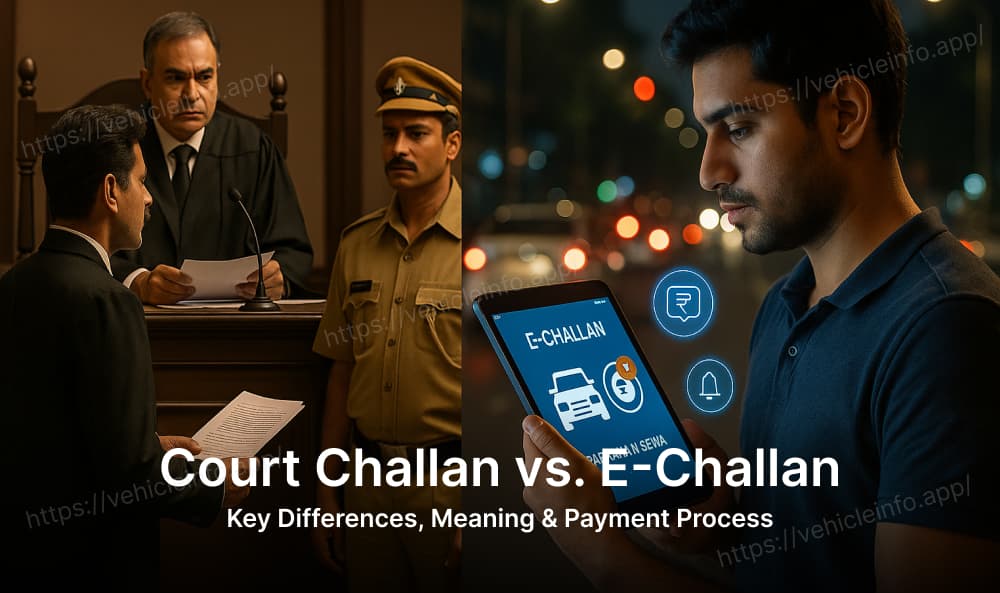
Understanding the difference between a court challan and an e-challan is crucial for every vehicle owner in India. Both are issued for traffic violations, but they differ in how they are processed, paid, and resolved. While an e-challan allows you to make an online challan payment easily, a court challan requires physical appearance before a magistrate for legal proceedings.
Knowing these distinctions helps ensure you handle traffic penalties correctly and avoid unnecessary legal trouble. Let’s explore both in detail.
Understanding the Difference Between Court Challan and E-Challan
In India, traffic challans such as a UP e challan or Delhi traffic challan can be broadly classified into two types — Court Challan and E-Challan. Here’s a quick comparison to help you understand better:
| Aspect | Court Challan | E-Challan |
|---|---|---|
| Definition | Issued for serious traffic offences that require a court hearing. | Generated digitally for minor traffic violations through CCTV or digital systems. |
| Issuing Authority | Traffic police issue it for major offences like rash driving or accidents. | Created automatically using AI cameras or issued by traffic officers digitally. |
| Nature of Offence | Severe or repeated violations needing judicial review. | Minor offences like not wearing a helmet, speeding, or signal jumping. |
| Payment Process | Payment must be made in court before a magistrate. | Paid online via Parivahan, state transport portals, or mobile apps. |
| Time Required | Longer process due to court hearings. | Quick and convenient, completed online within minutes. |
| Documentation | Requires submission of DL, RC, and ID proof in court. | Minimal paperwork, records are digital. |
| Record Keeping | Maintained in police and court records. | Stored in digital databases like Parivahan Sewa. |
| Payment Confirmation | Confirmed after court approval. | Instant confirmation via digital receipt. |
| Challan Status Check | Verified in court or government portals. | Checked online using vehicle number or DL number. |
| Legal Implications | May lead to suspension or imprisonment for serious offences. | Usually involves only fines with minimal legal impact. |

How a Court Challan Works
A court challan is issued when a serious traffic violation occurs — one that demands legal evaluation. Offences that generally result in a court challan include:
- Drunk driving
- Reckless or rash driving
- Driving without a valid licence
- Accidents causing harm or property damage
In such cases, the violator cannot simply make an online challan payment. Instead, they must appear before a magistrate and follow the court challan payment process. During the hearing, the violator can either:
- Accept the penalty and pay the fine, or
- Contest the charges with evidence
If convicted, the court may impose penalties such as:
- Heavy fines
- Suspension of driving licence
- Imprisonment (for severe cases)
Also Read: How to Check Traffic Challan Online in India
How an E-Challan Works
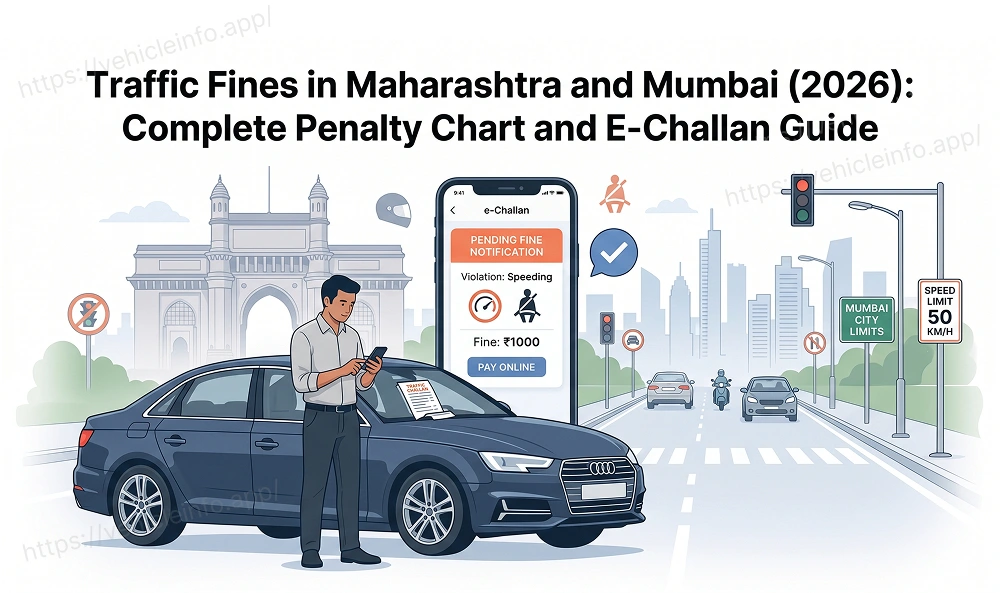
An e-challan is an electronically generated traffic challan that makes the entire process digital and hassle-free. When a traffic rule is violated, AI-enabled CCTV cameras capture the incident. The system automatically identifies the vehicle’s registration number and sends details to the transport department’s server.
Once processed, the vehicle owner receives an SMS or email containing:
- Type of offence
- Fine amount
- Payment link
The offender can then pay the fine through:
- Parivahan Sewa website
- State transport department portals
- Mobile apps like Vehicleinfo or Paytm
After payment, a digital receipt is generated instantly. This transparent system reduces corruption and improves efficiency in traffic management.
The Bottom Line
Both court challans and e-challans serve to maintain discipline on Indian roads. While e-challans are quick and digital, court challans involve serious offences requiring judicial attention. Understanding the difference between court challan and e challan helps drivers respond appropriately and avoid unnecessary legal complications.
Whether you need to check challan status, make online challan payment, or verify vehicle challan details, always use official government portals like Parivahan.gov.in or state RTO websites.
Frequently Asked Questions (FAQs)
1. Can an e-challan turn into a court challan?
Ans: Yes. If an e-challan is not paid on time, it can be escalated to a court challan, requiring the violator to appear before a magistrate.
2. Do court challans affect vehicle insurance premiums?
Ans: Yes, serious offences listed under court challans can impact your car insurance premium, as insurers review your driving record when determining risk profiles.
3. Can someone else pay my court challan?
Ans: Yes, another person can pay on your behalf, but they must carry relevant documents like challan details and ID proofs to ensure correct record updates.
4. How can I check my challan status online?
Ans: You can visit Parivahan.gov.in or your state transport department’s e-challan portal, enter your vehicle number or DL number, and view the challan details instantly.
5. What happens if I ignore a court challan?
Ans: Ignoring a court challan can lead to legal action, suspension of licence, or even imprisonment, depending on the severity of the offence.