Exploring Car Chassis: Different Types and Their Functions
30 August, 2024
A car chassis often seen as the vehicle's backbone is a crucial component that defines the car's structure and dictates its strength safety and overall performance. It acts as the framework where the body engine transmission and other parts are mounted.
Understanding the different chassis types and their specific uses can shed light on automotive design and engineering. This article explores the concept of a car chassis its various types and their implications in modern vehicles.
What is a Car Chassis?
The chassis is a fundamental structural element that supports the entire vehicle. It maintains the vehicle's shape provides rigidity and ensures the alignment of various components. The chassis must endure forces such as bending torsion and vibrations during operation. Essentially it is the skeleton that holds the car together impacting everything from safety to handling.
Types of Car Chassis Frames
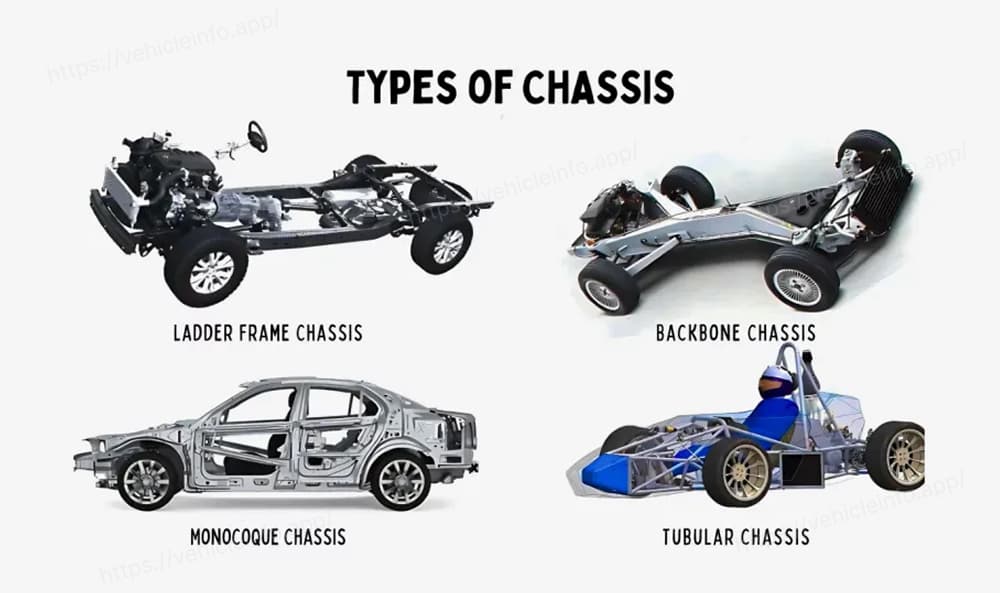
Several chassis frame types are used in automotive design each with its own benefits and specific uses. The main types include:
Ladder Frame Chassis
The ladder frame chassis is one of the oldest types used in automotive design. It consists of two longitudinal beams ("rails") connected by lateral and cross braces resembling a ladder's structure.
Advantages
Strength and Durability: Known for its robustness
the ladder frame handles heavy loads and rough terrain
making it ideal for trucks and off-road vehicles.
Ease of Repair: The separate body and frame structure makes it easier to repair and replace damaged sections.
Disadvantages
Weight: Ladder frames are generally heavier
which can negatively affect fuel efficiency and handling.
Space Utilization: The separate frame and body structure can lead to less efficient use of space within the vehicle.
Applications
Ladder frames are commonly used in trucks SUVs and off-road vehicles where strength and durability are essential.
Monocoque (Unibody) Chassis
The monocoque or unibody chassis integrates the frame and body into a single structure creating a unified lighter and more rigid frame. This design is prevalent in modern passenger cars.
Advantages
Lightweight: The unified structure reduces the vehicle's overall weight
improving fuel efficiency and performance.
Safety: Provides better crash protection as the entire body absorbs and disperses impact forces.
Improved Handling: The rigid structure enhances handling and ride quality.
Disadvantages
Complex Repairs: Damage to the monocoque structure can be harder and more costly to repair.
Limited Customization: Monocoque chassis offer fewer opportunities for modifications compared to ladder frames.
Applications
Monocoque chassis are common in passenger cars crossovers and some light trucks due to their efficiency safety and performance benefits.
Backbone Chassis
The backbone chassis features a central tubular structure running the length of the vehicle to which the body and drivetrain components are attached. This design provides a unique blend of strength and rigidity.
Advantages
Simplicity: The straightforward design simplifies manufacturing and assembly.
Strength: The central backbone offers a strong and rigid structure.
Disadvantages
Limited Space: The central backbone can limit interior and cargo space.
Niche Applications: Less common
usually found in specialized vehicles.
Applications
Backbone chassis are often used in sports cars small utility vehicles and some off-road vehicles.
Tubular Chassis
Tubular chassis also known as tube-frame chassis are made from a network of tubes welded together to form a rigid frame. This design is favored in high-performance and race cars due to its strength-to-weight ratio.
Advantages
Strength-to-Weight Ratio: Offers excellent strength while minimizing weight
ideal for high-performance applications.
Flexibility: The tubular structure allows for customization and modification.
Disadvantages
Complexity: The construction and welding of tubular frames can be intricate and time-consuming.
Safety: May not absorb impacts as effectively as other designs.
Applications
Tubular chassis are used in racing high-performance sports cars and custom-built vehicles.
Space Frame Chassis
The space frame chassis uses a network of small interconnected tubes or sections to create a lightweight yet highly strong structure. This design is often used in modern high-performance and luxury vehicles.
Advantages
Lightweight and Strong: Provides a good balance of strength and weight
enhancing performance and fuel efficiency.
Safety: Offers excellent crash protection due to its interconnected structure.
Disadvantages
Cost: The complexity of the design makes space frames more expensive to produce.
Repair Difficulty: Damage can be challenging and costly to repair.
How to Find the Engine Number, Chassis Number, and Vehicle Identification Number (VIN)?
ApplicationsSpace frame chassis are typically found in high-end sports cars luxury vehicles and some high-performance sedans.
The chassis is a vital element in a vehicle's safety performance and overall design. Different chassis frames offer various benefits and are suited to specific applications. Understanding these types helps in appreciating the engineering behind automotive designs and the considerations involved in creating safe effective and high-performing vehicles. Whether it's the rugged durability of a ladder frame the efficient performance of a monocoque or the specialized strength of a tubular or space frame each chassis type plays a crucial role in the automotive industry.